Food Safety
search
Ask Food Safety AI
cart
facebook twitter linkedin instagram youtube
  • Sign In
  • Create Account
  • Sign Out
  • My Account
Food Safety
  • NEWS
    • Latest News
    • White Papers
  • PRODUCTS
  • TOPICS
    • Contamination Control
    • Food Types
    • Management
    • Process Control
    • Regulatory
    • Sanitation
    • Supply Chain
    • Testing and Analysis
  • PODCAST
  • EXCLUSIVES
    • Food Safety Five Newsreel
    • eBooks
    • FSM Distinguished Service Award
    • Interactive Product Spotlights
    • Videos
  • BUYER'S GUIDE
  • MORE
    • NEWSLETTERS >
      • Archive Issues
      • Subscribe to eNews
    • Store
    • Sponsor Insights
    • ASK FSM AI
  • WEBINARS
  • FOOD SAFETY SUMMIT
  • EMAG
    • eMagazine
    • Archive Issues
    • Editorial Advisory Board
    • Contact
    • Advertise
  • SIGN UP!
NewsContamination ControlManagementProcess ControlSanitationCultureMicrobiologicalIntervention ControlsProcess ValidationBiofilm ControlEnvironmental MonitoringFacilitiesHygienic Equipment DesignSanitation

Report Describes How UK Food Processors Are Advancing Microbial Control
By Food Safety Magazine Editorial Team
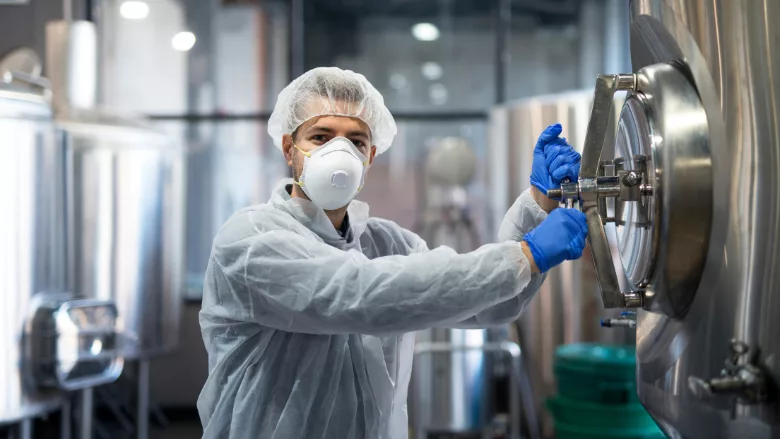
technologist opening processing tank
Image credit: aleksandarlittlewolf via Freepik
February 12, 2026

UK Health Security Agency (UKHSA) data indicate that cases of illness caused by major foodborne pathogens like Shiga toxin–producing Escherichia coli (STEC), Listeria monocytogenes, Salmonella, and Campylobacter continue to increase, with year‑over‑year growth ranging from 14–26 percent. These trends underscore the need for stronger surveillance and improved microbial control tools across the food sector.

Addressing this need, a report produced by the UK Food Safety Research Network (FSRN), led by the Quadram Institute, has identified emerging defenses against microbiological risks in food production environments (FPEs).

The paper, published in Nature Antimicrobials and Resistance, draws upon insights informally shared by UK food safety professionals—including microbiologists, quality managers, and technical managers—who have discussed the practical challenges, evolving strategies, and knowledge that are foundational to day-to-day operations for managing microbial risks in FPEs.

In general, emerging genomics tools, improved environmental monitoring, and more realistic disinfectant validation methods are now driving a shift toward science‑driven strategies designed to mitigate microbiological contamination. Additionally, elements of a strong food safety culture, such as cross-team collaboration and enterprise-wide awareness of microbial risks, were identified as important.

Core Lines of Defense Against Persistent Microbial Communities

Resident microbiota, including environmental, spoilage, and pathogenic microorganisms, continually enter FPEs via raw ingredients, personnel, equipment, water, or air handling systems. Over time, selective pressures create highly adapted microbial communities. These microbes commonly form complex, multi-species biofilms that resist routine cleaning and can lead to contamination.

The report outlines four core lines of defense against microbial risks, as identified by industry stakeholders:

  1. Preventing entry: Food businesses are tightening supplier controls and emphasizing microbiological awareness of personnel, relying on relevant standards as key resources. Stakeholders highlighted the need for ongoing training and mentorship to help employees fully understand the importance of controls and foster a strong food safety culture.
  2. Preventing harborage: Aging infrastructure, worn surfaces, cracked floors, and poorly designed equipment represent problematic microbial niches. Hygienic design principles remain critical, including the use of smooth, non-absorbent materials in facilities and equipment, robust engineering standards, and maintaining dry conditions. Stakeholders also cited the value of tighter collaboration between engineering and hygiene teams to ensure maintenance decisions reflect microbiological risks.
  3. Preventing spread: Facilities are working to integrate rapid, easy-to-use environmental monitoring tools; for example, chromogenic sprays or hydrogen peroxide–based color indicators. These tools help identify areas where biofilms may be forming and enable timely interventions, even when more advanced diagnostics are unavailable.
  4. Seek and destroy: Effective cleaning remains the cornerstone of microbial risk control, removing up to 99.8 percent of microbes even before disinfection. Businesses continue to use a range of disinfectants, including quaternary ammonium compounds (QAC), chlorine-based agents, peracetic acid, and hydrogen peroxide, while also exploring enzyme-based cleaners and oxidizing agents for enhanced biofilm penetration. Many companies are supplementing traditional agents with ultraviolet (UV) light-enhanced air systems, high-efficiency particulate air (HEPA) filtration, or antimicrobial surfaces in high-risk zones.

Scientific and Technological Advancements to Improve Microbial Control Programs

As microbial communities evolve and resist conventional approaches, food businesses are turning toward scientific collaboration and advanced analytics to strengthen hygiene, sanitation, and microbial control programs.

  • Surface engineering and antimicrobial materials: Newly developed surface coatings, such as silver- or copper-infused materials, photocatalytic films, and antimicrobial polymers, are being explored to prevent microbial attachment. While high costs remain a barrier, stakeholders view such passive antimicrobial designs as promising long‑term investments, especially in hard-to-clean areas.
  • Genomics and metagenomics: Whole genome sequencing (WGS) and shotgun metagenomics are emerging as transformative tools for understanding how microbes persist, spread, and adapt within FPEs. Stakeholders report that sequencing resident isolates helps distinguish transient contamination from persistent strains and supports more precise root-cause investigations. Although cost limits widespread use, strategic metagenomic surveys can establish a baseline microbial profile and guide targeted monitoring for high-risk species.
  • More realistic disinfectant validation: Stakeholders stressed that many standard laboratory assays—such as minimum inhibitory concentration (MIC)/minimum bactericidal concentration (MBC) tests or European Norms (EN)-series disinfectant validations—do not reflect real-world FPE conditions. Biofilm-related tolerance, soil loads, temperature, contact time, and surface wear all influence outcomes yet are poorly replicated in standard validation tests.

Researchers and businesses are now developing multi-species biofilm models, facility-specific challenge trials, and new tools to measure biofilm resilience and metabolic recovery. These approaches aim to replace single-strain, ideal-surface testing with models that better reflect real-world FPEs.

Improved Microbial Control Enabled by Science-Based Strategies, Strong Culture

Based on stakeholder insight, the report highlights several key priorities to advance hygiene strategies and microbial control:

  • Strengthening collaboration between industry and research partners to develop practical, scalable tools
  • Advancing detection and monitoring with rapid tests, genomics, and improved environmental mapping
  • Adopting biofilm-relevant testing models that mirror real facility conditions
  • Evaluating new antimicrobials and materials based on practical performance and environmental impact
  • Incorporating product quality indicators, including recall rates and consumer complaints, into hygiene performance metrics.

Overall, the researchers highlight that improving food safety must go beyond the application of stronger chemicals or more frequent testing. It demands a systems-level approach grounded in microbiology, infrastructure design, workforce knowledge, and data-driven decision-making.

Looking for quick answers on food safety topics?
Try Ask FSM, our new smart AI search tool.
Ask FSM →


KEYWORDS: processors Quadram Institute report UK

Share This Story

Fsm purple logo 200x200

The Food Safety Magazine editorial team comprises Bailee Henderson, Digital Editor ✉; Adrienne Blume, M.A., Editorial Director; and Stacy Atchison, Publisher.

Recommended Content

JOIN TODAY
to unlock your recommendations.

Already have an account? Sign In

  • people holding baby chicks

    Serovar Differences Matter: Utility of Deep Serotyping in Broiler Production and Processing

    This article discusses the significance of Salmonella in...
    Methods
    By: Nikki Shariat Ph.D.
  • woman washing hands

    Building a Culture of Hygiene in the Food Processing Plant

    Everyone entering a food processing facility needs to...
    Training
    By: Richard F. Stier, M.S.
  • graphical representation of earth over dirt

    Climate Change and Emerging Risks to Food Safety: Building Climate Resilience

    This article examines the multifaceted threats to food...
    Contamination Control
    By: Maria Cristina Tirado Ph.D., D.V.M. and Shamini Albert Raj M.A.
Manage My Account
  • eMagazine Subscription
  • Subscribe to Newsletters
  • Manage My Preferences
  • Website Registration
  • Subscription Customer Service

More Videos

Sponsored Content

Sponsored Content is a special paid section where industry companies provide high quality, objective, non-commercial content around topics of interest to the Food Safety Magazine audience. All Sponsored Content is supplied by the advertising company and any opinions expressed in this article are those of the author and not necessarily reflect the views of Food Safety Magazine or its parent company, BNP Media. Interested in participating in our Sponsored Content section? Contact your local rep!

close
  • Salmonella bacteria
    Sponsored byThermoFisher

    Food Microbiology Testing Methods: Salmonella species

  • a diagram explaining indicator organisms
    Sponsored byHygiena

    How Proactive Listeria Testing Helps Prevent Six- and Seven-Figure Recalls

  • woman grocery shopping
    Sponsored byCorbion

    Designing Safety Into Every Bite: Proactive Risk Mitigation for Refrigerated Foods

Popular Stories

plate of RTE deli meats and sausages

Boar’s Head Reopens Production Facility Behind Fatal Listeriosis Outbreak

natural blue food coloring powder

FDA Allows Foods with ‘Natural’ Food Dyes to Claim ‘No Artificial Colors’

person on clipboard in processing environment

Preventive Maintenance: A Complex Prerequisite Program

Events

February 25, 2026

How to Manage Food Safety and Regulatory Risks in Your Supply Chain

Live: February 25, 2026 at 2:00 pm EST: From this webinar, attendees will learn how large food manufacturing organizations can successfully manage their supply chain, food safety, and regulatory risks.

March 3, 2026

FDA/USDA Regulatory Updates: Food Safety Work Plans for 2026

Live: March 3, 2026 at 2:00 pm EST: In this high-level, exclusive webinar, FDA Deputy Commissioner for Human Foods Kyle Diamantas and USDA Under Secretary for Food Safety Mindy Brashears, Ph.D. will share their agencies' regulatory priorities and work plans for 2026 and beyond.

May 11, 2026

The Food Safety Summit

Stay informed on the latest food safety trends, innovations, emerging challenges, and expert analysis. Leave the Summit with actionable insights ready to drive measurable improvements in your organization. Do not miss this opportunity to learn from experts about contamination control, food safety culture, regulations, sanitation, supply chain traceability, and so much more.

View All

Products

Global Food Safety Microbial Interventions and Molecular Advancements

Global Food Safety Microbial Interventions and Molecular Advancements

See More Products

Related Articles

  • Image of produce being washed on a conveyor belt in a facility

    Science in Action: How Nanobubbles Are Advancing Food Safety Standards

    See More
  • FSM podcast

    Ep. 158. Harris and Grantham: How Food Processors are Preparing to Meet FSMA 204 Traceability Requirements

    See More
  • food science students

    IFT Report Describes Food Science Students’ Changing Career Interests, Declining Confidence

    See More

Related Products

See More Products
  • global food.jpg

    Global Food Safety Microbial Interventions and Molecular Advancements

  • 9781032369990 (1).webp

    Food Safety Quality Control and Management

  • 9781498721776.jpg

    Handbook of Food Processing: Food Safety, Quality, and Manufacturing Processes

See More Products

Related Directories

  • Control Instruments Corp.

    Manufacture advanced detection systems for hazardous gases & vapors.
  • Rentokil Pest Control

    Delivering solutions to food businesses for over 100 years, Rentokil is the single-source provider for your pest management needs. Our local technicians deliver customized programs and innovative solutions, ensuring regulatory compliance and audit readiness. To help you drive your business, our secure PestNetOnline platform provides detailed service data and reporting.
×

Never miss the latest news and trends driving the food safety industry

Newsletters | Website | eMagazine

JOIN TODAY!
  • RESOURCES
    • Advertise
    • Contact Us
    • Directories
    • Store
    • Want More
  • SIGN UP TODAY
    • Create Account
    • eMagazine
    • Newsletters
    • Customer Service
    • Manage Preferences
  • SERVICES
    • Marketing Services
    • Reprints
    • Market Research
    • List Rental
    • Survey/Respondent Access
  • STAY CONNECTED
    • LinkedIn
    • Facebook
    • Instagram
    • X (Twitter)
  • PRIVACY
    • PRIVACY POLICY
    • TERMS & CONDITIONS
    • DO NOT SELL MY PERSONAL INFORMATION
    • PRIVACY REQUEST
    • ACCESSIBILITY

Copyright ©2026. All Rights Reserved BNP Media.

Design, CMS, Hosting & Web Development :: ePublishing