


The 4.0 ppt Era: Future-Proofing Your Food Supply Chain Against 'Forever Chemicals'
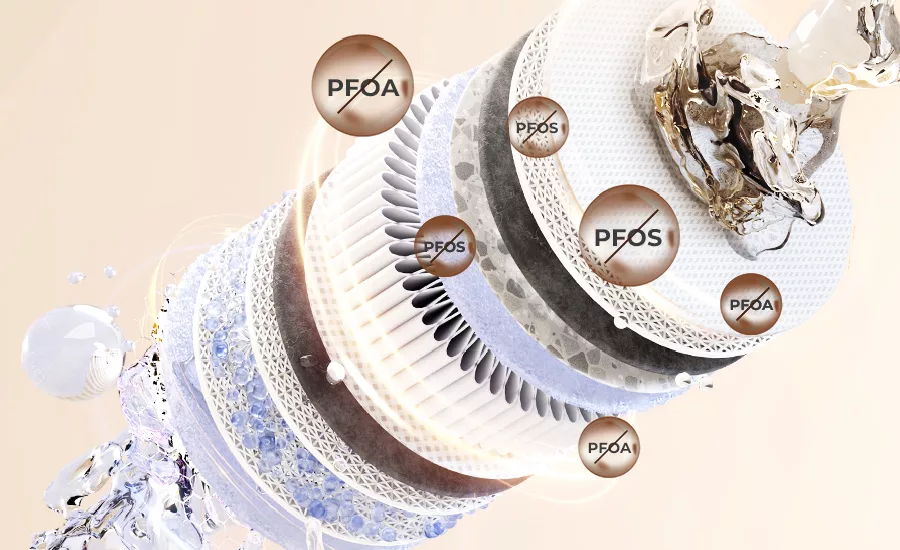
Per- and polyfluoroalkyl substances (PFAS) are widely used chemicals in numerous consumer and industrial products. The carbon–fluorine bond which makes PFAS valuable for their stability, oil- and water-repelling properties, and lubricity also allows them to persist without degradation, leading to their accumulation in and diffusion throughout the environment, and earning them the nickname “forever chemicals.” 1
Due to mounting evidence about the health effects, persistence, and bioaccumulation of PFAS, these chemicals have been increasingly subjected to public and regulatory scrutiny, bringing important implications for food and beverage producers.
The 4.0 ppt Era: An Emerging PFAS Regulatory Landscape
The U.S Environmental Protection Agency’s (EPA’s) National Primary Drinking Water Regulations (NPDWR) establishes new limits for certain PFAS in drinking water.
Specifically, NPDWR sets Maximum Contaminant Limits (MCLs) of 4.0 parts-per-trillion (ppt) for perfluorooctanoic acid (PFOA) and perfluorooctanesulfonic acid (PFOS) in public water systems, requiring initial monitoring efforts to be completed by 2027 and, by 2029, for PFAS reduction solutions to be implemented in water systems that exceed the 4.0 ppt limit. 2
The Prevalence and Impacts of PFOS and PFOA
PFOA and PFOS are the two PFAS with sufficient evidence to suggest a link between long-term, low-dose exposure and harm to human health. 3,4 They are also two of the most frequently detected PFAS in the environment and drinking water. According to EPA data, more than 55 million and 61 million people are served by water systems with PFOA and PFOS levels above the 4.0 ppt limit.5
In this context, NPDWR is not just a drinking water standard. It presents compliance challenges, product safety and quality concerns, and brand reputation risks for the food and beverage industry.
Why Food Producers Should Pay Attention to PFAS in Water
Water is an “invisible ingredient” that touches all points of food and beverage production. Subsequently, the levels of PFAS in water used by food processors and their suppliers—compounded by the introduction of PFAS from raw materials or transferred from food contact materials—can directly impact the levels of PFAS in final food and beverage products.
The sources of PFAS in a food producer’s supply chain can add up, leaving companies at risk of regulatory scrutiny and enforcement actions.
Regulatory and Reputation Risks to Food Businesses Posed by PFAS
The U.S. Food and Drug Administration (FDA) tests foods for ten PFAS for which there are toxicological reference values (TRVs) that are used to assess potential human health concern, including PFOS and PFOA. 6
If the FDA finds that the level of PFAS in a food indicates a concern, the agency may take action. In 2022, two distributors of imported canned clams (Bumble Bee and Crown Prince) issued recalls after FDA tests revealed high PFOA levels. 7 The agency later issued an import alert that subjects shipments of foodstuffs containing high levels of chemical contaminants, including PFAS, to Detention Without Physical Examination (DWPE), reinforcing the FDA’s focus on PFAS as a food safety and public health hazard. 8
Aside from regulatory actions, litigation trends indicate that there is the potential for food and beverage producers to find themselves at the receiving end of a lawsuit if PFAS mitigation is not prioritized. Plaintiffs of such lawsuits have cited EPA’s 4.0 ppt MCL for PFOA and PFOS, as well as various federal and state food labeling statutes to claim that incidental PFAS in a food renders it “misbranded” or “adulterated.” 9
Not only are PFAS-related food recalls and litigation costly in themselves, they can also damage brand reputation and consumer trust.
Integrating PFAS Into Risk Management Frameworks
Under the Food Safety Modernization Act (FSMA), the FDA requires food manufacturers to establish Hazards Analysis and Critical Control Points (HACCP) plans for identifying process-specific microbiological, chemical, and physical hazards to develop appropriate, effective, and verifiable control measures. 10 To get ahead of regulatory trends and food safety risk, food and beverage manufacturers can integrate PFAS as a foreseeable hazard into their current frameworks.
Like preventing microbiological contamination in food production, a comprehensive approach to PFAS mitigation involves a closed loop of monitoring, assessing, managing, and verifying risks and control measures.

Where microbial control may focus on environmental monitoring, pathogen inactivation, and cleaning/sanitation and hygienic design, PFAS mitigation must emphasize monitoring inputs (e.g., raw materials, water) for levels of PFAS and controlling introduction of the chemicals at the source. Additionally, maintaining the durability of physical barriers to prevent PFAS transfer is critical.
As the scientific understanding of PFAS grows, so will regulatory requirements, public awareness, and the associated operational and brand risks. It is in food and beverage processors’ best interest to proactively address PFAS as a hazard requiring forward-looking management solutions.
Advantages of Reverse Osmosis in the Era of 4.0 ppt
A facility’s water supply poses an important opportunity to control the introduction of PFAS into a processing operation. The EPA suggests three main Best Available Technologies (BATs) for the reduction of PFAS in water. Activated carbon and ion exchange treatments both offer effective PFAS removal under certain conditions, although they are limited by their specificity and longevity. 11
On the other hand, reverse osmosis treatment is more than 90 percent effective at removing a wide range of PFAS, including shorter chain PFAS. These high-pressure, low-permeability filtration membranes push through approximately 80 percent of the flow as clean, treated water, with the rest separated as wastewater. This technology is valuable for its ability to remove a broad spectrum of contaminants and can be applied at point-of-use. 11
Featuring 0.0001-micron filtration precision, Waterdrop Filter’s G3P800 reverse osmosis technology addresses the urgent need for PFAS mitigation solutions to help meet regulatory and public perception expectations brought on by the EPA’s 4.0 ppt MCLs. Proven to achieve 98 percent PFOA reduction and 99 percent PFOS reduction with a 3:1 pure water to wastewater ratio, the filter is also NSF 24- and NSF 53-certified for chlorine, taste, and odor reduction, demonstrating its industrial-grade reliability. 12
Adopting Science-Based Water Management for Long-Term Food Safety
PFAS mitigation is a complex problem—but food safety professionals do not have to tackle it alone. Expert partners like Waterdrop Filter are available to help risk managers make science-backed decisions with the most effective and advanced available technologies.
True to their nickname, “forever chemicals” and their associated demands are not fading away anytime soon; begin integrating them into your risk governance frameworks now to protect your business in the long-term.
References
- https://www.nationalacademies.org/read/29272
- https://www.epa.gov/sdwa/and-polyfluoroalkyl-substances-pfas
- https://www.epa.gov/sdwa/human-health-toxicity-assessment-perfluorooctanoic-acid-pfoa
- https://www.epa.gov/sdwa/human-health-toxicity-assessment-perfluorooctane-sulfonic-acid-pfos
- https://www.nrdc.org/resources/new-maps-show-most-congressional-districts-have-pfas-problem#rollback
- https://www.fda.gov/food/process-contaminants-food/testing-food-pfas-and-assessing-dietary-exposure
- https://www.fda.gov/food/hfp-constituent-updates/fda-shares-results-pfas-testing-seafood
- https://www.accessdata.fda.gov/cms_ia/importalert_1180.html
- https://www.food-safety.com/articles/10124-pfas-in-food-packaging-what-you-need-to-know
- https://www.fda.gov/food/food-safety-modernization-act-fsma/fsma-final-rule-preventive-controls-human-food
- https://www.epa.gov/system/files/documents/2024-04/pfas-npdwr_fact-sheet_treatment_4.8.24.pdf
- https://www.waterdropfilter.com/products/tankless-reverse-osmosis-system-wd-g3p800-w-fc-1


