Gearing Up for an FDA Inspection
Every food processor, food handler, or other food operator under the jurisdiction of the U.S. Food and Drug Administration (FDA) can be visited by an investigator from the Agency or an inspector from one of the state agencies that have contracted with FDA to conduct inspections. If you are a producer of a high-risk product, such as a ready-to-eat (RTE) food, the odds that FDA will visit your facility are higher.
Investigators can conduct inspections any time the facility is operating, but they usually schedule their visits during the day shift. Remember, it is against the law to deny an investigator access to the facility.
Every food processor or handler should have a program in place to deal with an FDA inspection. The program should include the following elements:
- Greeting the investigator
- Holding an entrance meeting
- Accompanying the investigator
- Understanding your rights and the law
- Addressing adverse findings
- Collecting samples
- Holding an exit interview
- Addressing the 483 (if applicable).
Greeting the Investigator
The investigator or inspection team will come to the front office and announce their intentions. They will present the facility with an FDA Form 482 Notice of Inspection. The facility must develop a program for the receptionist or office staff to receive the FDA investigators or state inspectors. If the company is a multishift operation, several persons on each shift will need to be trained on the protocol, and that training will need to be properly documented.
The receptionist or office staff should do the following:
- Ask the investigators to show proper identification
- Provide them with a copy of the plant rules and regulations for visitors
- Escort them into a waiting area or conference room
- Notify the food quality and safety people who have been designated as FDA liaisons.
While a facility generally cannot deny an investigator access, the author knows of at least one time when a processor did so. The company had a strict "no beard or moustache" policy and did not want a bearded investigator in the plant. The investigator accepted the company's position, and a second person performed the audit.
Holding an Entrance Meeting
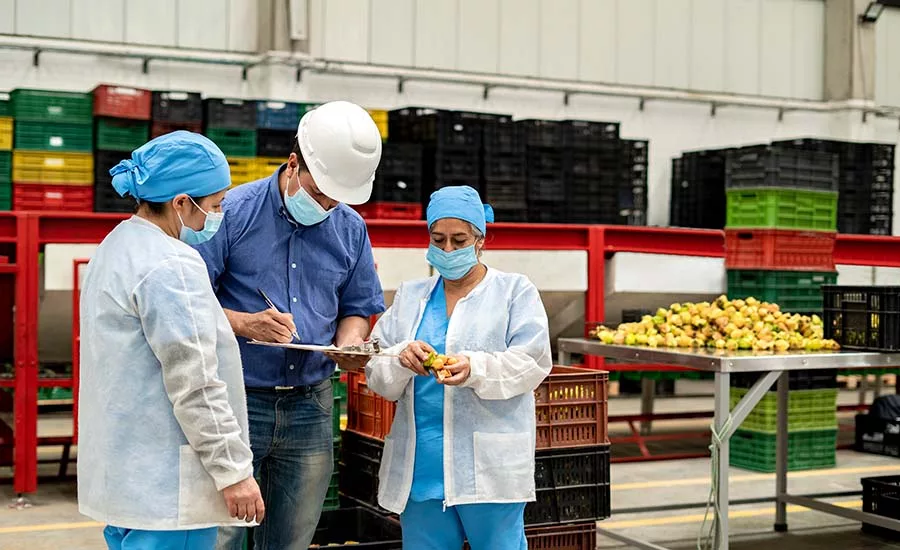
The entrance meeting will include the investigator or inspection team and the plant's management team. The objective of the meeting is to set the stage for the investigation. The first order of business will be to make introductions. The plant should let FDA know who is responsible for managing different elements of the food safety management program.
The investigators will explain what they wish to do and describe documents that they may wish to see. They are allowed to look at procedures and records pertaining to food safety and sanitation, as may be seen in the Preventive Controls for Human Food regulation found in 21 CFR Part 117.1 Investigators cannot ask for consumer complaint records unless they are used as part of the company's preventive controls hazard evaluation. However, if the investigation is taking place in response to an illness, injury, or significant violation, then all records must be made available for review.
Accompanying the Investigator
The plant shall assign one or more persons to accompany the investigator. Plant personnel should clearly state their facility's "no photography" policy, if applicable. They should also define whether any trade secrets may be observed during the investigation and request that these trade secrets not be mentioned in any reports.
Looking for quick answers on food safety topics?
Try Ask FSM, our new smart AI search tool.
Ask FSM →
However, FDA policy now states that investigators can take photographs as evidence of potential violations, according to Section 5 of the 2025 Investigations Operations Manual.2 If the investigators do take photographs, the processor should request that FDA share copies of any pictures that are taken.
Understanding Your Rights and the Law
Prior to being subjected to an inspection or investigation, any facility under FDA jurisdiction must take steps to understand the company's rights when being inspected. As mentioned earlier, if the company is a multishift operation, there should be at least one person on each shift who understands the investigators' expectations and their company's rights. The company must train these employees using FDA's Investigations Operations Manual.
The best protocol is to bring in a consultant or retired FDA investigator to conduct educational programs for these individuals. Why bring in a consultant? The Investigations Operations Manual can be somewhat intimidating in that it is over 800 pages long. Asking employees to tackle this document on their own could cause problems with comprehension and accuracy. The focus should be on those sections of the manual that discuss products or conditions that exist in the processing facility.
Addressing Adverse Findings
During the course of the inspection, the investigator may observe potential food safety and/or sanitation concerns. Some of these will be minor concerns that may be addressed easily and quickly. It is a good idea to initiate corrective actions as soon as possible—preferably during the course of the inspection.
If corrective actions are taken immediately, try to have the investigator revisit the area and show them what was done to address the issue. The concern will not vanish from the final Form 483, but there may be a note appended to the observation that the issue was corrected and what actions were employed.
Collecting Samples
The investigator may decide to collect samples during the visit. The Investigations Operations Manual describes the steps that FDA personnel must following when collecting, shipping, and analyzing samples. There is some debate within the industry as to how processors should address samples collected during investigations. Some feel that the company should establish a sample collection program that mirrors what the investigators collect. Others believe such a program is counterproductive. Why? If the agency sample is positive, then that will trump any results from the company sample. In other words, a negative company sample will mean very little.
Holding an Exit Interview
The inspection may take several days, especially if there are a large number of concerns noted. After the inspection is over, the FDA investigator will hold an exit interview with plant personnel. They will summarize observations but will not provide any guidance on how these issues should be addressed. They may provide information on whether the observations are critical, major, or minor. This meeting will give the company a "heads up" so that corrective actions can be initiated.
Addressing the 483
If there are adverse findings, the investigators will prepare an FDA Form 483 Inspectional Observations report and submit it to the facility. This will take some time, as the investigators will prepare the document back at their offices. Years ago, some investigators would complete the 483 so it could be shared at the exit meeting, but this is no longer the case.
Upon receipt of the 483, the ball is now back in the company's court. The company will need to respond to the document in writing and develop, document, and implement programs that mirror their responses. One way to get into "hot water" with FDA is to say you are going to do something in response to the 483 and not do so.
If there are no issues, then FDA will prepare an inspection report. Any photographs that were taken will accompany the report.
Takeaway
Every processor under FDA jurisdiction must develop, document, implement, and maintain a program on how to handle an FDA inspection. Of course, the best thing to do is run an operation that adheres to all elements described in the Preventive Controls for Human Food regulation: sanitation, pest management, food safety, shipping, receiving, etc.
Every program needs to be documented, and records must be kept showing that the staff has been properly educated on these procedures—including how to react when FDA shows up at the front door.
References
- Code of Federal Regulations. "Part 117: Current Good Manufacturing Practice, Hazard Analysis, and Risk-Based Preventive Controls for Human Food." 21 CFR Part 117. https://www.ecfr.gov/current/title-21/chapter-I/subchapter-B/part-117.
- U.S. Food and Drug Administration (FDA). Investigations Operations Manual 2025. 2025. https://www.fda.gov/media/166525/download?attachment.