


Employee Uniforms: A Frontline Defense Against Food Contamination
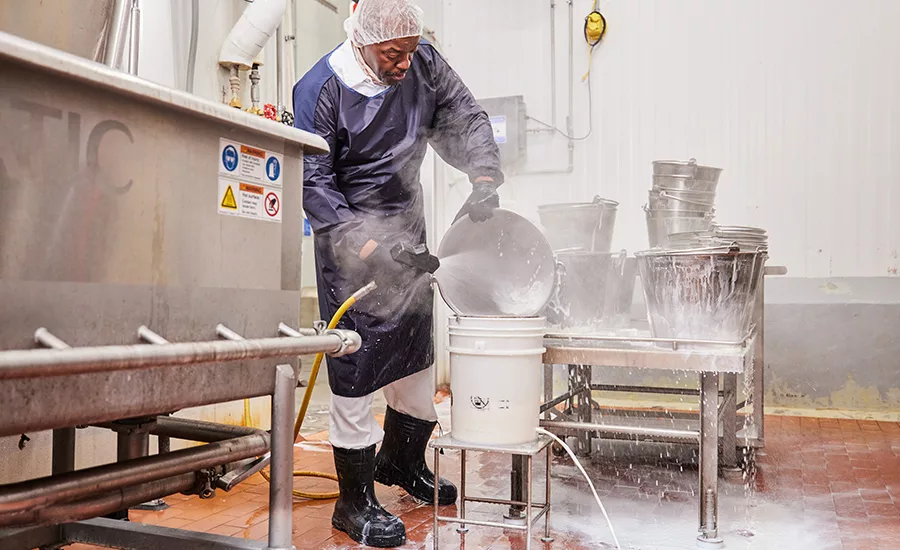
Food processing is a high-stakes environment. One small oversight can carry significant consequences — ranging from costly recalls and regulatory penalties to lasting reputational damage to your business.
Across the industry, leaders rely on Hazard Analysis and Critical Control Points (HACCP) principles and regulatory frameworks to assess, control and mitigate food safety risks. But while many plant managers, quality assurance (QA) leaders and line operators focus heavily on factors such as equipment sanitation, ingredient sourcing, allergen management and more, there is another risk factor that touches every part of the production floor: employee uniforms.
Everything worn by a worker in a food processing facility — such as gloves, hairnets, aprons and smocks — plays a critical role in food safety by acting as a barrier against contamination when managed properly. Neglecting garments and personal protective equipment (PPE) can introduce risks and compromise product integrity. From equipment sanitation and employee hygiene to uniform compliance, accountability is expected throughout the food supply chain.
The Risks are Real: How Small Errors Trigger Big Consequences
The risks associated with improper garment management are quantifiable. In 2024, there were nearly 300 total recalls across products regulated by the U.S. Food and Drug Administration (FDA) and U.S. Department of Agriculture (USDA)1. Approximately 4% were attributed to foreign materials, such as plastic or metal1 – contaminants that can enter the food supply if workwear is improperly designed, damaged or does not meet industry standards. While foreign material recalls are less common than those caused by allergens or pathogens, they still represent a significant risk to product integrity and brand reputation, making uniform management a critical variable in food safety.
Moreover, consumers are paying attention. Public demand for greater transparency from food brands and retailers is rising, with 72% of shoppers citing it as important or extremely important2. Expectations go beyond ingredient labeling, with shoppers increasingly seeking information on sourcing, manufacturing practices and more, reflecting a growing interest in how food is produced.2
This pressure from consumers and regulators underscores a stark reality: food processing leaders are facing unprecedented scrutiny to help ensure safety at every step.
Hygienically Clean Uniforms: A Prerequisite for Risk Mitigation
Uniforms are an integral part of the production environment and a key component of a facility’s food safety program, helping to reduce the risk of cross-contamination and support compliance with food safety standards.
Risks to consider when evaluating your uniform program:
- Cross-Contamination: If uniforms are not properly washed, stored and managed, they may facilitate the movement of harmful pathogens between production zones, such as from raw ingredient areas to packaging spaces.
- Physical Hazards: Buttons and loose threads can fall into food, contaminating the food supply and potentially creating choking hazards, which may trigger recalls. While pockets below the waist are permitted in some facilities, items left in pockets can also contribute to contamination risks.
- Audit Vulnerability: Non-compliant uniforms are frequently flagged during regulatory inspections and third-party food safety audits. These reviews encompass factors such as sanitation and employee hygiene—areas where garment hygiene failures can lead to citations and costly consequences.
What Makes a Uniform Compliant for Food Safety?
Compliance is in the details. Garments designed for food safety help reduce risks in critical food processing zones:
- Pocketless Design: Pockets are notorious for harboring bacteria and holding foreign objects. Best practice dictates eliminating pockets above the waist, and many food processing facilities prohibit them entirely.
- Secure Closures: Buttons pose a contamination risk as they can detach and fall into food. Compliant food safety garments typically feature stainless steel gripper snaps or hook-and-eye closures that are secure and detectable.
- Durable, Shed-Resistant Fabric: Fabrics must withstand rigorous industrial laundering without shedding fibers that could contaminate the product.
- Proper Fit: Well-fitted uniforms prevent excess fabric that could lead to contamination or spills. A proper fit also helps reduce the risk of loose garments getting caught in equipment or machinery, enhancing worker safety and regulatory compliance.
- Verifiable Hygiene: It is not enough for a uniform to look clean; it must be hygienically clean. This requires a wash process verified to remove pathogens, ensuring the garment is safe for use in a food processing environment.
The Value of a Managed Uniform Program
For employers, providing the right uniforms is only part of the solution. It’s equally important to ensure that garments are consistently available and maintained to the highest hygiene standards.
A managed uniform program is a practical and effective approach to ensuring employees have the hygienically clean uniforms they need, when they need them.
Benefits of a Cintas professionally managed uniform program:
- Reliable Inventory Control – Maintains consistent garment availability and reduces shortages through enhanced tracking and scheduled replenishment.
- Supports Operational Efficiency – Ensures timely access to hygienically clean uniforms, helping to minimize workflow disruptions and keeping production on track.
- Reduces Administrative Burden – Outsources many uniform management tasks – such as ordering of garments for new employees, replacement garments and tracking – to the service provider, freeing up staff to focus on core responsibilities.
- Strengthens Audit Readiness and Compliance – Provides hygienically clean certifications and HACCP-based laundering processes, helping to simplify audits and meet stringent food safety standards.
Protecting the Bottom Line
Uniforms are universally recognized as an essential requirement in food processing. By viewing hygienically clean garments and effective inventory management as strategic advantages, food industry leaders can elevate both staff readiness and operational standards, directly supporting stronger food safety and risk management outcomes.
Learn more about hygienically clean uniforms and innovative garment management solutions at cintas.com/foodprocessing.
Sources:
- Food Safety Net Services. “Food Recalls in 2024: Revealing the Statistics.” FSNS, 2024. https://fsns.com/food-recalls-in-2024-revealing-the-statistics/
- Supermarket News. “Survey: Consumers Demand Deeper Transparency from Food Brands, Retailers.” Supermarket News, 2022. https://www.supermarketnews.com/consumer-trends/survey-consumers-demand-deeper-transparency-from-food-brands-retailers
Additional Resources:
Cintas. Managed Uniform Program for Food Processing. https://www.cintas.com/foodprocessing
*Information contained in this article is intended for a North American audience.
Cintas is a Fortune 500 leader in managed uniform programs. Our hygienically clean, third-party, Hohenstein-certified laundering processes and innovative garment dispensing solutions are tailored for food processing environments, supporting HACCP-based food safety programs and helping facilities align with FDA and USDA requirements for clean, suitable protective clothing.


