Plasma-Activated Mist Shows Promise for Biofilm Removal in Food Facilities
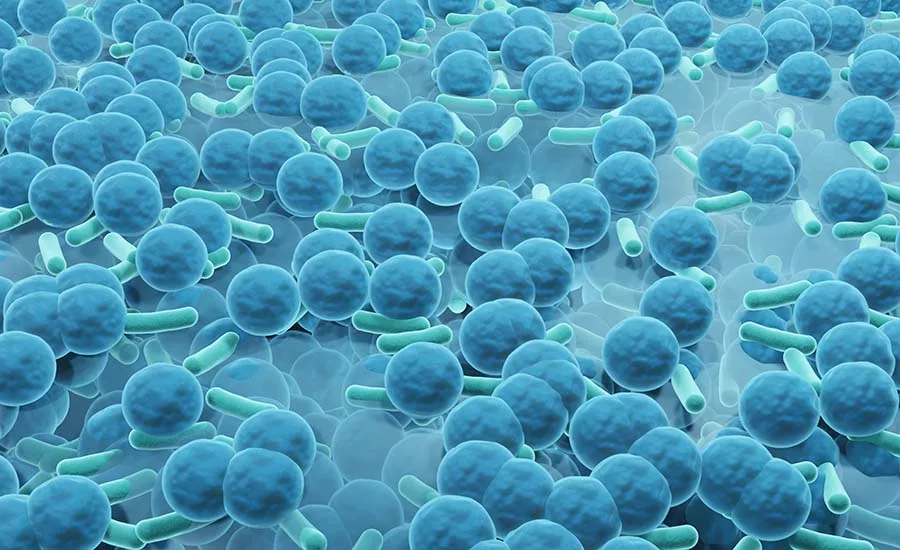
New research from the University of Alberta, published in the Journal of Food Safety, has demonstrated the enhanced antimicrobial efficacy of plasma-activated water and water–chemical solutions against Escherichia coli biofilms, offering a potential solution that is sustainable, safe, and capable of addressing pressing sanitation challenges.
Plasma-Activated Mist as a Sustainable, Safe Alternative to Chemicals
Traditional methods for biofilm removal include the application of chemical disinfectants, some of which can produce carcinogenic or otherwise hazardous byproducts, per the study. Additionally, reliance on these chemicals contributes to the development of antimicrobial resistance and carries high operational costs.
Meanwhile, cold plasma technology is emerging as a promising approach for antimicrobial applications. According to the researchers, plasma-activated mist is more environmentally friendly than chemical treatments and does not leave residues. If adopted by industry, it may also decrease the need for costly chemicals and reduce the expenses associated with post-wastewater treatment processes.
Generating Plasma-Activated Mists
The researchers assembled a system that converted plasma-activated water into mist. Plasma-activated mists both with and without added chemicals—specifically, 100-parts-per-million (ppm) sodium hydroxide and 340-ppm hydrogen peroxide—were applied to dual-species E. coli biofilms on stainless steel coupons.
Two plasma generation times (ten and 20 minutes) were used, and treatment times of five minutes (continuous), ten minutes (continuous), and ten minutes (intermittent).
Additionally, the effect of temperature was assessed by generating plasma at 4 °C, 21 °C, and 35 °C to simulate chilled conditions, room temperature, and warm water, respectively.
Promising Microbial Reductions Achieved
The researchers found the continuous ten-minute application time and the use of plasma-activated mist generated from 4 °C water to be the most effective, achieving a microbial reduction of 1.56 ±0.04 log colony-forming units per square centimeter (CFU/cm2).
Looking for quick answers on food safety topics?
Try Ask FSM, our new smart AI search tool.
Ask FSM →
Biomass contents and microbial counts were further reduced when mists containing sanitizers were applied to biofilms. The plasma-activated water–chemical solutions were generated at room temperature. The greatest reduction of 1.64 ±0.01 log CFU/cm2 was achieved using the plasma-activated 340-ppm hydrogen peroxide mist. On the other hand, the 100-ppm sodium hydroxide solution only achieved a 1.46 log CFU/cm2 reduction.
The microbial reductions in biofilms after positive control treatments without plasma were significantly different, confirming that plasma is the key element in microbial inactivation.
Antimicrobial Mechanisms of Plasma-Activated Mist
Based on their findings, the researchers believe the efficacy of the 4 °C plasma-activated mist may be attributable to:
- A smaller mist particle size, which increased the surface area of application
- A decrease in extracellular polymeric substances (EPS), which form a biofilm’s protective and adhesive matrix, as evidenced by biomass reductions
- The increased amount of reactive oxygen and nitrogen species (RONS), which penetrate EPSs and therefore facilitate microbial inactivation, produced when plasma-activated mists were created at lower temperatures.
Overall, the study suggests that plasma-activated mist is a promising technology for food-contact surface sanitization, requiring the exploration of future scaling needs to evaluate its practical potential.