

The Risks of Ready-to-Eat: Five Ways to Protect Today's Prepared Meals
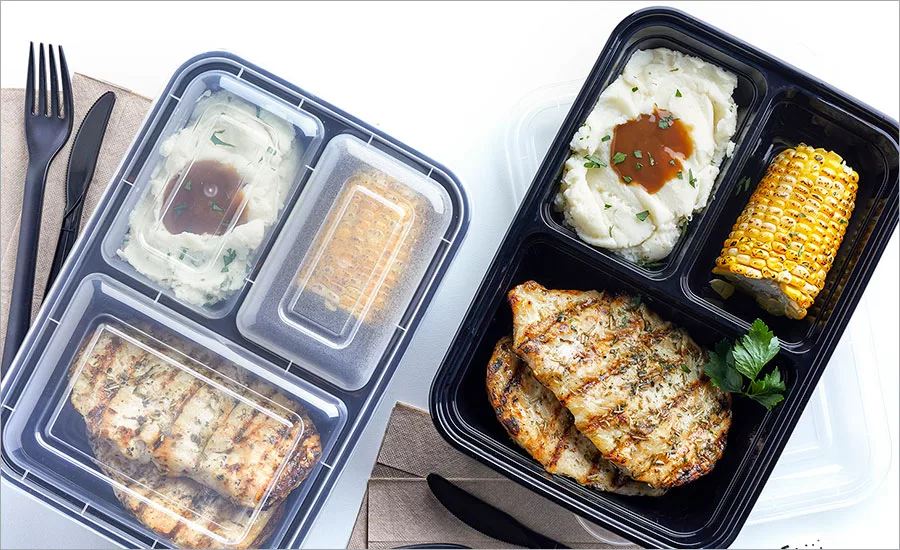
Ready-to-eat (RTE) meals and meal kits continue to move from a convenience option to an everyday staple. From refrigerated soups and deli salads to prepared sides, pasta dishes, and bundled meal solutions, refrigerated and prepared products help consumers save time, ideally without sacrificing variety or quality.
The market momentum is clear. RTE meals grew at a 4 percent compound annual growth rate in dollar value from 2020–2024 and are expected to surpass $100 billion globally by 2027. At the same time, consumers are scrutinizing what these products promise. In a 2025 Innova category survey, 28 percent of consumers said product safety was the most influential claim when purchasing ready meals, while 26 percent pointed to "made with real/natural ingredients" as the most influential claim.1,2
 Image Credit: Corbion
For manufacturers, that creates a complicated challenge: deliver culinary appeal, maintain freshness, support food safety, preserve taste and texture, and do it all with labels consumers can understand. The challenge is especially important for refrigerated RTE foods because of the many complex safety and quality variables unique to each application.
Account for Complexity Across Every Inclusion
Treat every component in the meal as part of the food safety system, not as a standalone ingredient. A single prepared meal may include cooked protein, roasted vegetables, pasta or rice, sauce, garnish, and dressing. Each inclusion brings its own pH, water activity, salt level, microbial history, handling requirements, and sensory expectations. When those components come together, the finished product can behave differently than each ingredient would on its own.
That complexity matters because RTE products may be exposed to the processing environment before packaging and may not receive another treatment that would fully eliminate harmful pathogens. For this reason, FDA guidance for RTE foods focuses on controls that can significantly minimize or prevent contamination with Listeria monocytogenes when products are exposed before packaging and do not receive a later listericidal step or include another effective control measure.3
Build Protection Beyond Refrigeration
Use refrigeration as one hurdle in the safety strategy, not the full strategy. While refrigeration is essential to these products' shelf life, it should not be treated as the only line of defense. Listeria can survive and grow even under refrigeration, which makes chilled prepared foods a persistent concern. Longer refrigerated storage can also give the organism more opportunity to grow if contamination is present.4
Temperature abuse adds another layer of risk. Products may encounter fluctuating temperatures during cooling, distribution, retail handling, delivery, consumer transport, or home storage. In culinary applications with rich sauces, vegetables, proteins, and starches, these conditions can contribute not only to safety concerns but also to spoilage, gas formation, mold growth, off-odors, off-flavors, discoloration, and ultimately, a shortened shelf life.
Validate Shelf Life Under Real-World Conditions
Confirm that the product remains safe and high-quality through its intended shelf life, including likely distribution, storage, and handling conditions. Shelf life decisions for RTE meals require more than a target number of days on the package. The European Commission's updated guidance for RTE foods emphasizes that food business operators should understand the growth behavior of Listeria monocytogenes in their products and demonstrate compliance throughout shelf life. It also points to tools such as physico-chemical characterization, scientific literature, predictive modeling, challenge testing, and durability studies.5
This is increasingly important for companies selling into, or manufacturing for, global markets. Commission Regulation (EU) 2024/2895, applicable from July 1, 2026, updates requirements for RTE foods able to support the growth of Listeria monocytogenes. Food businesses making products that can support growth and do not undergo a process capable of eliminating Listeria must be able to demonstrate compliance through the product's shelf life.6
Choose Safety Strategies that Preserve the Eating Experience
Evaluate preservation systems for both microbial performance and sensory impact. Prepared foods drive repeat purchases through sensory appeal, including flavor, texture, aroma, and appearance. A preservation system that protects safety but compromises a creamy dressing, a tomato-forward sauce, a vegetable side, or a chilled pasta salad can create a different kind of failure.
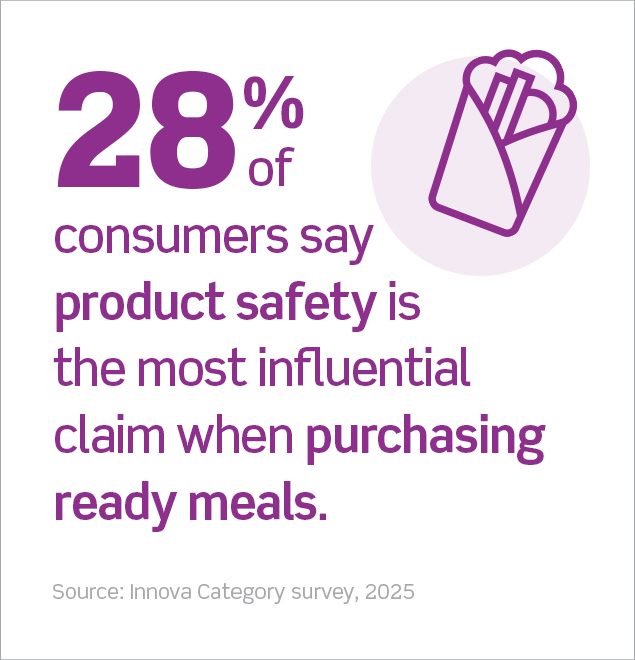 Image Credit: Corbion
That is why manufacturers need application-specific preservation strategies. A low-sodium soup, a protein-rich meal bowl, and an acidic dressing each pose unique challenges and thus require different strategies to help ensure safety. Product developers should evaluate how formulation, processing, packaging, storage conditions, and ingredient interactions affect microbial control and final sensory quality.
Natural, fermentation-based solutions can help address these needs by supporting microbial control while fitting more consumer-friendly labeling goals. Corbion's ingredient solutions for refrigerated foods, for example, include vinegar- and fermentation-based products such as cultured dextrose, cultured sugar, and cultured onion, designed for applications including deli salads, soups, dressings, and prepared foods. These solutions are intended to help manage microbial threats, including yeast and mold, Listeria, Clostridia, and spoilage bacteria while supporting flavor, freshness, and label-friendly goals.
Consider Safety Implications When Adjusting for Label and Wellness Goals
Evaluate formulation changes early when reducing sodium, simplifying labels, or increasing fresh ingredients. Food safety may be a primary purchase driver, but many consumers are also looking for recognizable ingredients, cleaner labels, and "better-for-you" cues. Sodium reduction, natural positioning, and "made with real ingredients" claims can all influence formulation decisions. The challenge is that changes made for wellness or label appeal can also affect preservation performance.
Reducing sodium, removing traditional preservatives, or increasing fresh ingredients can alter a product's microbial environment. Manufacturers should evaluate those changes early, not after sensory approval. A strong development process connects culinary design with food safety validation from the start.
Building Protection Into the Product
RTE meals and meal kits represent one of the most exciting spaces in culinary innovation, but they require proactive safety strategies. The most effective programs consider the entire system: ingredient selection, formulation, pH, water activity, processing, environmental controls, packaging, distribution, shelf-life validation, and consumer use conditions.
For manufacturers, the opportunity is not simply to make RTE meals last longer. It is to create products that remain safe, fresh, and appealing in the realities of modern supply chains, while meeting consumer expectations for recognizable ingredients and better daily eating.
That balance is where food safety and innovation meet.
Sources
- Innova Market Insights. "Ready Meals Market Trends: Global Market Overview." December 8, 2025. https://www.innovamarketinsights.com/trends/global-ready-meals-market-trends/.
- Innova Market Insights. "Innova Category Survey." 2025. https://www.innovamarketinsights.com/.
- U.S. Food and Drug Administration (FDA). Control of Listeria monocytogenes in Ready-To-Eat Foods: Guidance for Industry. January 2017. https://www.fda.gov/regulatory-information/search-fda-guidance-documents/draft-guidance-industry-control-listeria-monocytogenes-ready-eat-foods.
- FDA. Listeria (Listeriosis). Current as of January 16, 2025. https://www.fda.gov/food/foodborne-pathogens/listeria-listeriosis.
- European Commission. Guidance document on Listeria monocytogenes monitoring and shelf-life studies for ready-to-eat foods under Commission Regulation (EC) No. 2073/2005 of 15 November 2005 on microbiological criteria for foodstuffs. Revised December 18, 2025. https://food.ec.europa.eu/system/files/2016-10/biosafety_fh_mc_guidance_document_lysteria.pdf.
- Food Safety Authority of Ireland. Guidance Note 46 Controlling Listeria monocytogenes and Ensuring Food Safety in the Production of Certain Cook/Chilled Ready-to-Heat Meals. March 30, 2026. https://www.fsai.ie/publications/guidance-note-46-controlling-listeria-monocytogene.


