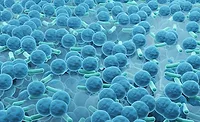
Study Shows Sustainable Enzymatic Pre-Treatment Speeds Salmonella Biofilm Removal in Egg Processing

New research conducted by the U.S. Department of Agriculture’s Agricultural Research Service (USDA-ARS) demonstrates the potential of ficin as an enzymatic pre-treatment to conventional sanitizers in egg processing environments, reducing both the concentration and contact time required to inactivate Salmonella in biofilms on food contact surfaces.
The study, published in Food Control, examined biofilm formation by S. Typhimurium in liquid whole egg (LWE) on stainless steel, silicone, and nylon surfaces, which are commonly found in egg processing lines. The efficacy of conventional sodium hypochlorite and peracetic acid (PAA) sanitizer treatments, as well as a ficin enzymatic pre-treatment, were evaluated.
Rapid Biofilm Development and Surface Attachment
Cells inoculated at 10³ colony forming units per milliliter (CFU/mL) in LWE exhibited significant growth under static conditions at 37 °C. Within 24 hours, microbial counts exceeded 6 log CFU/cm², forming a dense biofilm matrix of protein and fat. After 48 hours, nylon showed the highest cell concentration, followed by silicone, although differences were not statistically significant.
Scanning Electron Microscopy revealed thick biofilms embedding Salmonella cells across all surfaces. Stainless steel harbored cells in surface irregularities (i.e., pores and crevices), representing the food safety risk of inadequate sanitization. On silicone surfaces, which lacked irregularities, Salmonella attachment presented as aggregated clumps.
Performance of Conventional Sanitizers: Chlorine vs. PAA
Conventional sodium hypochlorite at 200 parts per million (ppm) achieved full biofilm removal and cell inactivation on all surfaces within five minutes, with stainless steel showing the fastest reduction after one minute.
PAA at 200 ppm required ten minutes to achieve complete biofilm removal and cell inactivation. After five minutes of PAA at 200 ppm, microbial reductions varied by surface: silicone showed 3.1 log reduction, nylon showed 2.2 log reduction, and stainless steel showed 1.2 log reduction.
Innovative Two-Step Approach: Enzyme Plus Organic Acid
Enzymes are biodegradable and considered “green” chemicals. Although enzymes do not have an antimicrobial effect, they can open, degrade, and loosen biofilm, improving the efficiency of subsequent antimicrobial treatments. Therefore, the use of enzymatic treatment as part of a two-step approach to biofilm removal is being explored by the food industry.
Looking for quick answers on food safety topics?
Try Ask FSM, our new smart AI search tool.
Ask FSM →
The present study tested ficin, a proteolytic enzyme derived from fig latex, at 6.25 units per mL (U/mL), as a pre-treatment before PAA application.
After one hour of ficin exposure, PAA at 90 ppm eliminated viable cells within ten minutes, while 120 ppm achieved complete inactivation in just one minute across all surfaces.
Compared to PAA alone, the ficin enzymatic pre-treatment reduced both contact time and sanitizer concentration needed to achieve biofilm elimination and Salmonella inactivation, offering a sustainable solution.
Implications for the Egg Industry
Overall, the findings suggest that combining enzymatic treatments with organic acids could optimize sanitation protocols, minimize chemical use, and enhance food safety. Further research is needed to assess performance in multi-species biofilms and real-world processing conditions.