Harnessing Cold Plasma Technology for Decontamination of Food and Food Contact Surfaces
Cold plasma is a novel, promising technology that has shown abundant possibilities for disinfection in food processing environments
This article explores a novel technology, cold plasma, and its applications in food processing. Plasma, the fourth state of matter, offers a good alternative to conventional disinfection methods due to the generation of a mixture of reactive species that are effective in the destruction of microorganisms. The basics of plasma are covered, alongside its mode of action for the inactivation of microorganisms on food and food contact surfaces. The article also discusses the current state of cold plasma technology and future challenges to commercializing the technology.
What is Cold Plasma?
Most of our food goes through a long supply chain, starting at the farm and ending on consumers' plates. There are several possibilities for the food to become contaminated with diverse microorganisms along the way, including spoilage bacteria and pathogens, via food contact surfaces. At present, chemical sanitizers such as chlorine and ammonia are commonly used to decontaminate food and food contact surfaces. However, consumers are seeking options for chemical-free solutions that are environmentally friendly. Emerging technologies such as irradiation, pulsed light, power ultrasound, ultraviolet (UV), and high-pressure processing have shown promise for inactivating bacteria in food and/or on food contact surfaces. Cold plasma—or cold atmospheric pressure plasma/non-thermal plasma—is a newer technology that has shown promise for inactivation.
It is useful to understand the nature of plasma before diving into cold plasma technology. We are surrounded by three states of matter: solid, liquid, and gas. When energy is applied to gas, the gas becomes ionized, which creates plasma—the fourth state of matter. Most of our universe (99 percent) is made up of plasma. In nature, examples of plasma include stars, the aurora borealis (northern lights), and lightning. We are also familiar with artificially produced plasma used for neon lights, plasma screens, and plasma arcs for welding. The cold plasma that has applications in food and agriculture is produced at atmospheric pressure and is near room temperature. In the past few years, cold plasma has emerged as a promising food processing technology.
How Does Cold Plasma Work?
Different gases can be used to generate cold plasma. However, air is more commonly used to generate cold plasma in the food and agriculture field. Cold plasma for air contains charged and neutral particles; free electrons; reactive oxygen species [hydroxyl (OH), hydrogen peroxide (H2O2), superoxide (O2−•), hydroxyl radical (•OH), singlet oxygen (1O2), and ozone (O3)]; reactive nitrogen species [nitric oxide (•NO), nitrogen dioxide (•NO2), dinitrogen tetroxide (N2O4), nitrogen trioxide (NO3), nitrous oxide (N2O), and peroxynitrite (ONOO−)]; UV radiation; and sometimes electric field.1 The ions and uncharged molecules are at significantly lower temperatures than the electrons, resulting in the plasma remaining at a low temperature. The novelty of this technology lies in its non-thermal, economical, versatile, and environmentally friendly nature.
The antimicrobial activity of cold plasma against Gram-negative and Gram-positive bacteria, yeast, and fungi, as well as spores and biofilms, has been reported in various studies and is attributed to the presence of the reactive oxygen and nitrogen species such as hydroxyl radicals, hydrogen peroxide, nitric oxide, peroxides, peroxynitrite, singlet oxygen, and superoxide.2
What is Plasma-Activated Water (PAW)?
When plasma is exposed to water directly or indirectly, the reactive oxygen and nitrogen species (RONS) from plasma transfer to water. Various primary and secondary species—including long-lived species such as hydrogen peroxide, nitrate, nitrite, ozone, and short-lived species such as hydroxyl radicals, superoxide, singlet oxygen, nitric oxide, peroxynitrite—are generated. RONS, along with acidic pH, result in inactivation of bacteria, biofilms, fungi, mold, and viruses.3
Compared to direct gas plasma treatment, PAW has an advantage as it can replace traditional liquid sanitizing solutions generally used for decontamination in food processing environments.
Looking for quick answers on food safety topics?
Try Ask FSM, our new smart AI search tool.
Ask FSM →
How is Plasma Generated?
Plasma is generated by applying high energy (electrical, microwave, or intense UV light) to a gas. Plasma sources such as dielectric barrier discharge, corona, gliding arc, or jets are used. The concentration and composition of the reactive species depend on various parameters such as the plasma sources, working gas, type of discharge, treatment distance, exposure time, and other operating and environmental parameters.
Where Can Plasma be Used in the Food Industry?
Being a waterless and residue-free technology, plasma can help save on the amount of water used in sanitation in food processing. Plasma can also have vast applications in a low-moisture environment. Research has shown applications for removing bacteria and biofilms from different food industry surfaces.4,5,6 Some plasma sources come in form of a jet or torch, which can be mounted on a robotic arm to clean surfaces (Figure 1).

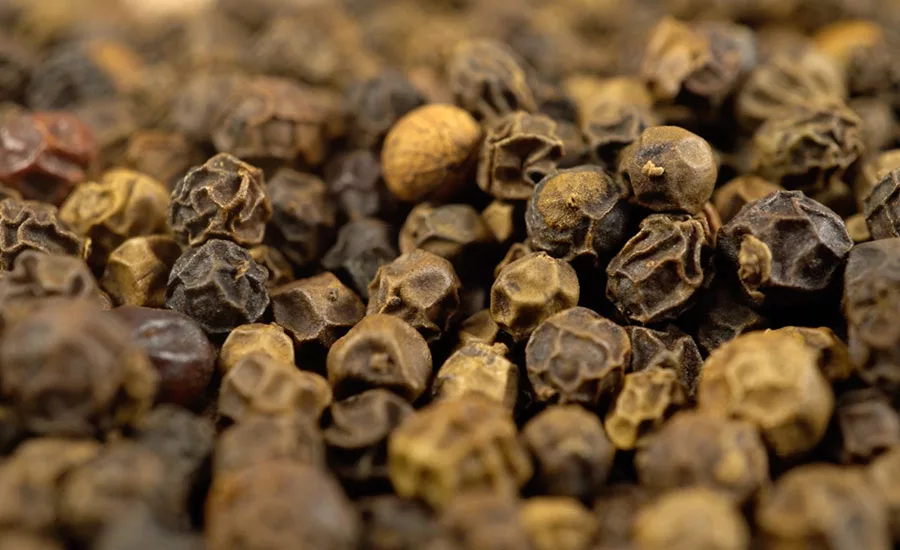
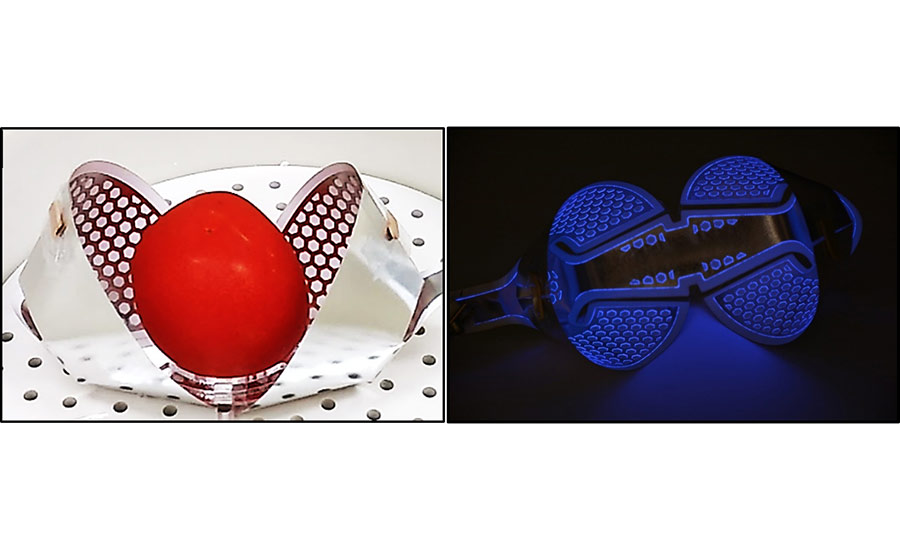
Plasma also has potential for treatment of low-moisture foods like spices and grains (Figure 1). In-package plasma has shown promise for inactivation of pathogens without changing sensory properties, while improving the shelf life of different foods. Recently, the author's team has been working on flexible plasma surface dielectric barrier electrodes that can be folded to form packages (Figure 2) to treat different food samples.7,8
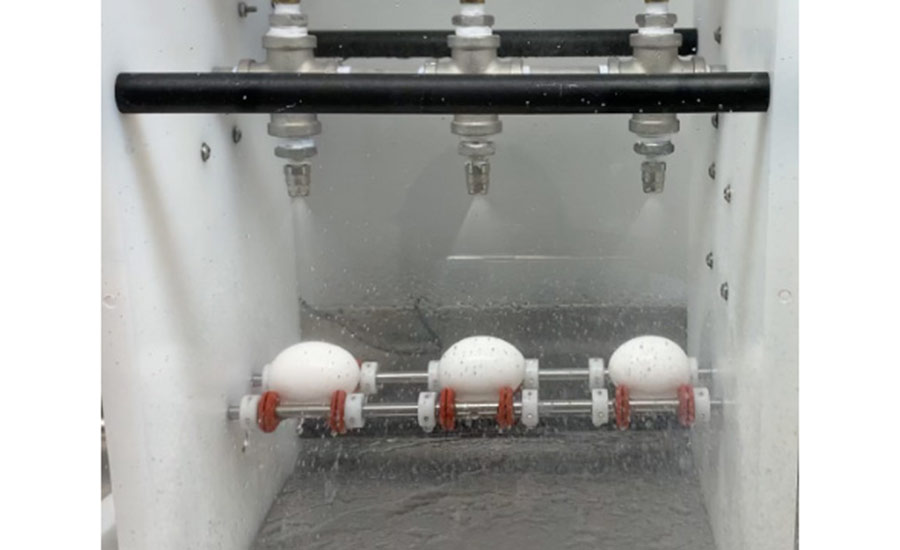
Plasma-treated mist that uses minimal water (or water with H2O2) can be utilized for the sanitation of fresh produce and food contact surfaces. Plasma-activated water can replace traditional sanitizers in food processing for cleaning fresh produce, eggs (Figure 3), and other foods, as well as for cleaning food contact surfaces. Plasma or PAW (or other liquids) can be generated onsite and used immediately to ensure food or food contact surface safety. The only resources needed to make plasma or PAW are air, electricity, and water (in the case of PAW); therefore, these treatments are considered environmentally friendly.
What Are the Challenges of Cold Plasma?
Although plasma has shown promise for the disinfection of food and food contact surfaces, and researchers continue to identify applications in the food industry, there are a few areas that need attention. For example, there is a need to scale up equipment for cold plasma and PAW generation to meet commercial food processing volumes. There is growing interest in scale-up from plasma companies, as well as researchers.
Secondly, there is a need to define dosimetry of plasma, since plasma chemistry changes depending on the method of generation and other factors. Validation and process control of plasma is challenging due to the complexity of plasma and PAW chemistry, equipment, and process parameters. Further research is crucial to understand the interactions of food constituents and plasma and to determine chemical residue from plasma and the potential toxicological effects of plasma.
Lastly, other important aspects such as consumer acceptance, energy efficiency, cost-effectiveness, etc., need to be considered.
Summary
Overall, plasma is a novel, promising technology that has shown abundant possibilities in food processing environments; however, more efforts are needed to commercialize the technology and obtain regulatory approval.
References
- Misra, N.N., B.K. Tiwari, K.S.M.S. Raghavarao, and P.J. Cullen. "Nonthermal plasma inactivation of food-borne pathogens." Food Engineering Reviews 3 (2011): 159–170.
- Bourke, P., D. Ziuzina, L. Han, P.J. Cullen, and B.F. Gilmore. "Microbiological interactions with cold plasma." Journal of Applied Microbiology 123, no. 2 (2017): 308–324.
- Wang, Q. and D. Salvi. "Recent progress in the application of plasma-activated water (PAW) for food decontamination." Current Opinion in Food Science 42 (2021): 51–60.
- Wang, Q., N. Lavoine, and D. Salvi. "Cold atmospheric pressure plasma for the sanitation of conveyor belt materials: Decontamination efficacy against adherent bacteria and biofilms of Escherichia coli and effect on surface properties." Innovative Food Science and Emerging Technologies 84 (2023): 103260.
- Zhu, Y., C. Li, H. Cui, and L. Lin. "Feasibility of cold plasma for the control of biofilms in food industry." Trends in Food Science and Technology 99 (2020): 142–151.
- Niemira, B.A., G. Boyd, and J. Sites. "Cold plasma inactivation of Escherichia coli O157: H7 biofilms." Frontiers in Sustainable Food Systems 2 (2018): 47.
- Wang, Q., R.K. Pal, H.W. Yen, S.P. Naik, M.K. Orzeszko, A. Mazzeo, and D. Salvi. "Flexible and Conformable Cold Plasma-generating Packages: Evaluation of Microbial Inactivation and Quality Changes of Fresh Produce." Food Control 137 (2022): 108915.
- Trosan, D., P. Walther, S. McLaughlin, D. Salvi, A. Mazzeo, and K. Stapelmann. "Analysis of the Effects of Complex Electrode Geometries on the Energy Deposition and Electric Field Measurements of Surface Dielectric Barrier Discharges." Plasma Processes and Polymer (2023): e2300133.
Deepti Salvi, Ph.D. is an Associate Professor of Food Engineering at North Carolina State University in Raleigh, North Carolina. Her areas of expertise include food processing technologies and techniques to ensure food safety and quality, the role of physical properties of food to control excessive caloric intake and enhance nutrient absorption in the human gastrointestinal tract, and numerical modeling of transport phenomena in biological and food engineering. She holds a Ph.D. in Biological and Agricultural Engineering from Louisiana State University, and is a member of the Institute of Food Technologists (IFT) and the International Association for Food Protection (IAFP).