

Beyond Detection: How to Avoid Physical Contamination in Food Through a Smarter Inspection Strategy

Food manufacturers operate in an environment where safety, quality, efficiency, and compliance are more interconnected than ever before. Regulatory expectations continue to evolve, retailers are demanding stronger supplier controls, and consumers have little tolerance for product quality issues. In this landscape, a single incident involving foreign body contamination can trigger consequences that extend far beyond the immediate cost of a product recall.
Production interruptions, retailer penalties, regulatory investigations, wasted product, and reputational damage can all result from a contamination incident. In some cases, the long-term impact on consumer trust can be even more significant than the direct financial losses.
As a result, physical contamination detection has evolved from just a quality control function into a critical business strategy. Today, leading manufacturers recognize that effective foreign body contamination detection is not only about helping to prevent unsafe products from reaching consumers. It is about protecting brands, profits, and productivity while creating more resilient and efficient manufacturing operations.
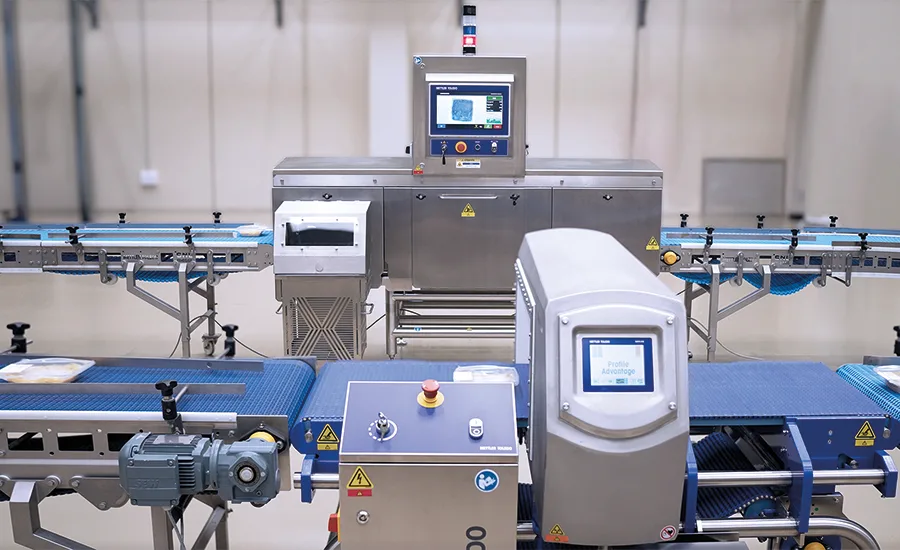
Through proven physical contamination detection solutions, manufacturers can inspect products for foreign materials, and automatically remove non-conforming products from production; protect their productivity, profits and brands; and comply more easily with industry requirements. Technologies such as metal detection and X-ray inspection now play a central role in helping food businesses achieve these objectives.
 Image Credit: Mettler Toledo
Rather than relying solely on end-of-line inspection, forward-thinking manufacturers are implementing risk-based contamination control programs built upon Hazard Analysis and Critical Control Points (HACCP) principles, strategically positioned Critical Control Points (CCPs), validated inspection systems, and complementary technologies that strengthen foreign material detection throughout production.
Why Foreign Material Detection Has Become a Business Imperative
Historically, contamination detection was viewed primarily as a food safety requirement. While protecting consumers remains the most important objective, modern manufacturers increasingly recognize the broader business value of robust foreign body contamination detection solutions.
Every contaminated product prevented from entering the marketplace represents more than a food safety success. It can prevent costly recalls, reduce waste, avoid regulatory action, minimize downtime, and preserve relationships with customers and retailers.
This shift in perspective is transforming how manufacturers invest in physical contamination control technologies. Instead of viewing inspection systems solely as safety and compliance tools, they are increasingly being recognized as assets that contribute directly to operational performance and profitability.
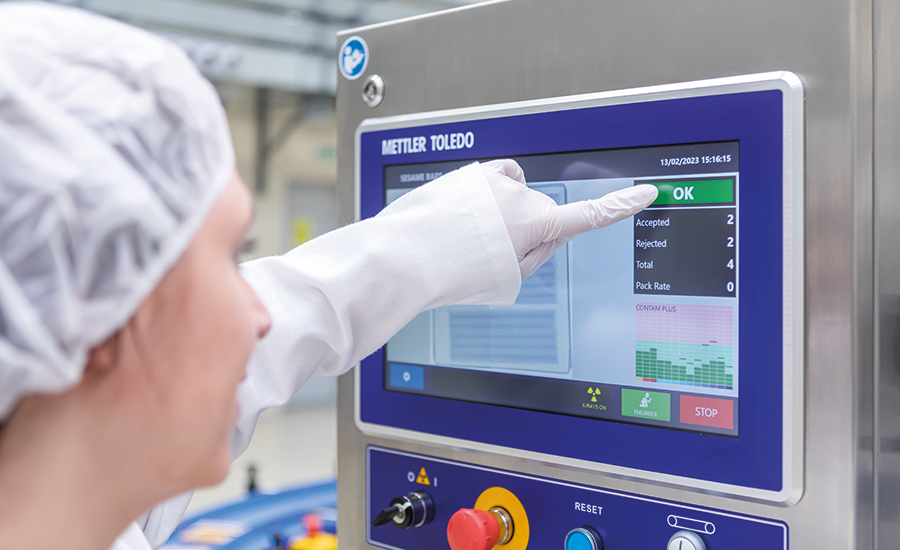 Image Credit: Mettler Toledo
When advanced metal detection and X-ray inspection systems automatically identify and reject contaminated products, manufacturers gain multiple benefits simultaneously. They improve consumer protection, reduce manual intervention, maintain production flow, and help ensure only compliant products continue through the manufacturing process.
In this way, physical contamination detection becomes a strategic mechanism for helping to protect product quality, operational efficiency, brand reputation, and financial performance.
Understanding How Foreign Body Contamination Occurs
To understand how to avoid physical contamination in food, manufacturers must first understand where contamination originates and how risks develop throughout production.
Foreign materials can enter the food supply chain at virtually any stage. During harvesting and collection, raw ingredients may become contaminated with stones, bones, metal fragments, or other debris. Transportation and storage operations may introduce additional risks, while processing equipment, packaging materials, and human activities can all become sources of foreign body contamination within the manufacturing environment.
Complicating matters further, contaminants often change as products move through production. A foreign contaminant that enters as a large fragment may be broken into smaller particles during the grinding, chopping, mixing, or cooking processes. This transformation can make foreign particle detection increasingly challenging later in production.
As a result, contamination prevention requires more than simply installing inspection equipment at the end of a production line. Manufacturers must conduct comprehensive risk assessments to identify contamination sources, evaluate how risks evolve throughout processing, and determine where inspection technologies will be most effective.
This risk-based approach is fundamental to developing an effective contamination control strategy and remains one of the most important answers to the question: How do you avoid physical contamination in food?
The Importance of Critical Control Points for Foreign Particle Detection
One of the most effective ways to strengthen foreign body contamination detection is through the strategic placement of inspection technologies at critical stages of production.
For many years, contamination inspection was concentrated at the end of the manufacturing process. While final product inspection remains essential, manufacturers increasingly recognize the advantages of implementing foreign material detection earlier in production.
Detecting contamination upstream provides several important benefits. Contaminated ingredients can be identified before additional value is added, reducing waste and preventing unnecessary processing costs. Equipment can be protected from damage caused by foreign objects. Production disruptions can be minimized, and food safety risks can be addressed closer to their source.
For example, inspecting incoming ingredients such as flour, grains, frozen vegetables, nuts, or dried fruits can prevent contaminants from entering key production processes altogether. This not only strengthens food safety outcomes but also improves productivity and operational efficiency.
By positioning inspection systems at carefully selected CCPs, manufacturers create multiple opportunities to identify and remove contaminated products before they affect downstream operations. The result is a more robust and proactive contamination control strategy that supports both food safety and business objectives.
Metal Detection: A Proven Technology for Foreign Material Detection
Metal detectors remain one of the most widely used technologies for metal contaminant detection in the food industry, and for good reason.
Designed specifically to identify metallic contaminants, advanced metal detection systems can detect ferrous and non-ferrous metals, as well as non-magnetic stainless-steel across a broad range of food products.
The technology operates by generating an electromagnetic field and identifying disturbances caused by metal contamination. When metal is detected, the system automatically rejects the affected product from the process stream, preventing it from progressing further through production or reaching consumers.
Today’s metal detection solutions support a wide variety of applications, including conveyorized packaged and unpackaged products, and pumped liquids, pastes, and slurries. They also support vertical production processes, such as gravity fall metal detection systems for powders and grains, and throat metal detectors installed mid-line during the processing and packaging stage—specifically within a Vertical Form, Fill, and Seal (VFFS) packaging system.
One of the major benefits of an advanced metal detection system is its ability to identify the smallest metal contaminants with exceptional sensitivity. Intelligent systems using Multi-Simultaneous Frequency technology and signal processing algorithms help manufacturers achieve reliable detection performance while minimizing false rejects.
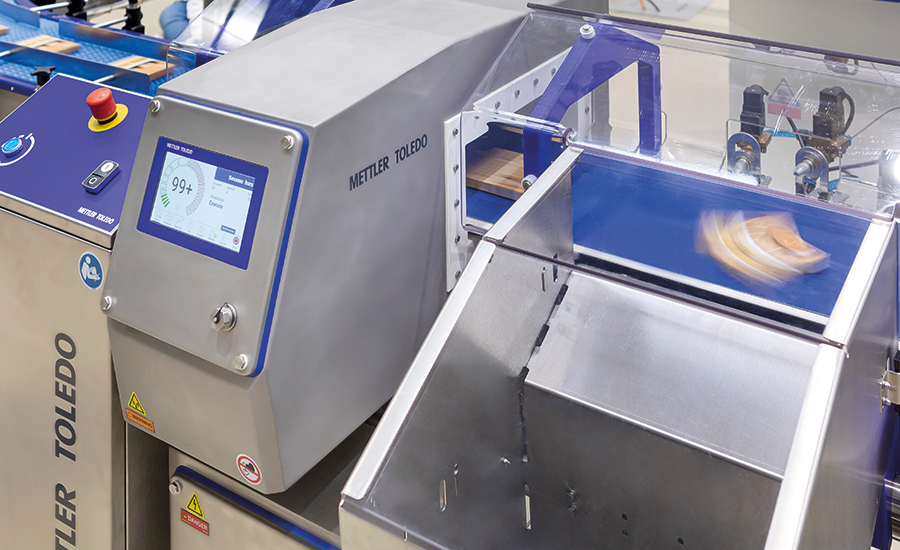 Image Credit: Mettler Toledo
Importantly, metal detectors deliver value beyond contamination identification alone. By automatically rejecting contaminated products, manufacturers can avoid equipment damage, reduce downtime, minimize product waste, and maintain consistent production output.
However, while metal detection provides outstanding performance for metal contaminants, it is not designed to identify non-metal foreign bodies such as glass, stone, dense plastics, rubber, or calcified bone. That is where X-ray inspection becomes increasingly valuable.
X-Ray Inspection: Expands Foreign Body Contamination Detection Capabilities
As food safety expectations continue to rise, X-ray inspection is increasingly valuable for manufacturers that need broader foreign body detection, alongside quality checks.
This combined capability helps manufacturers streamline inspection, improve productivity, and increase overall quality control.
Most X-ray systems are based on density differences, but the latest photon-counting technology uses material discrimination algorithms to identify foreign bodies, offering enhanced detection capabilities in challenging applications. X-ray technology can be used to identify a wide range of physical contaminants including metal, glass, stone, calcified bone, dense plastics and rubber. This makes X-ray especially useful where manufacturers need a more comprehensive inspection solution.
In addition to foreign body detection, X-ray systems can perform quality control checks such as fill-level inspection, missing component detection, product integrity verification, product trapped within seal inspection, and mass measurement within the same inspection process.
The ability to perform multiple quality and safety checks simultaneously makes X-ray inspection a powerful business tool, helping manufacturers protect consumers while improving productivity and reducing operational costs.
Why Metal Detection and X-Ray Inspection Work Better Together
A common misconception is that manufacturers must choose between metal detection and X-ray inspection. In reality, many of the most effective contamination control programs utilize both technologies as part of a layered protection strategy.
Each technology offers unique strengths, and when deployed strategically, they can complement one another exceptionally well.
For example, a manufacturer may implement metal detection at ingredient intake to identify metallic foreign materials before processing begins. Later in production, an X-ray inspection system can perform broader foreign body contamination detection while simultaneously conducting quality control inspections.
This multi-layered approach creates multiple opportunities to identify physical contamination and reject non-conforming products before they leave the facility.
For manufacturers seeking practical answers on how to avoid physical contamination in food, this integrated strategy provides one of the most effective solutions. By combining risk assessment, carefully selected CCPs, metal detection, and X-ray inspection, manufacturers can create comprehensive contamination control programs capable of addressing a wide range of hazards.
Working with an experienced product inspection partner that offers both metal detection and X-ray inspection systems can guide manufacturers in making an informed decision to find the most suitable solution for each application, line stage, and contamination risk.
Combination Systems
Combination systems can also be used for physical contamination detection and quality assurance in manufacturing. These sophisticated machines can seamlessly integrate the capabilities of both checkweighing and metal detection or X-ray inspection into a single unit, offering versatility and efficiency within a smaller footprint to maximize production space. By harnessing the strengths of each technology, combination systems provide comprehensive food safety quality assurance. For example, completing precision weighing checks in fast production line speeds while detecting physical contaminants.
Simplifying Compliance Through Intelligent Inspection Technology
Compliance remains a fundamental requirement for every food manufacturer. Global Food Safety Initiatives (GFSI)-recognized standards such as BRCGS, FSSC 22000, and IFS require organizations to demonstrate that contamination detection systems are properly validated, verified, monitored, documented, and maintained.
However, compliance is no longer simply about installing inspection equipment.
Manufacturers must provide evidence that systems are functioning effectively under real production conditions and that testing, monitoring, and verification procedures are consistently performed.
Modern inspection technologies and data management software, such as ProdXTM from Mettler Toledo, support these requirements through features such as automated testing routines, electronic recordkeeping, audit-ready reporting, user access controls, event logging, and real-time performance monitoring.
These capabilities simplify compliance while reducing the administrative burden placed on quality teams and food manufacturers.
By integrating contamination detection with automated documentation and traceability tools, manufacturers can maintain confidence in their inspection programs while ensuring they remain prepared for audits and regulatory reviews. Therefore, manufacturers not only improve foreign body contamination detection performance but also comply more easily with industry requirements and strengthen their overall food safety management programs.
The Future of Foreign Body Detection
The future of food manufacturing will require physical contamination control strategies that do more than identify hazards. Inspection systems must support broader business objectives including productivity, sustainability, waste reduction, quality assurance, and compliance.
Metal detection and X-ray inspection are increasingly becoming foundational technologies within this evolution.
Together, these solutions enable manufacturers to inspect products for foreign materials, automatically reject non-conforming products, protect productivity, profits and brands, and maintain compliance with increasingly demanding industry requirements.
The most successful manufacturers will be those that move beyond a reactive "detect and reject" mindset and embrace a proactive, risk-based approach to contamination prevention.
For organizations seeking to understand how to avoid physical contamination in food, the answer lies in combining robust HACCP programs, strategically positioned CCPs, validated inspection technologies, and a layered approach that leverages both metal detection and X-ray inspection.
When these elements work together, manufacturers gain far more than contamination detection. They gain a competitive advantage built on safety, efficiency, compliance, and consumer trust.
For more information, click here.


