Proactive Prevention of Food Contaminants: A Review of FDA Guidance and Expectations

Need to Know
- FDA can take enforcement action against food contaminants even without established action levels, tolerances, or specific guidance
- FDA recommends that facilities review a range of FDA resources and international resources periodically for information about current and emerging chemical contaminants
- Recent contamination incidents involving lead in cinnamon and radioactive contaminants in imported foods demonstrate FDA's broad enforcement authority
- Expanding testing capabilities and emerging contaminants are increasing legal, regulatory, and supply chain risks for the food industry
- Food companies should strengthen hazard analyses, monitor emerging threats, and implement risk-based supplier controls and testing programs
Food contamination allegations have immediate, impactful business consequences long before the scientific or legal merits are resolved. They capture attention within and outside of the company and demand significant resources for investigation or resolution. Import detentions, refusals, or placement on an import alert due to the detection of an unexpected contaminant often proves costly and disruptive. Even if the allegations are proven false, newly filed litigation complaints alleging food contamination attract far more media attention than the dismissal of the case or a win in court many months to years later. Furthermore, a call from the U.S. Food and Drug Administration (FDA) regarding the detection of a contaminant can trigger a costly investigation and potential recall. In these and many other situations, products may be stranded or in limbo, customer trust lost, and significant resources diverted from other business priorities.
To effectively manage and mitigate legal and regulatory risks associated with food contaminants, food manufacturers, retailers, and distributors must ensure that they are proactive and are equipped with best practices to identify, monitor, and mitigate new hazards as they arise. While there is no substitute for timely counsel when an issue arises, it is useful to have a firm understanding of the fundamental laws and regulations governing food contaminants when proactively strengthening existing practices and procedures. In addition, FDA recommends that facilities periodically review a range of FDA resources and international resources for information about current and emerging contaminants.i
FDA is grappling with how best to address a broad and growing range of food contaminants, working to establish published action levels for heavy metals in foods for infants and very young children as part of its Closer to Zero initiative, and to finalize recently issued draft guidance1 on the control of chemical hazards.ii While FDA continues this and other work, three things are clear:
- The range of potential food contaminants continues to expand
- Potential legal risk and liability for food contaminants increase as testing capabilities expand and testing costs decrease
- FDA does not need finalized guidance, or even a published action level, to take enforcement action if there is an unsafe level of a food contaminant.
FDA's Framework to Address Food Contaminants
In early 2025, FDA announced its Chemical Contaminants Transparency Tool (CCT Tool), which provides one location for industry to search for chemical contaminants and associated levels. Chemical contaminants, despite receiving renewed attention in recent years, remain only one of the types of hazards that a facility must consider in its preventive controls program. Even if a potential contaminant is not included in the CCT Tool or other FDA information for industry, it is important to keep in mind that the Federal Food, Drug, and Cosmetic Act (FD&C Act) gives FDA broad latitude to address food contaminants.
General Adulteration
Section 402(a)(1) of the FD&C Act is the baseline prohibition deeming a food to be adulterated if it bears or contains any poisonous or deleterious substance which may render it injurious to health.iii The standard does not require FDA to have proof of actual injury. Instead, Section 402(a)(1) is a precautionary standard based on the potential for harm. Section 402(a)(4) addresses insanitary conditions, stating that a food is adulterated if it is prepared, packed, or held under insanitary conditions in which it may have become contaminated with filth or rendered injurious to health.iv
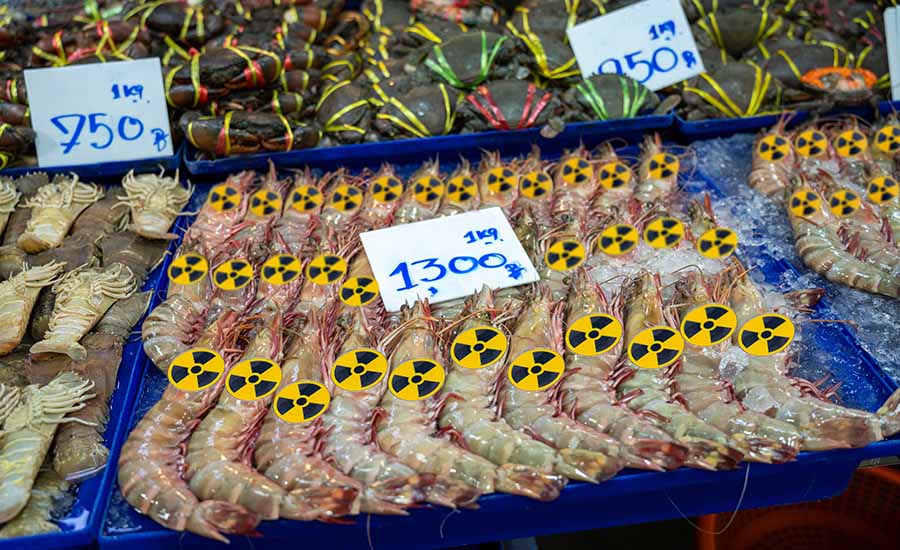
To understand the breadth of the potential applications of Section 402(a), we need to look no further in history than 2025, when the highly publicized radioactive contamination of shrimp prompted an FDA import alert citing insanitary conditions.v
Economically Motivated Adulteration
Section 402(b) of the FD&C Act prohibits economically motivated adulteration.vi Under Section 402(b) of the FD&C Act, a food is adulterated if any "valuable constituent" has been omitted or substituted, or if any damage or inferiority has been concealed.vii Section 402(b) also considers a food adulterated if any substance has been added to it to increase its bulk or weight, reduce its quality or strength, or make it appear better or of greater value than it is.viii Common examples include adding syrup to honey or diluting a juice with a more commonly available or cheaper juice.
Looking for quick answers on food safety topics?
Try Ask FSM, our new smart AI search tool.
Ask FSM →
Unavoidable Contaminants
Contaminants (e.g., heavy metals) are often unavoidable if they are present in a crop's growing environment or accumulate as a byproduct during processing (e.g., acrylamide). Under these circumstances, Section 406 of the FD&C Act authorizes FDA to promulgate regulations limiting the amount of any contaminant that cannot be prevented with good manufacturing practices (GMPs), providing the statutory basis for FDA's system of tolerances and action levels.ix To implement Section 406, FDA promulgated the regulations in 21 CFR Part 109. Under 21 CFR 109.4, FDA may establish tolerances, regulatory limits, or action levels for added poisonous or deleterious substances above which a food would be considered adulterated.
Recently, FDA has focused on establishing action levels, such as through its Closer to Zero initiative (Figure 1).x Action levels are non-binding thresholds for unavoidable contaminants that cannot be entirely eliminated through GMPs.xi FDA may consider foods exceeding an applicable action level for an unavoidable contaminant to be adulterated under Section 402(a)(1) of the FD&C Act.xii However, it is critical to note that an action level represents the ceiling for an unavoidable contaminant, not a safe harbor for avoidable levels of an unavoidable contaminant.xiii FDA fully expects industry to minimize, to the fullest extent possible, contaminants for which there is a published action level.

Pesticide Residues
Section 402(a)(2)(B) addresses pesticide chemical residues, indicating that a food is adulterated if it bears or contains a pesticide residue that is unsafe within the meaning of Section 408.xiv Section 408 (21 U.S.C. § 346a) of the FD&C Act states that food with a pesticide chemical residue is adulterated, unless there is a tolerance established for the pesticide chemical residue and the amount of pesticide chemical residue on the food is less than the tolerance or an exemption applies.xv
FDA and the U.S. Environmental Protection Agency (EPA) work in tandem to regulate pesticide residues.xvi EPA establishes the tolerances, and FDA uses them to enforce Section 408.xvii It is important to keep in mind that FDA cannot set aside EPA's tolerances. Additionally, if EPA has not established a tolerance for a particular pesticide on or in a specific commodity in the U.S., then any detection of such residue may render the food adulterated, even if the pesticide's use was lawful where the commodity was grown.
FSMA Hazard Analysis and Preventive Controls
Section 418 [21 U.S.C. § 350(g)], which was added 15 years ago by the Food Safety Modernization Act (FSMA), requires facilities to evaluate hazards that could affect food manufactured, processed, packed, or held by the facility and to identify and implement preventive controls to significantly minimize or prevent the occurrence of such hazards.xviii The statute explicitly lists biological, chemical, physical, and radiological hazards for evaluation, as well as hazards from natural toxins, pesticides, drug residues, decomposition, parasites, allergens, and unapproved food and color additives—as do the implementing regulations.xix
In addition, FDA has now released its long-awaited draft guidance1 on the control of chemical hazards. In the draft guidance, FDA provides significant details regarding chemical contaminants and the broad range of chemical hazards that the FDA considers known or reasonably foreseeable and therefore would view as requiring preventive controls. Therefore, robust preventive controls must address the full range of potential hazards and contaminants that may impact a finished food product or its ingredients.
FDA's Response to Recent, High-Profile Food Contamination Events
Recent, highly publicized food contamination events demonstrate how the FDA can use its multiple statutory hooks to address food contaminants.
Economic Adulteration—Lead in Cinnamon
A cautionary tale highlighting the importance of hazard analysis and preventive controls occurred in 2023 when FDA issued a safety alert after finding elevated lead levels in WanaBana Apple Cinnamon Fruit Puree pouches for toddlers and young children.xx Lead levels in the cinnamon in the products were 5,110 parts per million, or more than 2,000 times the Codex Alimentarius Commission's proposed maximum level for bark spices.xxi
FDA's leading hypothesis was that lead chromate was deliberately added to the cinnamon ingredient for economic gain to make the cinnamon heavier and give it a better color.xxii The U.S. Centers for Disease Control and Prevention (CDC) ultimately identified 566 cases of lead poisoning across 44 states.xxiii FDA issued warning letters to three importers for Foreign Supplier Verification Program (FSVP) violations and multiple import alerts citing adulteration due to heavy metal contamination and economic gain.xxiv FDA also issued warning letters to retailers like Dollar Tree and Family Dollar for not properly removing the recalled products from their store shelves.xxv
Radioactive Contaminants—Shrimp and Cloves
In August 2025, the U.S. Customs and Border Protection (CBP) detected cesium-137 (Cs-137) radiation contamination in samples of imported frozen shrimp from Indonesia.xxvi FDA confirmed the presence of Cs-137 in breaded shrimp imports at a level of approximately 68 becquerels per kilogram (Bq/kg).xxvii Although this was below FDA's intervention level of 1,200 Bq/kg, FDA determined that the level could present a health concern with long-term exposure.xxviii Screening also revealed Cs-137 contamination in cloves imported from Indonesia.xxix
Effective October 2025, following several recalls and an import alert, FDA began requiring import certification for shrimp and spices from Indonesia, which marked the first use of this Congressional authority under FSMA in response to ongoing food safety hazards.xxx Under this two-tier system, firms with confirmed contamination appear on the import alert red list, meaning they are immediately detained at the border and must obtain third-party certification, while all other firms in the affected region must have their shipments certified by the Indonesian government prior to entry into the U.S.xxxi
What food manufacturers, retailers, and distributors must remember here is that FDA has multiple statutory hooks, and it chooses the one best suited to the facts in each scenario. The WanaBana cinnamon lead poisoning incident triggered enforcement under two sections of the FD&C Act: Section 402(a)(1) for the lead contamination itself and Section 402(b) via Import Alert 99-47 for economic adulteration.xxxii The cesium-137 shrimp contamination event triggered Section 402(a)(4) of the FD&C Act for insanitary conditions (Figure 2).xxxiii FDA has significant flexibility in using the statutory provisions most suitable depending upon the circumstances.
Building and Strengthening an Early Warning System for Food Contaminants
As these recent examples demonstrate, the FD&C Act requires the food industry to identify, prevent, and mitigate potential food contaminants. The list of potential food contaminants is notably long and includes many more than this brief article can address, including mycotoxins, processing-induced contaminants, the emerging potential threats associated with plastics and related chemicals, and more.
As a practical matter, the absence of a published action level, tolerance, or specific guidance for a particular food contaminant does not alleviate legal and regulatory risks for the food industry. Instead, the lack of a published action level, tolerance, or specific guidance increases risk and uncertainty. Food manufacturers, retailers, and distributors must therefore continually reevaluate their methods for identifying, monitoring, and mitigating potential hazards.
Monitor Trends and Identify Emerging Threats
Food industry stakeholders should build an early warning system that takes monitoring trends and emerging threats into account. Monitoring new and emerging food contamination threats requires routinely scanning the horizon for what is happening in other parts of the world and probing to determine which substances FDA and international regulators are monitoring but have yet to regulate.
This could include, for example, surveilling new and updated FDA import alerts, Codex developments, and scientific literature. FDA's recently launched Chemical Contaminants Transparency Tool includes all substances with levels established by FDA, along with a hyperlinked regulatory reference. FDA's Total Diet Study results and pesticide monitoring reports are also useful resources to stay informed on which contaminants are being detected in different foods.
Quantify the Risk
If a food is contaminated with pathogenic bacteria, such as Listeria monocytogenes or Salmonella, quantifying the bacteria will not ordinarily be part of what must happen next to ensure that the food is not introduced into commerce or is recalled. The same logic does not hold true, though, when it comes to a broad range of other food contaminants, such as heavy metals, pesticide residues, and even certain toxins.
Detection of a contaminant does not necessarily mean that food is unsafe. Instead, consider:
- At what level was the contaminant detected?
- In what food was it detected?
- Who consumed it and how often?
Review and Update Hazard Analysis
As a starting point, facilities that process, pack, or hold food should periodically reassess their hazard analysis to ensure that they continue to accurately "identify and evaluate, based on experience, illness data, scientific reports, and other information, known or reasonably foreseeable hazards for each type of food manufactured, processed, packed, or held at [the] facility to determine whether there are any hazards requiring a preventive control," per 21 CFR 117.130(a)(1).xxxiv
The written hazard identification must include known or reasonably foreseeable hazards:xxxv
- Biological hazards, including microbiological hazards (e.g., parasites, environmental pathogens, and other pathogens)
- Chemical hazards (e.g., radiological hazards, pesticide and drug residues, natural toxins, decomposition, unapproved food or color additives, and food allergens)
- Physical hazards (e.g., stones, glass, and metal fragments)
- Naturally occurring hazards
- Hazards that may be unintentionally introduced
- Potential hazards related to economically motivated adulteration.
Expand Supply Chain Monitoring and Controls
Additionally, food processors and their customers, such as retailers and private-label brand owners, should consider increased testing of incoming raw materials and ingredients. The testing should be targeted by contaminant, commodity, and supplier risk profile to further strengthen defenses against food contaminants. For high-risk contaminants, in-house testing or independent third-party testing of each incoming lot of the raw material or ingredient may be warranted.
Bottom Line: Be Proactive
In this evolving regulatory landscape where laboratory testing for contaminants is now widely available, the absence of a published action level does not signal a lack of regulatory enforcement or litigation risk. Companies must therefore move beyond a reactive compliance mindset and instead adopt proactive, science-driven systems for identifying, monitoring, and mitigating both known and emerging food contaminants. Ultimately, those businesses that invest in robust hazard analysis and early warning capabilities will be best positioned to manage enforcement risk and protect both their brands and their customers going forward.