Bridging the Gap Between Policy, Science, and Practice in Food Safety

Need to Know
- Food safety regulations, scientific advances, and technological tools are only effective when consistently implemented in daily operations
- Food safety culture requires leadership accountability, employee empowerment, and the ability to report concerns without fear of retaliation
- Production pressures and an emphasis on audit readiness can undermine preventive controls and effective food safety practices
- Traceability, sustainability, preventive health, and ethics should be integrated into food safety decision-making across the supply chain
- Closing the gap between food safety policy, science, and practice requires coordinated action from regulators, industry leaders, frontline workers, and suppliers
We have more food safety regulation than at any point in history. We have better technology. Better testing, better data, more inspectors, more certifications, and more audits. Yet serious food safety failures continue to occur.
In the U.S., hospitalizations associated with recalled foods more than doubled in 2024, rising from 230 to 487, while deaths increased from eight to 19.1 Food and Drug Administration (FDA)-registered food recalls also rose 8 percent from the previous year.1 The numbers are not leveling off. They are climbing. These figures underscore the continuing human consequences of food safety failures, even as the industry invests in more sophisticated prevention and monitoring systems.
Something is wrong. Not with the science or the policy, but with how we are actually living both of them—every day, on the floor, in the boardroom, across the supply chain. The gap between what our regulations require, what our science tells us, and what actually happens in practice is not a small one. It is wide enough that people are dying inside of it.
This article is about that gap and what it will honestly take to close it.
The Basic Contract Between Food Producers and Consumers
When consumers purchase food, they generally assume that the businesses responsible for producing, processing, transporting, and selling it have taken the necessary precautions to ensure its safety. They are not evaluating HACCP plans, reviewing supplier verification records, or considering whether a facility has implemented the requirements of the Food Safety Modernization Act (FSMA).
They trust that the food is safe.
This expectation forms the basis of the relationship between the food industry and the people it serves. Consumers reasonably expect that food safety requirements will be followed consistently, regardless of production schedules, staffing challenges, or the timing of the most recent audit.
Looking for quick answers on food safety topics?
Try Ask FSM, our new smart AI search tool.
Ask FSM →
Food businesses must also remain financially viable. Production efficiency, profitability, and growth are legitimate objectives, but problems arise when production performance becomes the dominant measure of success and food safety is treated primarily as a compliance function.
Responsibility for safety can become concentrated within quality assurance or regulatory affairs departments, even though many decisions affecting food safety occur elsewhere in the organization. A production supervisor deciding whether to halt a line, a purchasing manager evaluating a supplier, or an executive approving capital expenditures can all influence the effectiveness of a company's food safety systems.
Food safety must therefore be understood as an organizational responsibility rather than the exclusive domain of a particular department. If a company consistently rewards production output while treating safety-related interruptions as failures, then employees will recognize which objective carries greater weight.
That is where the industry's commitment to consumers is tested.
Food Safety Policy: Strong Frameworks, Inconsistent Execution
The passage of FSMA in 2011 marked an important shift in U.S. food safety policy, placing greater emphasis on preventing contamination rather than responding after products have entered commerce and illnesses have occurred.
Other international frameworks, including the EU Farm to Fork strategy, Codex Alimentarius standards, and World Trade Organization sanitary and phytosanitary agreements, address different aspects of food safety and the broader conditions affecting food production and trade.
These frameworks serve important purposes, but their effectiveness depends on implementation, enforcement, and the ability of organizations to incorporate their requirements into routine operations.
One challenge is that food safety, environmental protection, labor conditions, and public health are often addressed through separate regulatory and management systems. Similar divisions exist within businesses, where food safety, operations, procurement, and human resources may operate according to different performance measures.
The emphasis on audit readiness illustrates this disconnect. Audits provide an important means of evaluating compliance and identifying weaknesses. However, preparing for an audit should not become a substitute for maintaining effective food safety practices throughout the year. A facility may have complete documentation, established procedures, and trained personnel while still struggling to apply its requirements consistently under operational pressure.
The distinction matters because food safety outcomes depend on what happens between audits, when employees are making decisions without direct oversight.
Organizations should maintain conditions in which employees understand the purpose of safety procedures, have the resources to follow them, and can raise concerns when something does not appear right. These expectations should extend to suppliers and other business partners whose activities can affect the safety of finished products.
Compliance establishes a necessary foundation, but meeting minimum requirements should not be treated as the endpoint of an organization's food safety efforts.
Translating Scientific Advances Into Practical Protection
Scientific and technological advances have significantly expanded the tools available to food safety professionals.
Blockchain-based systems can support product traceability by maintaining records of movements through supply chains. Internet of Things (IoT) sensors can provide real-time information about temperature, humidity, and storage conditions, while artificial intelligence (AI) can help analyze large datasets to identify patterns and potential risks.
These capabilities can improve how organizations identify and respond to hazards, but their effectiveness depends on the quality of the information collected, the systems connecting it, and the decisions made in response.
Technology cannot compensate for incomplete records, poorly defined responsibilities, or failures to act on known warning signs.
Recent foodborne illness outbreaks have demonstrated the consequences of these shortcomings. In 2024, a Salmonella outbreak2 associated with cucumbers was first reported in March, but a recall was not issued until May 31. People were still becoming sick in July, illustrating the consequences of delays in identifying contamination sources and removing affected products from commerce.
That same year, an outbreak of listeriosis associated with Boar's Head deli meats produced in Jarratt, Virginia sickened 61 people across 19 states.3 Sixty people were hospitalized, and ten died. It was the largest listeriosis outbreak on record since 2011. The outbreak drew particular attention because the facility had a documented history of sanitation noncompliances. These findings raised serious questions about why known problems had not been adequately addressed and how existing inspection and oversight processes had failed to prevent the contamination.
The pattern continued into 2025 and 2026, with recurring cucumber-linked outbreaks,4 a historic Cyclospora outbreak associated with lettuce that sickened tens of thousands of people,5 and continued recalls involving undeclared allergens and foreign materials.6,7 These incidents point to persistent weaknesses in the food system's ability to identify emerging problems, implement preventive measures, and respond effectively when controls fail.
Traceability is particularly important because it connects information across the food supply chain. Effective systems can help businesses identify affected ingredients, determine where products have been distributed, and narrow the scope of recalls. They can also support supplier oversight, process verification, and earlier identification of potential problems.
Antimicrobial resistance presents another example of the need to translate scientific knowledge into coordinated action. Antibiotic use in food-producing animals can contribute to the development and spread of resistant bacteria, creating concerns that extend across animal health, food safety, and human medicine. The Centers for Disease Control and Prevention (CDC) and the World Health Organization (WHO) have identified antimicrobial resistance as a major public health threat.
Our understanding of food safety hazards has advanced considerably. The more difficult task is ensuring that scientific knowledge consistently informs operational priorities and preventive decisions—i.e., the gap between the answer and the action (Figure 1). That gap is not a scientific problem. It is a leadership problem. It is a culture problem. It is an ethics problem.
This last point is a consideration that most food safety articles do not address.
Ethics—The Section Nobody Writes
There is one question that does not appear in most food safety audits. It is not addressed in HACCP plans, measured by KPIs, or reflected in SQF or BRC certification scores.
The question is this: Can an employee on the production floor report an unsafe practice without fear of losing their job? Without fear of retaliation, dismissal, or being ignored? Without being made to feel that maintaining production takes precedence over raising a legitimate food safety concern?
If the answer is anything other than an unequivocal yes, then the organization may have a food safety program, but it does not have a strong food safety culture. There is a fundamental difference between the two. A program lives in a binder. A culture lives in people.
Consider a production employee who notices an unusual temperature reading, an incomplete sanitation procedure, or an ingredient that does not meet established specifications. The employee may understand the potential risk and know that the concern should be reported. Whether they act on that knowledge can depend heavily on how supervisors and management have responded to similar situations.
If employees believe that reporting problems will lead to criticism, lost hours, disciplinary action, or other consequences, they may hesitate to speak up. This is a fundamental distinction between having a food safety program and maintaining an effective food safety culture. A program establishes requirements through documented procedures, training, monitoring, and verification. Culture influences whether those requirements are followed consistently, particularly when employees must make decisions under pressure.
The ethical dimension becomes especially important when considering the working conditions of employees throughout the food supply chain. Food production, harvesting, processing, and distribution depend on individuals who may work long shifts in physically demanding environments. Some face language barriers, limited familiarity with workplace protections, or other circumstances that make it difficult to challenge unsafe practices. Yet these same workers are often responsible for essential food safety activities, including sanitation, temperature monitoring, allergen controls, and inspection of incoming materials.
The people who do this work every day are often among the most vulnerable in our society. They work long shifts in cold facilities, in heat, and in noise. They may not speak English as a first language. They may be unfamiliar with their rights. In too many operations, that vulnerability is known, and it is used.
Expecting employees to identify hazards while discouraging them from reporting problems creates a contradiction that can undermine even a well-designed food safety management system. How many outbreaks could have been prevented if employees who observed warning signs had felt safe enough to report them, or if managers had acted appropriately when concerns were raised?
In some cases, employees recognize problems but remain silent because previous experiences have taught them that maintaining production schedules is more important than raising concerns. Others may report issues only to find that their observations are dismissed or corrective actions are delayed.
Facilities associated with major food safety failures have often demonstrated the consequences of unresolved sanitation deficiencies, inadequate corrective actions, and warning signs that should have prompted earlier intervention. Workplace cultures that discourage reporting create additional opportunities for these conditions to persist.
Addressing this problem requires practical measures that extend beyond written policies.
Employees need clear authority to stop unsafe operations. Stop-work procedures should be documented and communicated, with employees trained to recognize circumstances that justify halting production. Supervisors should evaluate reported concerns, explain the findings, and recognize employees who take appropriate action.
Accountability should distinguish between different types of behavior. A "just-culture" approach recognizes that honest mistakes, shortcuts encouraged by operational pressures, and reckless disregard for known hazards require different responses. Investigations should examine the conditions that contributed to a problem rather than focusing exclusively on assigning blame.
Reporting systems must be accessible and responsive. Employees should have straightforward ways to raise concerns, including alternatives when they are uncomfortable reporting directly to a supervisor. Timely acknowledgment and communication about corrective actions demonstrate that reporting leads to meaningful improvements.
Frontline workers should participate in developing solutions. Employees who perform production and sanitation activities every day possess practical knowledge that may not be apparent to management or external auditors. Including them in procedure reviews, multidisciplinary teams, and discussions about operational challenges can improve the effectiveness of preventive measures.
These practices depend on fair treatment, safe working conditions, and meaningful protection against retaliation. Psychological safety develops through consistent experiences with supervisors who listen, investigate concerns, and respond constructively.
Ethical leadership is ultimately demonstrated through these everyday decisions. Employees must have reason to believe that protecting consumers will never jeopardize their livelihoods.
The Operational Reality: Where Policy Meets Production
Regulatory requirements often pass through several organizational layers before reaching the employees responsible for implementing them. Legal teams interpret requirements, quality assurance personnel develop procedures, and supervisors incorporate those procedures into production activities. Training programs and checklists then communicate what employees are expected to do.
At each stage, there is an opportunity for the purpose behind a requirement to become less clear. An employee may understand that a particular record must be completed without fully understanding why the measurement matters or what action should follow an abnormal result. Similarly, a supervisor may know that a sanitation procedure is required but face competing expectations to minimize downtime.
Production pressures can make these challenges particularly difficult. Throughput, yield, downtime, and labor efficiency are closely monitored because they affect business performance. These measures are important, but they can create unintended consequences when organizations fail to give food safety comparable weight.
If a supervisor is consistently questioned about lost production time but rarely recognized for preventing a potential safety problem, that imbalance may influence future decisions.
The concentration of foodborne illnesses within a relatively small number of outbreaks also warrants attention. In 2024, 98 percent of all foodborne illnesses came from just 13 outbreaks.1 This concentration demonstrates how a limited number of significant contamination events can have widespread consequences. It also raises questions about whether earlier recognition of warning signs, stronger preventive controls, or more effective intervention could have reduced their impact.
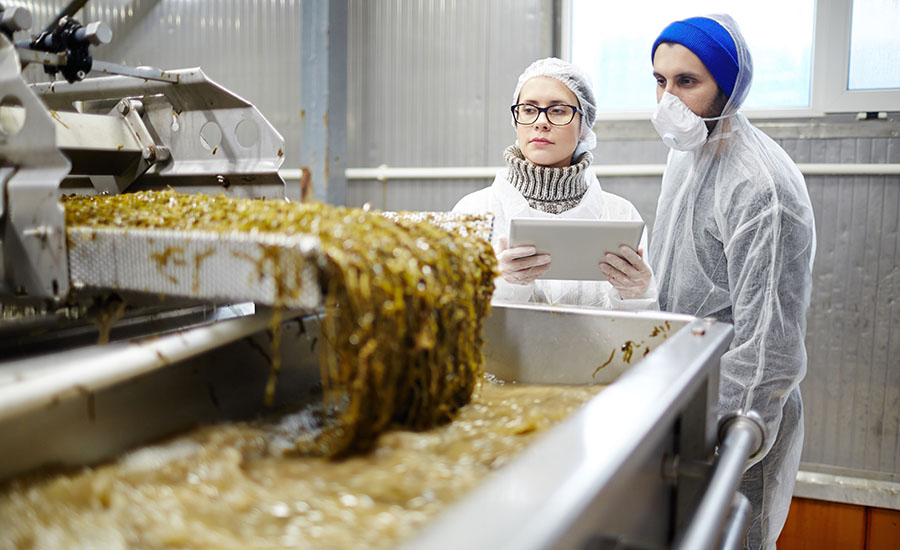
Small and midsize food businesses face additional challenges. A facility with 40 employees may not have the specialized departments or resources available to a multinational manufacturer, even though it must manage many of the same fundamental hazards (Figure 2). When regulatory complexity consumes too much time and attention, documentation can begin to overshadow the practical work of preventing contamination. Effective food safety systems must therefore be scientifically sound while remaining realistic for the facilities expected to implement them.

The true measure of a food safety system is not simply whether its requirements are documented and understood during an audit. It is whether those requirements are followed when production is behind schedule, a supplier delivery raises concerns, or an employee identifies a problem that requires immediate attention.
Building a More Connected Food Safety System
The separation between policy, science, and practice reflects a broader challenge within the food system: activities that influence one another are frequently managed as distinct responsibilities. A more integrated approach would recognize the relationships among five areas:
-
Food safety
-
Traceability
-
Sustainability
-
Preventive health
-
Ethics.
Food safety establishes the responsibility to identify and control hazards that could harm consumers.
Traceability supports that responsibility by providing information about the origins, movements, and handling of ingredients and finished products.
Sustainability addresses the environmental and resource conditions under which food is produced. Factors such as water quality, soil conditions, agricultural inputs, and production practices can also influence food safety risks.
Preventive health connects food production and consumption to broader public health objectives. Although nutrition-related health concerns are distinct from acute foodborne illness, both require coordination between food producers, policymakers, and public health stakeholders.
Ethics influences how organizations make decisions across these areas, particularly when business pressures create incentives to compromise established standards.
Traceability deserves particular attention because it provides a practical connection between activities that may otherwise be managed separately.
An effective system should allow an organization to determine where ingredients originated, how they moved through production and distribution, and which products may be affected when a hazard is identified. This information can support supplier evaluations, investigation of process deviations, and more targeted recalls.
The 2024 cucumber-associated Salmonella outbreak2 illustrates why this capability matters. Following the first reported illnesses in March, faster access to accurate supply chain information might have enabled investigators to identify the contamination source sooner and allowed businesses to remove affected products before additional consumers became ill.
However, the availability of technology alone does not guarantee a rapid response. Businesses must maintain accurate records, exchange information effectively with supply chain partners, and establish clear responsibilities for acting on the data.
Similar coordination is necessary when addressing environmental conditions that affect agricultural production and food safety. Sustainability initiatives should be evaluated for their specific effects on hazard prevention, rather than assuming that all environmentally beneficial measures necessarily improve food safety.
Preventive health also belongs in this broader discussion. Programs that improve access to nutritious foods and support healthier dietary patterns depend, in part, on a food system capable of delivering products that consumers can trust. The substantial costs associated with diet-related chronic diseases reinforce the importance of considering the relationship between agriculture, food production, and public health.
These five responsibilities do not need to be managed as a single function. They do, however, need to be understood as interconnected elements of a food system in which decisions made at one stage can have consequences elsewhere.
What Different Stakeholders Must Do
Improving the relationship between policy, science, and practice requires coordinated action throughout the food system. We do not lack knowledge, technology, or evidence. What we have lacked, for too long, is the collective will to act on all three at the same time in the same direction.
That changes with leadership—and leadership starts with honesty.
To policymakers: Stop writing food safety policy in isolation. The environment, labor, public health, and food safety are not separate conversations happening in separate rooms. They are one conversation, and they have always been one conversation. The frameworks that work are those that acknowledge this. Build policy that reflects the whole system. Enforce it as a whole system. Measure outcomes that matter to real people, not just compliance rates that look good in a report.
Stop incentivizing the minimum. Reform the subsidy structures, the insurance programs, and the procurement policies that reward volume over safety, speed over sustainability, and cost over quality. Public dollars should support the kind of food system we say we want, not perpetuate the one that is failing us.
To the C-suite: Food safety is not a QA function. It is not something that lives three levels below you on an organizational chart and surfaces only when there is a recall or a failed audit. It is a leadership function. It belongs on your agenda every single day. It belongs in your capital investment decisions. It belongs in how you evaluate and compensate your people. It belongs in the standards you set for your suppliers and the consequences you are willing to enforce when those standards are not met.
If the person responsible for food safety in your organization does not have a direct line to you and the authority to stop production when something is wrong, then you have already made your priorities clear—and your workforce has noticed.
To operations: The production schedule does not override safety—not under any pressure, not at the end of a quarter, not when a customer is waiting, and not when the line is already behind. The moment you allow safety to become negotiable under pressure is the moment you have told everyone watching exactly what this organization values. They will remember that long after the quarter is closed.
Build systems where stopping the line is not an act of courage. It should be a normal, expected, supported response to an observation that something is not right. The person who stops the line should be recognized and thanked. They should be held up as an example of exactly the culture you are trying to build.
To workers and labor: Your voice is not optional in this system; it is essential. You see things that auditors never see. You know things that reports never capture. You are not a pair of hands; you are a critical part of the safety infrastructure of every facility you work in, and you deserve to be treated that way.
You deserve fair wages. You deserve safe working conditions. You deserve the right to speak up without fear of retaliation, without being ignored, without being made to feel that your concern is an inconvenience. If that is not the culture where you work, that is a leadership failure—not yours.
To suppliers and vendors: The standards we set inside our own facilities must extend to every partner in our supply chain. Sustainability, ethics, traceability, and safety are not internal expectations. They are the price of partnership. An organization that holds itself to a high standard and then looks the other way at what happens upstream has not actually built a safe food system. It has built a story about one.
To practitioners: The food safety professionals, the quality managers, the regulatory affairs teams, the people who live this work every day: You are the bridge. You stand between what the policy says and what the floor does. You see both sides, and you understand the gap better than anyone. Do not stop advocating. Do not accept the minimum as the destination. Do not let audit readiness become the goal when actual safety is what you came to this work to build.
Conclusion: Honoring the Contract
The consumer held up their end. They walked in and picked up the product. They trusted that the people, systems, and organizations behind that product had done their jobs. They paid.
That trust is not naïve; it is reasonable. It is the foundation of commerce, community, and public health. It is a trust that our food system—in too many places, too many times—has failed to honor.
The recalls are not just numbers. The hospitalizations are not just data points. The deaths are not just statistics in an annual report. They are people, families, and the human cost of a gap that we have the knowledge, technology, and tools to close.
What we need now is not another framework, certification, audit standard, or regulatory update. What we need is a decision, made at the top of every organization that touches the food supply, that safety is primary. This decision needs to be embedded in practice every day, at every level, with every person. It should show up across every supplier relationship, every production decision, and every moment when the pressure is on, the line is behind, and someone sees something that does not look right.
Food safety is not an industry. It is not a department. It is not a silo. It is a responsibility that belongs to all of us who participate in the extraordinary and consequential act of feeding people.
The consumer made their part of the deal. It is time we made good on ours.
References
- U.S. PIRG Education Fund. "Food for Thought 2025." February 2025. https://pirg.org/edfund/resources/food-for-thought-2025/.
- Food and Drug Administration (FDA). "Outbreak Investigation of Salmonella: Cucumbers (June 2024)." Current as of December 23, 2025. https://www.fda.gov/food/outbreaks-foodborne-illness/outbreak-investigation-salmonella-cucumbers-june-2024.
- Centers for Disease Control and Prevention (CDC). "Investigation Update: Listeria Outbreak, Meats Sliced at Delis." January 30, 2025. https://www.cdc.gov/listeria/outbreaks/delimeats-7-24/investigation.html.
- FDA. "Outbreak Investigation of Salmonella: Cucumbers (May 2025)." Current as of December 23, 2025. https://www.fda.gov/food/outbreaks-foodborne-illness/outbreak-investigation-salmonella-cucumbers-may-2025.
- CDC. "Cyclospora Case Data." October 23, 2026. https://www.cdc.gov/cyclosporiasis/cases/index.html.%206.
- FDA. CORE+EP 2025 Annual Report. Current as of October 6, 2026. https://www.fda.gov/food/outbreaks-foodborne-illness/coreep-2025-annual-report.
- Food Safety Magazine Editorial Team. "FDA Responded to 26 Foodborne Illness Outbreaks in 2025." October 6, 2026. https://www.food-safety.com/articles/11896-fda-responded-to-26-foodborne-illness-outbreaks-in-2025.