Investing in Food Safety is Investing in the Future of Food
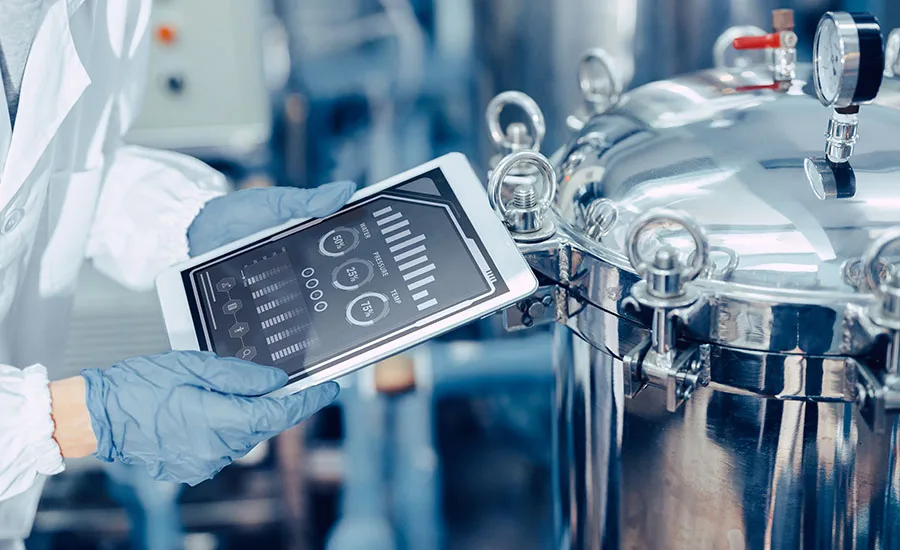
Consumers rarely think about the infrastructure behind safe food. They do not see the pilot plants, applied research centers, and training facilities that help transform scientific discoveries into practical solutions for industry. Long before a product reaches the marketplace, experts are validating food safety interventions, evaluating shelf life, optimizing formulations, assessing packaging compatibility, and ensuring that processes can be implemented safely and consistently at commercial scale. Although largely invisible to the public, this infrastructure plays a critical role in shaping the safety, quality, and reliability of the modern food supply.
Food safety is often discussed primarily through the lens of compliance, regulation, or outbreak response. While those elements are undeniably important, they tell only part of the story. Investments in food safety research infrastructure are also investments in public health, innovation, workforce development, and economic resilience.
As food systems become increasingly complex and consumer expectations continue to evolve, the U.S. will need stronger applied research ecosystems capable of translating scientific discovery into real-world implementation. This is where land-grant universities and applied research centers play a uniquely important role.
Since their founding, land-grant institutions have served as engines of practical problem-solving—connecting research, education, and industry to address real-world challenges in agriculture and food production. Today, that mission remains just as critical. In many ways, modern food safety challenges demand exactly the kind of applied, interdisciplinary collaboration these institutions were designed to provide.
Bridging the Gap Between Discovery and Implementation
Food safety solutions rarely move directly from a research publication to commercial implementation. Between basic scientific discovery and full-scale industry adoption lies a critical middle ground: validation studies, pilot-scale processing, product development support, workforce training, and process optimization. This "missing middle" is often where innovation either succeeds or stalls.
Many promising technologies fail to reach broad implementation not because the science is absent, but because companies lack the resources, expertise, or infrastructure needed to determine whether those solutions can be applied safely, consistently, and economically under real production conditions. Demonstrating efficacy in a laboratory is only the first step. What works in a research setting must ultimately be translated into systems that can be reliably executed on a commercial production line. Applied food research centers help bridge this gap by creating environments where industry, academia, and students can work together to solve practical problems under real-world conditions.
This model is becoming increasingly important as manufacturers navigate evolving consumer demands. These expectations create both opportunities and challenges for the food industry, particularly when balancing shelf life, microbial safety, sensory quality, and product innovation.
Looking for quick answers on food safety topics?
Try Ask FSM, our new smart AI search tool.
Ask FSM →
Modern Food Safety Technologies as Innovation Platforms
At Oklahoma State University's Robert M. Kerr Food and Agricultural Products Center (FAPC), recent modernization efforts have included the installation of a new high-pressure processing (HPP) unit as part of a broader investment in applied food research infrastructure. Alongside this effort, the development of an innovation test kitchen and upgraded pilot-scale capabilities are designed to support food manufacturers, entrepreneurs, and applied research initiatives focused on bringing safe and innovative food products to market. These updated facilities allow researchers, students, and industry partners to evaluate risk, test processes, and troubleshoot food safety challenges before products reach the marketplace.
While these investments represent an important advancement for Oklahoma's food industry, they also reflect a broader national trend: the growing need for regional innovation hubs capable of supporting modern food manufacturing, product development, and food safety research. As consumer expectations evolve and food companies seek new ways to balance safety, quality, shelf life, and clean-label demands, access to modern processing technologies and applied research support is becoming increasingly important.
Technologies such as HPP illustrate how investments in modern food safety infrastructure can support both public health and innovation simultaneously. This technology has become increasingly important for products such as dips, ready-to-eat meats, juices, sauces, and refrigerated prepared foods where consumers expect fresh-like quality alongside strong food safety controls.
Historically, access to advanced processing technologies such as HPP has been limited, particularly for small and mid-sized food businesses. The equipment itself is often cost-prohibitive, making it unrealistic for many processors to purchase or evaluate independently. At the same time, consumer demand is shifting toward products with fewer preservatives and additives, placing increasing pressure on manufacturers to find alternative approaches for maintaining shelf life and food safety.
Without nearby pilot-scale or commercial access to technologies like HPP, companies may be forced to outsource validation work or travel significant distances to assess product feasibility. These barriers can slow innovation, particularly for entrepreneurs and regional processors operating with limited resources.
Investments in facilities that provide access to emerging food safety technologies help lower those barriers while creating opportunities for collaboration among industry, researchers, and students. In this way, modern food safety infrastructure becomes more than a collection of equipment—it becomes a platform for innovation, technology transfer, workforce training, and economic growth.
Supporting Entrepreneurship and Small Food Businesses
Importantly, investments in food safety infrastructure do far more than support individual research projects. They help create regional innovation ecosystems.
For many entrepreneurs and small food businesses, the challenge is not simply developing a good product idea, but learning how to produce that product safely, consistently, and at commercial scale. Navigating process validation, shelf-life considerations, food safety requirements, packaging compatibility, and regulatory expectations can quickly become overwhelming for companies without in-house technical expertise. At the same time, access to advanced technologies and pilot-scale facilities is often limited or financially out of reach.
Innovation kitchens, pilot plants, and applied research centers help bridge this gap. These facilities allow companies to test products, refine formulations, troubleshoot manufacturing challenges, and evaluate food safety and processing approaches before making major commercial investments. By lowering technical and financial barriers, they create pathways for small and mid-sized businesses to bring innovative products to market more safely and efficiently.
The impact extends well beyond individual companies. Food manufacturing remains a major economic driver across the U.S., particularly in agricultural states where value-added processing supports rural economies and local supply chains. When regions lack food safety infrastructure and technical capacity, businesses are often forced to seek expertise elsewhere, taking innovation, workforce development opportunities, and economic activity with them. Strong applied research ecosystems help retain that innovation locally while supporting entrepreneurship, attracting industry partnerships, and strengthening supply chain resilience.
Workforce Development through Applied Learning
The food industry increasingly needs professionals who can operate at the intersection of science, technology, regulation, and practical problem-solving. Modern food manufacturing environments are highly technical, requiring expertise in microbiology, preventive controls, sanitation, product development, processing technologies, quality systems, and data interpretation. Yet employers across the food sector continue to report challenges finding graduates with hands-on experience and industry-ready skill sets.
Applied research centers help close this gap by giving students exposure to real-world food manufacturing environments and emerging technologies long before they enter the workforce. At Oklahoma State University, students train in FAPC's pilot plant, microbiology laboratories, and commercial-scale processing environments, gaining practical experience that cannot be replicated through classroom instruction alone.
Equally important, these environments expose students to the collaborative nature of modern food systems. Solving food safety challenges increasingly requires multidisciplinary thinking that brings together microbiologists, engineers, chemists, sensory scientists, regulatory specialists, and industry professionals. Applied research programs help students learn how to work across these disciplines while developing practical solutions to industry challenges.
This combination of workforce development, innovation support, and public health impact reflects the enduring value of the land-grant mission. The most effective food safety systems are not built solely through regulation or inspection after problems occur. They are built proactively through investments in research, education, technical assistance, and industry collaboration.
Investing in the Future of the Food System
As food systems continue to evolve, investments in applied food safety infrastructure will become increasingly important. Emerging technologies, changing consumer preferences, new product categories, climate pressures, supply chain complexity, and workforce transitions will all create new challenges for the food industry in the years ahead.
Meeting those challenges will require more than scientific discovery alone. It will require institutions capable of translating science into practice—helping businesses implement safer processes, supporting entrepreneurs, training the future workforce, and strengthening regional food systems along the way.
When we invest in food safety research infrastructure, we are not simply investing in laboratories or equipment. We are investing in safer food, stronger businesses, a more prepared workforce, and a more resilient food system for the future.