Governor Hochul Vetoes New York Bill Targeting GRAS Ingredients, Food Additives
New York Governor Kathy Hochul has vetoed the Food Safety Chemical and Disclosure Act (Assembly Bill 1556/Senate Bill 1239), which would have banned three substances from food manufactured or sold in the state, as well as required industry to disclose their use of “Generally Recognized as Safe” (GRAS) ingredients.
The bill had passed the Assembly and the Senate with wide support, in a 106–32 vote and a unanimous vote, respectively.
GRAS has long been criticized as a “loophole” that allows chemicals to enter the U.S. food supply without oversight.
Deference to FDA
In her veto memorandum, Gov. Hochul said food additive oversight is “traditionally and more appropriately the role of the federal government”—a topic of ongoing debate on Capitol Hill, as food safety continues to gain attention from the public and a growing number of states attempt to regulate food additives.
She cited the U.S. Food and Drug Administration’s (FDA’s) recently proposed revisions to the GRAS rule, as well as the agency’s January 2025 decision to revoke the food additive authorization for red dye 3, one of the three substances targeted in the Food Safety Chemical and Disclosure Act.
FDA’s proposed rule cited by Gov. Hochul would replace voluntary GRAS notifications with mandatory submissions for food ingredients and food-contact substances. It would not constitute FDA premarket approval or eliminate the statutory GRAS exemption under federal regulations. If finalized, it would also expand an existing exemption to include food additives and ingredients, offering another pathway for qualifying substances to enter the food supply with minimal oversight.
Consumer Reports, a supporter of the New York GRAS bill, called the veto decision “deeply disappointing” because FDA’s proposed GRAS rule “does not require companies to supply the safety data for ‘secret GRAS’ ingredients, a loophole [the New York] bill would have closed.”
Looking for quick answers on food safety topics?
Try Ask FSM, our new smart AI search tool.
Ask FSM →
Impacts on New York Bakel, Pizza Makers
In addition to red dye 3, which has already been addressed at the federal level, the Food Safety Chemical and Disclosure Act would have banned propylparaben, a preservative, and potassium bromate, an oxidizing agent used as a flour improver.
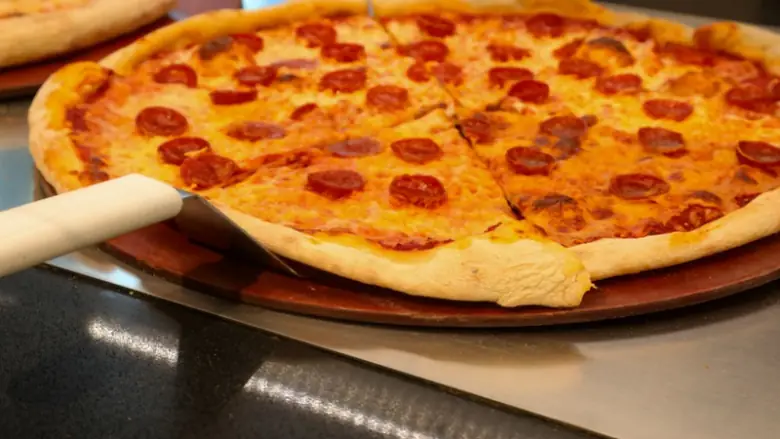
Gov. Hochul said the bill’s food additive prohibition would directly impact pizza and bagel makers by limiting their flour choices, underlining the importance of these foods to the state of New York.
Administrative Burdens and Costs
Finally, Gov. Hochul argued that the bill would have imposed administrative and cost burdens on New York State.
Consumer Reports refuted this point, saying, “Industry argued the bill would cost $21 million to implement, a figure drawn from an analysis of a proposed GRAS bill in California.” However, “The New York Senate Finance Committee put the cost of implementation at $250,000.”