Federal Preemption of State Food Safety Laws Debated During Congressional Hearing
In an April 29 Congressional hearing held by the House Subcomittee on Health, U.S. Representatives and witnesses from industry and consumer protection groups debated federal preemption of state food safety laws, the “Generally Recognized as Safe” (GRAS) process, state–federal information-sharing during outbreaks, and other issues, considering 28 active bills related to food safety and the U.S. Food and Drug Administration (FDA) currently pending in the legislature.
The Role of FDA vs. States in Regulating Food Safety
A reoccurring topic of discussion during the hearing was the emerging state-by-state patchwork of legislation restricting certain food ingredients and additives and setting standards for food labeling. An important point of debate was the federal preemption of state food safety laws, as proposed in the draft FDA Review and Evaluation for Safe, Healthy, and Affordable Foods Act of 2026 (FRESH Act), which is supported by the industry-backed Americans for Ingredient Transparency (AFIT).
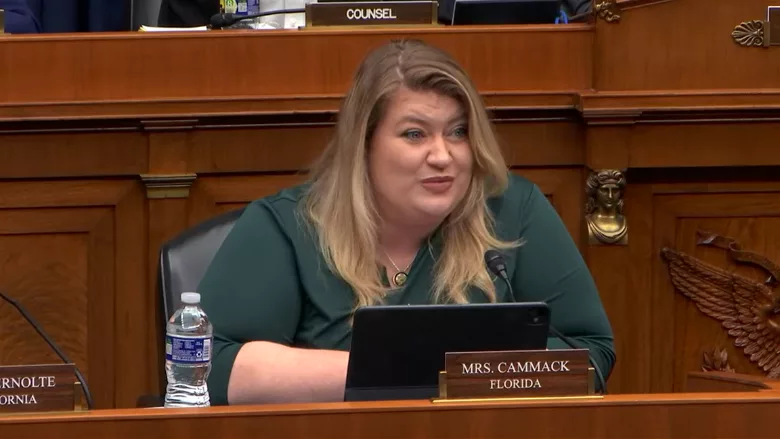
Rep. Kat Cammack (R-Florida), who helped draft the FRESH Act, argued that, while state food regulations and labeling laws are a “well-intentioned effort,” they are “really costing consumers at the end of the day,” do not solve the issue of lacking a national food safety standard, and leave “gaps in the system.” She cited an estimated 12 percent grocery cost increase caused by the emerging patchwork of state legislation.
Witness Joseph Colalillo, President, ShopRite of Hunterdon County Inc., agreed with the need for a single, uniform set of food ingredient and labeling requirements set by FDA. He told Rep. Cammack that if half of the products carried by ShopRite had to adhere to the different specifications of the nine states in which the retailer operates, the cost to the business would total approximately $1.5 billion just to ensure adequate warehousing to hold those products—and this cost would probably be absorbed by consumers.
Mr. Colalillo also questioned: if food ingredient and labeling laws are left to the states, what happens to consumers in states that choose not to enact legislation to remove potentially harmful ingredients from their food supply or pass protective labeling laws?
At the same time, in his answers to questions from the House Committee, Mr. Colalillo acknowledged that FDA must receive adequate resources and authorities required to establish uniform, science-based food regulatory standards that protect consumers.
Disagreeing with Mr. Colalillo’s stance on federal preemption, witness Scott Faber, Senior Vice President of Government Affairs, Environmental Working Group (EWG)—which openly opposes the FRESH Act—argued that states have played an important role in “phasing out the most troubling food chemicals, especially from school foods,” and therefore, Congress should not block states from providing important protections, especially when FDA fails to act.
Looking for quick answers on food safety topics?
Try Ask FSM, our new smart AI search tool.
Ask FSM →
Witness Steven Mandernach, J.D., Executive Director, Association of Food and Drug Officials (AFDO), took a more moderate stance on the issue, saying that federal preemption should be applied “carefully and deliberately” so that it strengthens, rather than strains, the state–federal food safety partnership and does not slow the use of new science. He also acknowledged in response to a question from the Committee that state legislative patchworks “absolutely do affect food producers” and that “if there are differences [in laws], there should be differences for a reason.”
Closing the GRAS ‘Loophole’ and Strengthening Chemical Safety
Another top topic of discussion was the GRAS “loophole,” which allows food companies to self-determine the safety of ingredients used in their foods without FDA notification or approval, and how—or if—that loophole should be closed.
The draft FRESH Act proposes allowing company GRAS determinations to be affirmed by third-party industry panels. FDA would be given a timeframe in which they could review an industry panel’s decision, but if they miss the deadline, the ingredient could enter commerce without FDA’s direct approval. Witness Mr. Faber advocated against this provision, saying that safe food must instead be assured by trusted, unbiased experts.
In response to questions about what GRAS reform and improved chemical safety oversight should look like, Mr. Faber suggested that FDA systematically review chemicals already in the food supply on a reoccurring basis, such as the U.S. Environmental Protection Agency (EPA) practices for pesticide approvals, beginning with substances that have the most evidence of potential harm to human health.
Mr. Mandernach added in response to questions from Rep. Troy Balderson (R-Ohio) that FDA should start with substances banned in other countries and novel ingredients when choosing which chemicals to systematically review. He also underlined the resource-intensiveness of implementing a robust, systematic post-market chemical review process, citing cost estimates of $2.5 million to $5 million per item.
Adequately Resourcing and Empowering FDA
FDA’s need for adequate funds and authorities to ensure food safety was a point of consensus among Representatives and witnesses.
Several Congresspeople called into question the Trump Administration layoffs that have reduced FDA’s workforce, citing staff losses of 14–20 percent, or approximately 4,000 employees. “While many of these bills [being considered today] are important,” said Rep. Lizzie Fletcher (D-Texas), “I am concerned that even if we pass them—even if they become law—the programs won’t be executed because of the drastic staffing cuts at FDA.”
Witness Mr. Faber suggested that the authorization of user fees for chemical and food companies could ensure FDA is well-resourced enough to address the food safety challenges discussed by Congress during the hearing, such as food chemical safety reassessments.
Allowing FDA to Share Information with States During Outbreaks
Additionally, an important authority proposed in the Federal and State Food Safety Information Sharing Act, for which Mr. Mandernach advocated strongly, is giving FDA the ability to share information with states during recalls and food safety crises. Mr. Mandernach explained that state and local jurisdictions conduct a majority of the food safety regulatory work in the U.S., including facility inspections, emergency response, recall verification, and foodborne illness outbreak investigation activities. However, current federal law prevents FDA from sharing timely, actionable information, such as product distribution lists, during outbreaks, leading to the slow removal of unsafe food from commerce, an example of which was recently seen during the infant botulism outbreak linked to ByHeart Nutrition infant formula.