


Precision Inspection Starts with the Right X-ray Detector
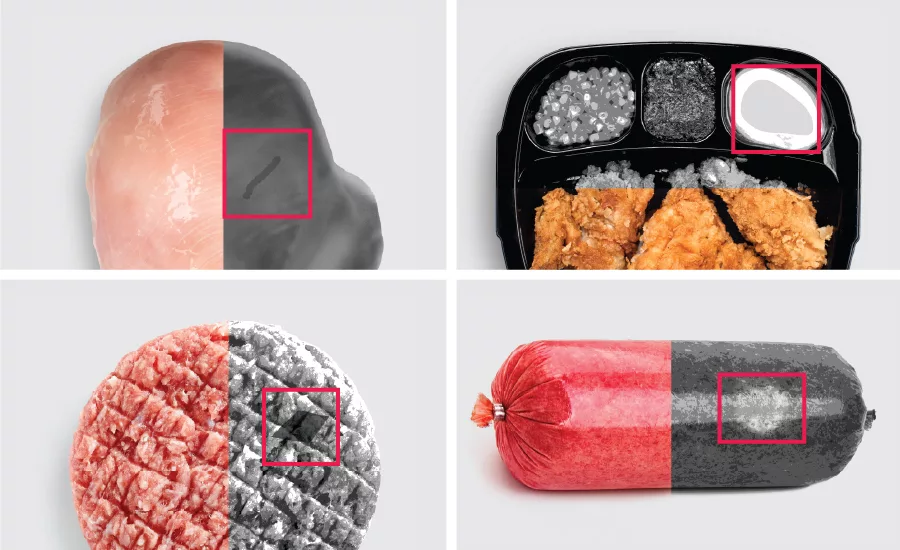
In the food industry, safeguarding product safety and quality is paramount. X-ray inspection technology plays a critical role in detecting foreign contaminants and verifying product integrity before goods reach consumers. However, selecting the right X-ray detector is not a "one-size-fits-all" process; it requires a nuanced understanding of the product, packaging, and operational environment. Here are six factors to consider before making a final decision.
Factor #1: Understand Your Product Composition and Characteristics
The first step in choosing a detector type for an X-ray machine is to analyze the composition and nature of your food product. Products with uniform textures, like blocks of butter or cheese, produce relatively clean and simple X-ray images. However, complex, heterogeneous products such as bagged salads, cereals, or prepared meals create "busy" images with many density variations. This complexity demands advanced detection capabilities.
High-salt-content products, such as certain cheeses, absorb X-rays more readily, resulting in denser images. Thicker products require higher-powered X-rays to penetrate layers and identify contaminants effectively. Recognizing these factors will guide your choice between single energy and dual energy X-ray detectors.
Factor #2: Single Energy vs. Dual Energy Detectors
So, what are single energy and dual energy detection methods? Single energy X-ray systems with line scan detectors are effective for detecting common contaminants like metals, glass, bones, stones, and certain plastics within products that have uniform textures. They are often sufficient for simpler applications.
Dual energy detectors, however, provide enhanced detection by measuring the ratio of two different X-ray energy levels passing through the product. This allows for detection of contaminants that might be missed by single energy systems, especially in complex or layered products.
Eagle pioneered the use of dual energy X-ray technology in the food industry and offers three types of dual energy solutions. The first is Material Discrimination X-ray (MDX), which was introduced to the food industry in 2005 and enables detection of foreign bodies that conventional systems often miss due to their density variations. Later came Dual Energy X-ray Absorptiometry (DEXA), which is widely regarded as the gold standard for fat analysis and provides highly accurate inline fat measurement to +/- 1CL.
The latest innovation, PXT™ photon-counting technology, delivers highly detailed images, excelling in identifying small bone fragments or contaminants in granular products. Systems equipped with PXT™ are versatile and effective across a wide range of applications, including various forms of poultry, meat, vegetables, and dairy. They perform reliably in both fresh and frozen products, bulk flow or retail packaging, and in single or multilane processing environments.
Factor #3: Consider Packaging Impact on Detection
Packaging design can significantly influence the effectiveness of X-ray inspection. Certain containers, such as jars with crevices or cans with pull tabs, can obscure areas where contaminants might hide. Specialized solutions like side-view X-ray systems can inspect these hard-to-see regions better than standard top-down machines.
Manufacturers must evaluate product and packaging together when selecting an X-ray system to ensure comprehensive inspection coverage.
Factor #4: Operational Considerations
Belt speed and machine placement on the production line are crucial. Faster conveyor speeds limit the integration time for detectors, which may affect image clarity. Placing the X-ray system toward the end of the line ensures that certain contaminants are caught before reaching their final destination, while positioning it earlier can prevent large foreign objects from entering the main processing stages.
Factor #5: Leverage Advanced Image Analysis Software
The hardware is only part of the solution. Image analysis software is the real differentiator. It is important to use equipment that is powered by imaging software capable of processing each X-ray image to deliver the most accurate results. Eagle's SimulTask™ PRO enhances contaminant detection by processing data with advanced algorithms and delivering high-resolution images with deep contrast. This software can be tailored to specific products and packaging, continuously improving detection accuracy and supporting operational efficiency through data analytics.
Factor #6: Collaborate with Experts and Plan for Maintenance
Working closely with X-ray technology providers ensures the right system configuration and placement. Comprehensive site assessments, proper calibration, and training are essential for optimal performance. Additionally, proactive maintenance agreements help minimize downtime and manage total cost of ownership.
Selecting the ideal X-ray detector for food inspection demands a thorough evaluation of the product's physical and chemical properties, packaging design, and production line dynamics. Integrating advanced dual energy detectors with sophisticated image analysis software, along with partnerships with expert providers, equips manufacturers to maintain the highest standards of food safety and quality while safeguarding consumers and brand reputation.


