‘Natural’ Food Dyes May Have Health Risks Too, Studies Show
A series of large-scale epidemiological studies conducted by a team of French researchers has suggested associations between food additives—specifically, colorants and preservatives—and an increased risk of certain health harms like cancer, type 2 diabetes, hypertension, and cardiovascular disease.
Notably, as consumer and regulatory scrutiny around synthetic food dyes and additives grows, causing manufacturers to reformulate products using naturally derived alternatives, the study found increased risk for diabetes and cancer to be associated with the consumption of both artificial and “natural” dyes.
Mathilde Touvier, Ph.D., Research Director at the French National Institute of Health and Medical Research (Inserm), led the work to generate data on the exposure to specific food additives and the incidence of chronic diseases in population-based studies. Until now, this knowledge gap had remained unaddressed, despite the widespread use of colorants and preservatives in the global food market.
Based on the findings from her work, Dr. Touvier called for “a reevaluation of the risks and benefits of food additives by the authorities for better consumer protection.”
“In the meantime,” Dr. Touvier said,” these findings support existing recommendations to favor non-processed and minimally processed foods, and to avoid unnecessary additives.”
Dr. Touvier was joined on the project by the Nutritional Epidemiology Research Team (CRESS-EREN), representing Inserm; the French National Research Institute for Agriculture, Food, and Environment (INRAE); Sorbonne Paris Nord University; Paris Cité University; and the French National Conservatory of Arts and Crafts (CNAM). The first authors on the food colorant studies and the preservatives study are Sanam Shah, M.D., Ph.D. and Anaïs Hasenböhler, Ph.D. candidate, respectively.
First-of-its-Kind Study on Food Additives and Chronic Health Conditions
Representing the first large-scale epidemiological studies on a broad range of colorants and preservatives in relation to cancer, type 2 diabetes, hypertension, and cardiovascular disease, the researchers analyzed 15 years of NutriNet-Santé cohort data.
Looking for quick answers on food safety topics?
Try Ask FSM, our new smart AI search tool.
Ask FSM →
Between 2009 and 2024, participants enrolled in the NutriNet-santé cohort, comprising more than 100,000 volunteers, reported their medical history, sociodemographic data, physical activity habits, information about their lifestyle and health status, and regular 24-hour dietary recalls, including the names and brands of foods consumed. The researchers compared the NutriNet-santé to several databases and European Food Safety Authority (EFSA) additive use and exposure data, enabling estimates of the participants’ exposure to food dyes and preservatives throughout the follow-up period. The analyses took into account socio-demographic profiles, lifestyle, and health factors that could have potentially biased the associations.
A total of 37 food colorants and 58 preservatives were reported in the NutriNet-santé cohort’s dietary recalls. The researchers further analyzed the individual relationships between ten colorants and 17 preservatives—which were consumed by at least 10 percent of participants—and the investigated health outcomes.
‘Natural’ and Artificial Food Dyes and Type 2 Diabetes, Cancer
Based on the work of Dr. Touvier and her colleagues, studies published in Diabetes Care and the European Journal of Epidemiology have shown associations between the consumption of food colorants and an increased risk of type 2 diabetes and cancer, respectively.
Food colorants as a whole were associated with a 38 percent increase in the risk of type 2 diabetes among those with the highest consumption. Among the different types of dyes, caramel colors were associated with a 43 percent increase and carotenoid colors (E160) were associated with a 39 percent increase. More specifically:
- Beta-carotene (E160a)—which can be derived from plant sources like carrots, palm fruit oil, and sweet potato—was associated with a 44 percent increase in risk
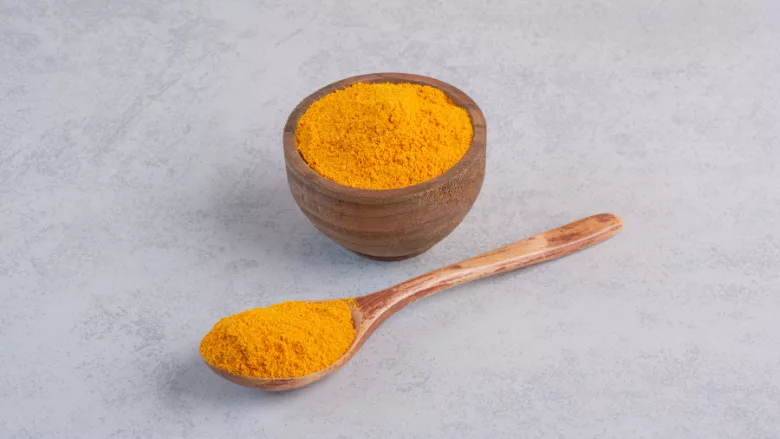
- Curcumin (E100), derived from the turmeric plant, was associated with a 49 percent increase in risk
- Anthocyanins (E163), which can also be plant-derived, carried a 40 percent increase in risk
- Plain caramel color (E150a), produced through the controlled heat treatment of sugars, carried a 46 percent increase in risk.
When compared to cancer incidence, increased levels of food dye exposure were associated with a 14 percent greater risk of cancers in general, a 21 percent greater risk of breast cancer, and a 32 percent greater risk of post-menopausal breast cancer. Notably, beta-carotene (E160a) was associated with a 16 percent increase in the risk of cancer overall and a 41 percent increase in the risk of breast cancer, and plain caramel (E150a) was associated with a 15 percent increase in the risk of cancer overall.
When asked about the findings’ relevance to “natural” food dyes, Drs. Touvier and Shah explained to Food Safety Magazine why additives derived from natural sources may carry health risks that are not associated with the consumption of the same substance in its original plant form. They said that substances can exert different effects depending on the matrix in which it is ingested, as the food properties (e.g., composition, structure, pH) affect absorption and metabolism by microbiota and host, and physical and chemical interactions of substances with other elements of the environment also play modulatory roles.
For example, Drs. Touvier and Shah cited previous studies showing that high-dose beta-carotene isolated in dietary supplements, in interaction with tobacco/asbestos exposure, causally increases lung cancer risk, while no association was detected for natural beta-carotene in fruits and vegetables. Moreover, in vitro experiments have shown that beta-carotene upregulates inflammation-related genes under hyperglycemic conditions, with histone modifications suggesting epigenetic regulation. Similarly, while dietary fibers within complex natural fruit, vegetable, and legume matrices are protective, isolated purified fibers (e.g., inulin) exacerbated colitis in mouse models.
Preservatives and Hypertension, Cardiovascular Disease
Findings published in the European Heart Journal suggested that common preservative additives may increase the risks of high blood pressure and cardiovascular disease.
Dr. Touvier and her collaborators found that NutriNet-santé cohort participants who consumed the largest amounts of non-antioxidant preservatives had a 29 percent higher risk of hypertension, compared to those who ate the least, and a 16 percent higher risk of cardiovascular disease, including heart attack, stroke, and angina. Antioxidant preservatives were associated with a 22 percent increase in the risk of hypertension. Overall, preservatives were associated with a 24 percent increase in the risk of hypertension.
Among the 17 individual food preservatives investigated, eight were associated with a higher incidence of hypertension, including potassium sorbate (E202) at 39 percent and citric acid (E330) at 25 percent. Ascorbic acid (E300) was associated with a 15 higher incidence of cardiovascular disease.
These findings are consistent with those of two other recent studies based on NutriNet-Santé data, which, in early 2026, observed associations between the consumption of preservatives and the risk of cancer and type 2 diabetes.
“Experimental research in the literature consistently suggested that preservatives may cause oxidative stress in the body or affect the way the pancreas works,” explained Dr. Touvier.