To Meet Demands for Natural Food Dyes, Cornell Scientists Develop New Algae-Based Blue
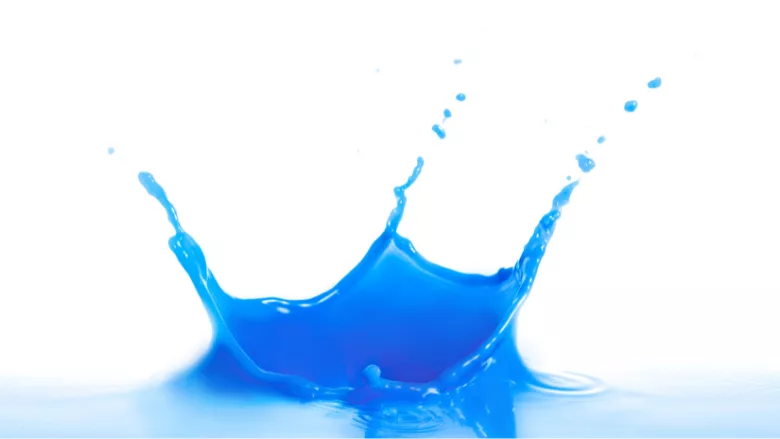
Consumer and regulatory demand for naturally derived alternatives to synthetic food colorants is on the rise; however, “natural” food dyes are often less stable, less vibrant, and more expensive. To meet that demand, Cornell University scientists have developed a new blue food dye made of algae protein.
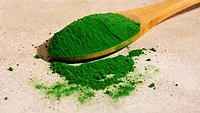
On its own, the vibrantly blue algae protein phycocyanin is sensitive to heat during processing and light during storage, making it unstable and difficult to include in food formulations. Seeing the potential of phycocyanin to replace artificial ingredients, the Cornell researchers sought to break down phycocyanin and build it back up into a more stable form. Using a denaturant, the scientists turned the large, uneven polymers into smaller and more uniform components, which exhibit a higher emulsifying capacity.
The restructured phycocyanin can create emulsions that appear bright blue and facilitate the protection and delivery of nutrients in oil. Small-angle X-ray scattering (SAXS) technology was used to see the structure of phycocyanin and confirm the results.
The Cornell researchers believe their modified phycocyanin may even be superior to spirulina, another naturally blue compound used as a food colorant, in terms of its properties and utility. Additionally, the cost is “likely reasonable, considering its health benefits” according to Alireza Abbaspourrad, Ph.D., corresponding author on the study.
The project was funded by the U.S. Department of Agriculture (USDA). Authors on the study include Cornell University’s Qike Li, a Ph.D. candidate in the Abbaspourrad Lab; Qingqiu Huang, Ph.D., Research Associate; and Dr. Alireza Abbaspourrad, Associate Professor of Food Chemistry and Ingredient Technology, Food Science. The study can be read here.
The Growing Demand for Naturally Derived Food Colorants
In April 2025, the U.S. Department of Health and Human Services (HHS) and the U.S. Food and Drug Administration (FDA) held a press conference announcing their intent to phase out the use of synthetic, petroleum-based synthetic dyes from the nation’s food supply. The agencies described the action as a “major step forward” in the “Make America Healthy Again” (MAHA) agenda, popularized by HHS Secretary Robert F. Kennedy Jr. and adopted by the Trump Administration.
Although Secretary Kennedy’s plan relies heavily on voluntary industry action rather than enforceable FDA rulemaking, the agency does plan to expedite the authorizations for natural food colorants and revoke the authorizations for some synthetic dyes.
Looking for quick answers on food safety topics?
Try Ask FSM, our new smart AI search tool.
Ask FSM →
The trend toward natural alternatives to food dyes began even before the MAHA movement, however, with states like California, joined by West Virginia and Louisiana, restricting or prohibiting their use in foods.
Additionally, FDA revoked the authorization for red dye 3 prior to the change in administration in response to consumer and congressional pressures.
Industry has made note of the changing attitudes on synthetic food colorants, and some companies, like General Mills, Kraft-Heinz, Conagra Brands, and Nestlé USA, have begun phasing them out of their products.
Are Natural Food Dyes Safer for All?
Some stakeholders have voiced concerns about the safety of naturally derived food colorants that are rapidly brought to market, especially regarding allergic consumers.
For example, in a statement from its CEO Sung Poblete, Ph.D., RN, the group Food Allergy Research and Education (FARE) said, “As industry innovates to comply [with Secretary Kennedy’s demands to phase-out the use of synthetic food dyes], there is a likely turn to concentrating color compounds from plants, leaves, fruits, and vegetables. It isn't known yet whether all food allergen protein would be removed in the manufacture of such coloring options. Plant and animal color sources that are currently widely used today such as annatto (orange) and carmine (red) are known to elicit food allergy reactions and anaphylaxis. The potential introduction of red from cherries or orange from cantaloupe, as examples, could expand those concerns. For the more than 33 million people in the U.S. with food allergy, we hope to see full transparency in food labeling of the source of new natural food colors, and not grouping as 'food or natural food colors,' as a very important accompanying step to this FDA decision."