Food Safety
search
Ask Food Safety AI
cart
facebook twitter linkedin instagram youtube
  • Sign In
  • Create Account
  • Sign Out
  • My Account
Food Safety
  • NEWS
    • Latest News
    • Sponsored Insights
    • Sponsored White Papers
  • PRODUCTS
  • TOPICS
    • Contamination Control
    • Food Types
    • Management
    • Process Control
    • Regulatory
    • Sanitation
    • Supply Chain
    • Testing and Analysis
  • PODCAST
  • EXCLUSIVES
    • Food Safety Five Newsreel
    • eBooks
    • FSM Distinguished Service Award
    • Interactive Product Spotlights
    • Videos
  • BUYER'S GUIDE
  • MORE
    • NEWSLETTERS >
      • Archive Issues
      • Subscribe to eNews
    • Store
    • ASK FSM AI
  • WEBINARS
  • FOOD SAFETY SUMMIT
  • EMAG
    • eMagazine
    • Archive Issues
    • Editorial Advisory Board
    • Contact
    • Advertise
  • SIGN UP!
NewsContamination ControlRegulatoryChemical ControlFDA

FDA Bans Red Dye 3 in Food
By Bailee Henderson
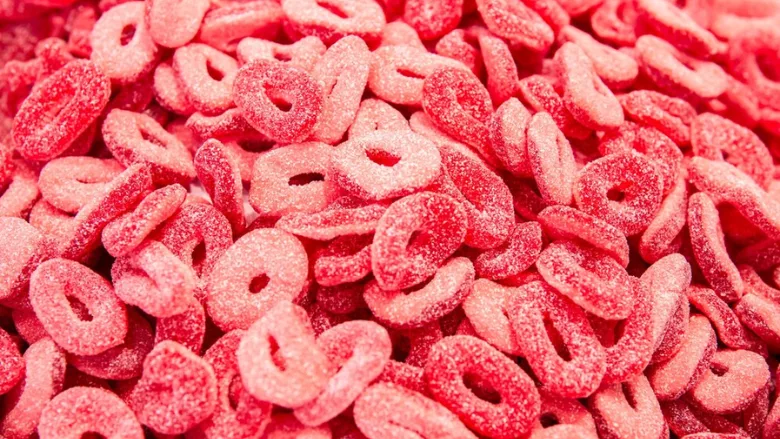
bunch of red gummy candy

Image credit: pvproductions via Freepik

January 15, 2025

Following pressures from consumer groups and legislators, the U.S. Food and Drug Administration (FDA) has revoked its authorization for the use of red dye 3 in food and ingested drugs. Food manufacturers using the colorant have until January 15, 2027 to reformulate their products.

Despite its decision to ban red dye 3 from food and ingested drugs, FDA maintains a contrary position, stating that claims of the colorant being harmful to human health through dietary exposure are not supported by the available scientific information. Still, the agency made its decision to revoke red dye 3's authorizations based on the Delaney Clause, which says that if a substance is found to cause cancer in man or animal, then it could not be used as a food additive.

FDA made its decision in response to a 2022 color additive petition filed by the Center for Science in the Public Interest, Consumer Reports, and 22 others, which cited, among other data and information, two studies that showed cancer in laboratory male rats exposed to high levels of red dye 3 due to a rat-specific hormonal mechanism. Although FDA granted this petition, in its decision, FDA asserted that these studies are not necessarily relevant to human health; according to the agency, harmful exposure levels for male rats are much lower than for humans, and studies in humans and in other animals did not show carcinogenic effects. In a December 2024 Senate hearing, when asked why the agency still allows potentially harmful red dye 3 in food but not cosmetics, FDA Deputy Commissioner for Human Foods Jim Jones reiterated this position, explaining that the current scientific consensus is that the additive’s mode of carcinogenicity in animals is not applicable to humans.

Regardless, beliefs that red dye 3 and other artificial food colorants are harmful to human health are widely held. In October 2024, Consumer Reports delivered another petition—with 80,000 signatures—urging the agency to ban red dye 3 in foods, citing, in addition to its potential carcinogenicity, that the dye is associated with hyperactivity and other neurobehavioral effects in children. A November letter from 23 Congress members also urging FDA to ban red dye 3 echoed the same concerns, and noted that the colorant is not allowed for food use by the EU, Australia, or New Zealand.

These concerns were also the reasoning behind the California Food Safety Act, passed in October 2023, which prohibits food containing red dye 3 (and three other chemicals) from being manufactured or sold in the state as of January 2027.

FDA notes that some other countries still currently allow for certain uses of red dye 3 (under the name erythrosine). However, foods imported to the U.S. must comply with U.S. requirements.

Are Other Food Dyes on the Line?

In a statement about FDA’s decision to grant its petition and revoke authorizations for red dye 3 in food and ingested drugs, Consumer Reports wrote, “With FDA’s decision to ban red dye 3, Consumer Reports is continuing to press the agency to ban other synthetic food dyes that have been linked to neurobehavioral problems in children and launched a petition calling on the agency to take action.” 

The California School Food Safety Act, passed in August 2024, bans six synthetic food dyes in foods sold or offered at public schools in the state due to their potential developmental and behavioral harms to children. The legislation will go into effect December 31, 2027 and targets red 40, yellow 5, yellow 6, blue 1, blue 2, and green 3.

With increasing state-level legislative activity surrounding food colorants and other chemical additives, as well as growing concerns from Congress members, consumer groups, and the public, FDA’s newly reorganized Human Foods Program is prioritizing post-market chemical safety reviews. The agency is currently developing an enhanced, systematic process for reassessing the safety of food chemicals already on the market.

Looking for quick answers on food safety topics?
Try Ask FSM, our new smart AI search tool.
Ask FSM →


KEYWORDS: additives red dye 3

Share This Story

Baileehendersonmay23

Bailee Henderson is the Director of Content Strategy for Food Safety Magazine. In the day-to-day, she covers industry-relevant current events, regulatory affairs, and scientific developments. She also produces the Food Safety Five Newsreel and edits the twice-weekly Food Safety Digest newsletter. Notably, Bailee's coverage for Food Safety Magazine has been featured in national televised news segments including CBS Sunday Morning and MSNBC's Rachel Maddow Show. She can be reached at hendersonb@bnpmedia.com.

Recommended Content

JOIN TODAY
to unlock your recommendations.

Already have an account? Sign In

  • people holding baby chicks

    Serovar Differences Matter: Utility of Deep Serotyping in Broiler Production and Processing

    This article discusses the significance of Salmonella in...
    Methods
    By: Nikki Shariat Ph.D.
  • woman washing hands

    Building a Culture of Hygiene in the Food Processing Plant

    Everyone entering a food processing facility needs to...
    Training
    By: Richard F. Stier, M.S.
  • graphical representation of earth over dirt

    Climate Change and Emerging Risks to Food Safety: Building Climate Resilience

    This article examines the multifaceted threats to food...
    Management
    By: Shamini Albert Raj M.A. and Maria Cristina Tirado Ph.D., D.V.M.
Manage My Account
  • eMagazine Subscription
  • Subscribe to Newsletters
  • Manage My Preferences
  • Website Registration
  • Subscription Customer Service

More Videos

Sponsored Content

Sponsored Content is a special paid section where industry companies provide high quality, objective, non-commercial content around topics of interest to the Food Safety Magazine audience. All Sponsored Content is supplied by the advertising company and any opinions expressed in this article are those of the author and not necessarily reflect the views of Food Safety Magazine or its parent company, BNP Media. Interested in participating in our Sponsored Content section? Contact your local rep!

close
  • an automated industrial production line used in a modern food factory
    Sponsored byIFC

    A Formula for Food Processing Pest Management

  • fly
    Sponsored byOrkin Commercial

    Fly Control in Food Processing Facilities: Managing Seasonal Food Safety Risks

  • Darkling Beetle
    Sponsored byElanco Animal Health

    Integrated Pest Management: Protecting Poultry Operations as Seasons Change

Popular Stories

Cyclospora cayetanensis oocysts

Foodborne Parasite Cyclospora Sickens Hundreds Across U.S.

Cyclospora cayetanensis oocyst

Cyclospora Cases Climb, But Actual Number Unclear as CDC Reporting Lags Behind States

UN building in geneva

Codex Publishes Strategic Plan for 2026–2031

building a skilled workforce ebook

Events

July 21, 2026

Using AI Responsibly in Food Safety Management Systems

Live: July 21, 2026 at 2:00 pm EDT: This webinar will provide participants with guidance on how to effectively use generative artificial intelligence (AI) tools to develop key components of a food safety management system (FSMS).

August 6, 2026

Beyond Sanitation: Understanding the Hidden System Conditions That Allow Pathogens to Persist

Live: August 6, 2026 at 2:00 pm EDT: Attend this webinar to learn strategies for strengthening environmental control programs through a layered approach to pathogen management.

August 11, 2026

Beyond Sanitization: Reducing Contamination Risk Without Raising Operating Cost

Live: August 11, 2026 at 2:00 pm EDT: Attend this webinar to learn why ambient air is the largest and most overlooked contamination zone in food processing, and what it costs you between scheduled cleans.

View All

Products

Global Food Safety Microbial Interventions and Molecular Advancements

Global Food Safety Microbial Interventions and Molecular Advancements

See More Products

Related Articles

  • close up of U.S. Capitol Hill dome with U.S. flag in foreground

    FDA Could Decide Whether to Ban Red Dye 3 in Food ‘In the Next Few Weeks,’ Officials Reveal in Senate Hearing

    See More
  • red and pink candies

    Congress Members Urge FDA to Ban Red Dye 3 in Food

    See More
  • melting red popsicle

    FDA is Petitioned to Ban Red Dye 3 in Food Based on Harmful Health Effects, Children’s Exposure

    See More

Related Products

See More Products
  • 9781138070912.jpg

    Trends in Food Safety and Protection

  • 1119237963.jpg

    Food Safety in China: Science, Technology, Management and Regulation

  • 9781498721776.jpg

    Handbook of Food Processing: Food Safety, Quality, and Manufacturing Processes

See More Products

Events

View AllSubmit An Event
  • May 28, 2026

    Advanced Sanitation Strategies for Allergen Risk Reduction in Food Processing

    On Demand: From this webinar, attendees will learn why validation and verification are necessary for allergen control, and how analytical tools can support allergen management programs.
  • March 26, 2026

    Continuous Pathogen Control: Enhancing Sanitation and Environmental Monitoring in Food Processing

    On Demand: This session explores the role of continuous airborne pathogen control technology in supporting sanitation and environmental monitoring programs within food processing environments.
View AllSubmit An Event

Related Directories

  • Food Radar Systems in Sweden AB

    Food Radar Systems, based in Sweden, develops microwave technology that detects and rejects low-density foreign bodies in pumpable food products, helping food manufacturers improve safety, protect consumers, and strengthen quality assurance in modern production environments.
  • FoodReady

    FoodReady offers complete Traceability, Food Safety & Quality, and Supply Chain software to digitize everything related to quality, food safety, sanitation, and traceability. FoodReady also offers complete consulting services for GFSI audit-preparation, HACCP consulting and development, process authority, FDA consulting, USDA consulting, and master sanitation consulting services from a team of longtime auditors, former Directors of Quality at the largest food companies.
×

Never miss the latest news and trends driving the food safety industry

Newsletters | Website | eMagazine

JOIN TODAY!
  • RESOURCES
    • Advertise
    • Contact Us
    • Directories
    • Store
    • Want More
  • SIGN UP TODAY
    • Create Account
    • eMagazine
    • Newsletters
    • Customer Service
    • Manage Preferences
  • SERVICES
    • Marketing Services
    • Reprints
    • Market Research
    • List Rental
    • Survey/Respondent Access
  • STAY CONNECTED
    • LinkedIn
    • Facebook
    • Instagram
    • X (Twitter)
  • PRIVACY
    • PRIVACY POLICY
    • TERMS & CONDITIONS
    • DO NOT SELL MY PERSONAL INFORMATION
    • PRIVACY REQUEST
    • ACCESSIBILITY

Copyright ©2026. All Rights Reserved BNP Media, Inc. and BNP Media II, LLC.

Design, CMS, Hosting & Web Development :: ePublishing