Food Safety
search
Ask Food Safety AI
cart
facebook twitter linkedin
  • Sign In
  • Create Account
  • Sign Out
  • My Account
Food Safety
  • NEWS
    • Latest News
    • White Papers
  • PRODUCTS
  • TOPICS
    • Contamination Control
    • Food Types
    • Management
    • Process Control
    • Regulatory
    • Sanitation
    • Supply Chain
    • Testing and Analysis
  • PODCAST
  • EXCLUSIVES
    • Food Safety Five Newsreel
    • eBooks
    • FSM Distinguished Service Award
    • Interactive Product Spotlights
    • Videos
  • BUYER'S GUIDE
  • MORE
    • NEWSLETTERS >
      • Archive Issues
      • Subscribe to eNews
    • Store
    • Sponsor Insights
    • ASK FSM AI
  • WEBINARS
  • FOOD SAFETY SUMMIT
  • EMAG
    • eMagazine
    • Archive Issues
    • Editorial Advisory Board
    • Contact
    • Advertise
  • SIGN UP!
NewsContamination ControlFood TypeRegulatoryMicrobiologicalMeat/PoultryUSDA

USDA-FSIS Describes Vision for Science-Based Approach to Reducing Salmonella in Poultry
By Bailee Henderson
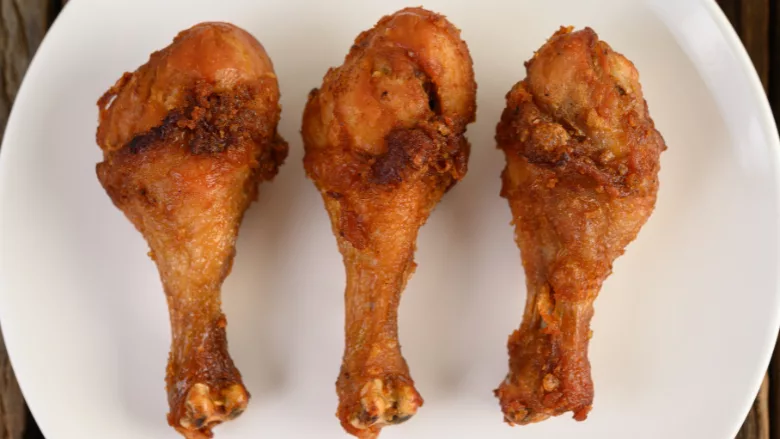
fried chicken drumsticks on a plate
Image credit: jcomp via Freepik
January 19, 2026

At a January 14 public meeting on strategies to reduce Salmonella in poultry products, the U.S. Department of Agriculture’s Food Safety and Inspection Service (USDA-FSIS) focused on the importance of tailored strategies, data-driven decisions, and considering the needs of small- and medium-sized establishments.

The hybrid public meeting drew more than 50 in-person and 300 virtual attendees. During the meeting, USDA-FSIS Under Secretary for Food Safety, Mindy Brashears, Ph.D., shared the agency’s vision for regulating Salmonella in poultry. In April 2025, the agency’s previously proposed framework to address Salmonella in poultry was withdrawn by the Trump Administration after years of development. The January 14 public meeting was held to gather stakeholder input and begin paving a new road toward policies that will reduce cases of salmonellosis attributable to poultry.

During the meeting, U.S. Secretary of Agriculture Brooke Rollins also made an appearance to express that the meeting was not about competing viewpoints, but about advancing practical, science-based strategies to reduce Salmonella and maintain a safe, affordable food system. Secretary Rollins also acknowledged how the meeting and subsequent work directly supports USDA’s five-point plan to bolster food safety, announced in July.

USDA-FSIS’ Vision for a Science-Based Salmonella Approach

During her remarks, Dr. Brashears said that, although Salmonella in poultry has been a major focus of USDA-FSIS in recent years, meaningful reductions in foodborne illness will require a broader lens that considers other regulated goods, like pork and beef, and which spans the supply chain.

The agency’s work to develop a new regulatory framework for Salmonella in poultry—which focused on the presence of specific serotypes on certain poultry products during production—was driven by the fact that, despite the effectiveness of FSIS’ current Salmonella verification sampling program in reducing the proportion of poultry products contaminated with the pathogen, it has not translated into a reduction in foodborne illness. 

As the agency explores a new approach to reducing foodborne Salmonella illnesses, Dr. Brashears stressed the importance of tailored strategies rather than relying on one-size-fits-all solutions. She highlighted modern tools like biomapping and environmental mapping to identify high-risk areas in facilities and acknowledged the need to consider small and very small establishments as FSIS develops this initiative. According to Dr. Brashears, solutions must work for plants of all sizes, enabling access to validated interventions and tools that fit within real-world operational realities.

Dr. Brashears also emphasized that data must continue to drive progress, and that regulatory sampling alone cannot capture the full scope of the issue. She asserted that interventions must be supported by science and validation, with data guiding decisions around critical control points.

Looking for quick answers on food safety topics?
Try Ask FSM, our new smart AI search tool.
Ask FSM →

Dr. Brashears: A Scientist at the Head of FSIS

In December, Dr. Brashears was officially confirmed by the Senate for a second term as head of USDA-FSIS. A career food research scientist and microbiologist, she previously served in the same position from 2020–2021 during the first Trump Administration. In her first term as Under Secretary for Food Safety, Dr. Brashears advocated for science-based policies to reduce Salmonella in regulated products, much like she did during the January public meeting.

Disagreement About the Way Forward

A major element of the now-withdrawn framework was the intent to declare Salmonella an adulterant in certain raw chicken products if it contained levels of the pathogen exceeding 10 colony forming unit (CFU) per milliliter (mL) or gram (g), or if a serotype of concern was detected at any level.

This concept proved controversial at the public meeting. Industry representatives from the Meat Institute, National Chicken Council, National Turkey Federation, and National Pork Producers Council supported the withdrawal of the proposed framework, suggesting that declaring Salmonella an adulterant was inappropriate because it is a naturally occurring substance.

Food safety and consumer protection representatives from groups like Consumer Reports, the Center for Science in the Public Interest, and Stop Foodborne Illness disagreed, believing the declaration of Salmonella as an adulterant to be necessary and calling for the agency to move forward with its now-withdrawn proposed framework.

USDA-FSIS has already finalized the determination of Salmonella as an adulterant in not-ready-to-eat (NRTE), breaded and stuffed chicken products at levels exceeding 1 CFU/g, but in December, USDA-FSIS indefinitely delayed sampling and verification activities to enforce this determination.

In his testimony at the meeting, Michael Hansen, Ph.D., Senior Food Scientist with Consumer Reports, urged FSIS to immediately reverse its decision to delay verification activities related to Salmonella in NRTE, breaded and stuffed chicken products. He also argued that the 1 CFU/g limit for adulteration is legally applicable not only to NRTE, breaded and stuffed chicken products, but also to other products covered under the broader regulatory framework. Dr. Hansen argued that Salmonella at levels of 1 CFU/g or higher in these poultry products qualify as an “added substance” because it is introduced by cross-contamination through processing.

KEYWORDS: Salmonella

Share This Story

Baileehendersonmay23

Bailee Henderson is the Digital Editor of Food Safety Magazine. She can be reached at hendersonb@bnpmedia.com.

Recommended Content

JOIN TODAY
to unlock your recommendations.

Already have an account? Sign In

  • people holding baby chicks

    Serovar Differences Matter: Utility of Deep Serotyping in Broiler Production and Processing

    This article discusses the significance of Salmonella in...
    Meat/Poultry
    By: Nikki Shariat Ph.D.
  • woman washing hands

    Building a Culture of Hygiene in the Food Processing Plant

    Everyone entering a food processing facility needs to...
    Food Prep/Handling
    By: Richard F. Stier, M.S.
  • graphical representation of earth over dirt

    Climate Change and Emerging Risks to Food Safety: Building Climate Resilience

    This article examines the multifaceted threats to food...
    Contamination Control
    By: Maria Cristina Tirado Ph.D., D.V.M. and Shamini Albert Raj M.A.
Manage My Account
  • eMagazine Subscription
  • Subscribe to Newsletters
  • Manage My Preferences
  • Website Registration
  • Subscription Customer Service

More Videos

Sponsored Content

Sponsored Content is a special paid section where industry companies provide high quality, objective, non-commercial content around topics of interest to the Food Safety Magazine audience. All Sponsored Content is supplied by the advertising company and any opinions expressed in this article are those of the author and not necessarily reflect the views of Food Safety Magazine or its parent company, BNP Media. Interested in participating in our Sponsored Content section? Contact your local rep!

close
  • Salmonella bacteria
    Sponsored byThermoFisher

    Food Microbiology Testing Methods: Salmonella species

  • a diagram explaining indicator organisms
    Sponsored byHygiena

    How Proactive Listeria Testing Helps Prevent Six- and Seven-Figure Recalls

  • woman grocery shopping
    Sponsored byCorbion

    Designing Safety Into Every Bite: Proactive Risk Mitigation for Refrigerated Foods

Popular Stories

brand new newborn drinking bottle

Florida Launches Food Contaminant Testing Program with Report on Metals in Infant Formula

illustration of colony of microorganisms under microscope

Food Safety Implications of Emerging Alternative Interventions for Salmonella Biofilms

FSM podcast

Ep. 209. Helena Bottemiller Evich: The MAHA Effect on American Food Policy

Events

January 27, 2026

Strategies for Reinforcing Food Safety Culture Among Temporary and Seasonal Staff

Live: January 27, 2026 at 2:00 pm EST: From this webinar, attendees will learn common areas where companies encounter challenges in their food defense strategies and how to address them.

May 11, 2026

The Food Safety Summit

Stay informed on the latest food safety trends, innovations, emerging challenges, and expert analysis. Leave the Summit with actionable insights ready to drive measurable improvements in your organization. Do not miss this opportunity to learn from experts about contamination control, food safety culture, regulations, sanitation, supply chain traceability, and so much more.

View All

Products

Global Food Safety Microbial Interventions and Molecular Advancements

Global Food Safety Microbial Interventions and Molecular Advancements

See More Products

Related Articles

  • chicken in pen

    USDA-FSIS Proposed Regulatory Framework for Reducing Salmonella in Poultry May Declare Salmonella an Adulterant

    See More
  • raw chicken parts

    USDA Opens Registration for Public Meeting on New Strategy for Reducing Salmonella in Poultry

    See More
  • plate of buffalo chicken wings

    Support for USDA-FSIS’ Withdrawn Regulatory Framework for Salmonella in Poultry Voiced at Meeting

    See More

Related Products

See More Products
  • 1119237963.jpg

    Food Safety in China: Science, Technology, Management and Regulation

  • 1119160553.jpg

    Food Safety: Innovative Analytical Tools for Safety Assessment

  • 9781138070912.jpg

    Trends in Food Safety and Protection

See More Products

Events

View AllSubmit An Event
  • August 12, 2025

    Systematic Approach to Hazard Analysis: Considering Product- and Process-Specific Risks

    On Demand: From this webinar, attendees will learn where and why hazard analysis can fail, especially for high-risk products like leafy greens and meat/poultry.
View AllSubmit An Event

Related Directories

  • OneVision Corp.

    We develop, manufacture, sell and support can seam inspection and weighing systems to food and beverage canners, can makers, and specialty manufacturers (oil filter, aerosol cans, composite cans). Founded in 1994, we've installed and support more than 350 can seam inspection systems around the world.
  • Matrix Sciences

    In an increasingly complex environment, Matrix Sciences brings together the expertise, resources and support needed to partner with the agri-food supply chain – from Cultivation to Consumer®. The results: the information they require to make informed decisions with confidence in the cultivation, production, and research of food and agriculture products
×

Never miss the latest news and trends driving the food safety industry

Newsletters | Website | eMagazine

JOIN TODAY!
  • RESOURCES
    • Advertise
    • Contact Us
    • Directories
    • Store
    • Want More
  • SIGN UP TODAY
    • Create Account
    • eMagazine
    • Newsletters
    • Customer Service
    • Manage Preferences
  • SERVICES
    • Marketing Services
    • Reprints
    • Market Research
    • List Rental
    • Survey/Respondent Access
  • STAY CONNECTED
    • LinkedIn
    • Facebook
    • Instagram
    • X (Twitter)
  • PRIVACY
    • PRIVACY POLICY
    • TERMS & CONDITIONS
    • DO NOT SELL MY PERSONAL INFORMATION
    • PRIVACY REQUEST
    • ACCESSIBILITY

Copyright ©2026. All Rights Reserved BNP Media.

Design, CMS, Hosting & Web Development :: ePublishing