USDA-FSIS Proposes to Permanently Raise Line Speed Limits at Swine, Poultry Slaughter Establishments
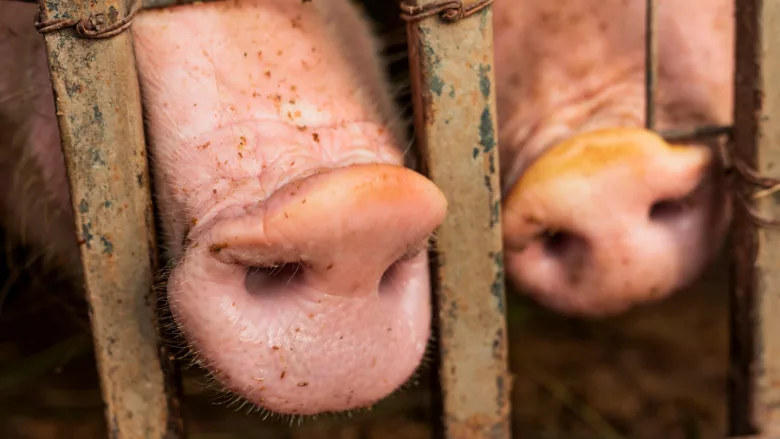
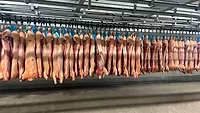
The U.S. Department of Agriculture’s Food Safety and Inspection Service (USDA-FSIS) is proposing to lift line speed limits for eligible pork processing operations and increase limits for eligible poultry operations.
Specifically, USDA-FSIS is proposing to amend federal meat inspection regulations to allow establishments operating under the New Swine Slaughter Inspection System (NSIS) to determine their own line speeds based on their ability to maintain process control. However, FSIS inspectors retain the authority to reduce the rate of establishment operations at any point in the slaughter process when, according to their own judgment, there is a loss of process control, or a carcass-by-carcass inspection cannot be adequately performed within the time available.
For New Poultry Inspection System (NPIS) establishments, proposed amendments to federal regulations would allow young chicken establishments to operate at line speeds up to 175 birds per minute (bpm) and increase the maximum line speed prescribed for turkey establishments from 55 bpm to 60 bpm. It would also define “maximum line speed” as the time it takes for an inspector to effectively perform online carcass inspection procedures and clarify when FSIS may direct establishments to operate at a reduced line speed.
USDA-FSIS is also proposing to remove the requirement that NPIS and NSIS establishments submit an annual worker safety attestation to FSIS stating that they maintain a program to monitor and document work-related conditions of employees, which USDA says “falls outside [the agency’s] statutory authority” and creates “redundant paperwork for industry.”
An End to NSIS and NPIS Limbo
These proposals made by USDA-FSIS conclude years of legal disputes and federal consideration of NSIS and NPIS, including time-limited trials (TLT) conducted by USDA-FSIS to gather worker safety data on select establishments operating at increased line speeds. Findings from the TLTs were published in January 2025, at which time the line speed waivers for participating NPIS and NSIS establishments were extended.
Remarking on the proposal to permanently lift NSIS and NPIS establishment line speeds, U.S. Secretary of Agriculture Brooke Rollins said, “These updates remove outdated bottlenecks so that we can lower production costs and create greater stability in our food system… these actions provide clarity and consistency for establishments that have operated for years under a patchwork of waivers, pilots, and temporary measures, replacing uncertainty with predictable, long-term rules.”
Potential Implications for Food Safety
While USDA asserts that FSIS will maintain full oversight of NPIS and NSIS establishments, ensuring that food safety standards are upheld, critics are skeptical, especially as USDA-FSIS continues to experience workforce attrition under the Trump Administration. USDA-FSIS has downsized by more than 1,000 staffers since the beginning of Fiscal Year 2025, and further employee losses are expected as an agency-wide restructuring forces Washington D.C.-based staff to relocate around the country, raising questions about USDA's ability to execute its critical functions with fewer personnel.
Advocacy group Food and Water Watch stated, “Corporate poultry and hog processing plants are hotbeds for disease and antibiotic resistance. To protect workers, consumers, and animals, these facilities need more oversight—not less. Speeding up slaughterhouses will put unsafe food on grocery store shelves.”
Looking for quick answers on food safety topics?
Try Ask FSM, our new smart AI search tool.
Ask FSM →