Protein Processing Act Would Lift Pork, Poultry Line Speed Limits if Food Safety Criteria Are Met
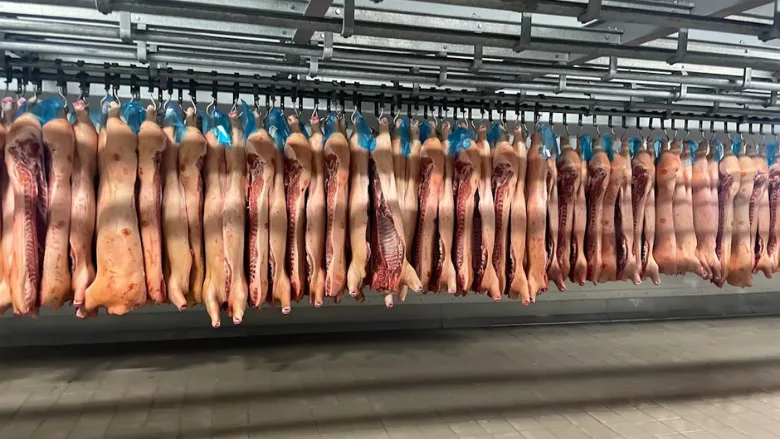
U.S. Congressman Brad Finstad (R-MN) has introduced a bill to increase line speed limits in pork and poultry production facilities.
The American Protein Processing Act aims to bring an end to years of uncertainty about increased line speed limits at swine and poultry processing facilities, which have been in limbo while the U.S. Department of Agriculture’s Food Safety and Inspection Service (USDA-FSIS) reconsiders its rules on the issue and considers the findings of recently completed pilot program trials.
The New Swine Slaughter Inspection System and New Poultry Inspection System
In 2021, the U.S. District Court for the District of Minnesota struck down USDA-FSIS’ New Swine Slaughter Inspection System (NSIS) final rule eliminating line speed limits for participating establishments, requiring plants to return to capped speeds of 1,106 head per hour. FSIS later launched time-limited trials (TLT) allowing a small number of plants to operate at increased speeds while gathering worker safety data. FSIS has also carried out similar TLTs at New Poultry Inspection System (NPIS) establishments, which grants line speed waivers to process up to up to 175 birds per minute.
For the studies, a team of third-party worker safety experts recorded and analyzed footage of poultry and swine plant workers, conducted interviews with workers, and measured muscle activity, posture, repetition among other activities.
In January 2025, USDA-FSIS extended line speed waivers for NSIS and NPIS establishments and published the results of its completed swine and poultry line speed studies, finding that workers across all participating establishments experienced pain in their upper extremities; however, line speeds were not determined to be the leading factor in worker musculoskeletal disorder risk at these plants. The reports recommended steps establishments operating at any line speed rate can take to reduce the risk of worker injury.
The existing line speed waivers for NSIS and NPIS establishments were again extended in March 2025, and USDA-FSIS began working on rulemaking to finalize faster maximum line speeds—without promising the future extension of any waivers.
The American Protein Processing Modernization Act
In this context, the American Protein Processing Modernization Act would take the issue of line speed rates out of the hands of USDA-FSIS by providing “a permanent framework to ensure pork and poultry processing facilities are able to maintain full operational capacity.” This framework would follow the science of the USDA-FSIS poultry and swine TLTs, “ensuring that processors can operate at full capacity beyond arbitrary government deadlines.”
Looking for quick answers on food safety topics?
Try Ask FSM, our new smart AI search tool.
Ask FSM →
Additionally, USDA would be required to publish food safety criteria for operating at increased line speeds, ensuring that processors who meet the criteria can continue operating without slowdown.
Support and Dissent for Increased Swine and Poultry Processing Line Speeds
The legislation is endorsed by the Meat Institute, National Pork Producers Council (NPPC), and Minnesota Pork Producers Association, which claim the act would benefit the meat and poultry industries while ensuring the safety of their products and workers.
Worker safety advocates disagree, however. For example, the Retail, Worker, and Department Store Union (RWDSU) said in response to the bill that “Faster line speeds mean fewer precious seconds to work safely… and not to mention less time to ensure food safety.”