Designing Safety Into Every Bite: Proactive Risk Mitigation for Refrigerated Foods

In today's food industry, no category carries as much paradoxical weight as refrigerated foods. On one hand, they represent freshness, convenience, and taste appeal. On the other hand, they embody some of the industry's most persistent challenges: safety, shrink, and the rise of ultra-processed alarm. Their inherent characteristics, such as low thermal kill during processing, high water activity, and wide pH ranges, create the perfect conditions for microbial growth and shortened shelf life due to spoilage. With the addition of complex cold chains, temperature fluctuations, and heightened consumer concern, it becomes clearer why refrigerated foods are under scrutiny.
Consumers are acutely aware of the risks associated with their food purchases. The International Food Information Council's (IFIC's) 2025 "Food and Health Survey"1 underscores just how high the stakes have become. Half of the respondents identified bacterial foodborne illness as their top safety concern, signaling that consumers remain acutely aware of microbial risks. At the same time, 43 percent reported low confidence in the U.S. food supply, citing frequent recalls as a key reason. This lack of confidence is more than a perception issue; it represents a growing trust gap among consumers due to food safety risks. For food manufacturers, the challenge is twofold: safeguarding refrigerated foods from real risks while also reassuring consumers that the quality and taste of their favorite offerings remain uncompromised.
Why Refrigerated Foods are so Vulnerable
Unlike frozen or shelf-stable products, refrigerated foods rely on cold storage and sometimes acidulation as their primary defense against microbial growth. But refrigeration is more of a speed bump than a barrier. Listeria monocytogenes, for example, can grow at refrigerator temperatures, making it a leading concern for ready-to-eat (RTE) items like deli salads and refrigerated sides.
High moisture levels in soups, dressings, and dips further support microbial growth, while mild processing often lacks the thermal intensity needed to inactivate pathogens. This leads to shorter shelf life for these products, which in turn creates pressure to move products quickly, leaving less margin for error.
For quality and safety teams, it is a delicate balancing act: how to extend shelf life and reduce risk without compromising flavor, texture, or consumer expectations.
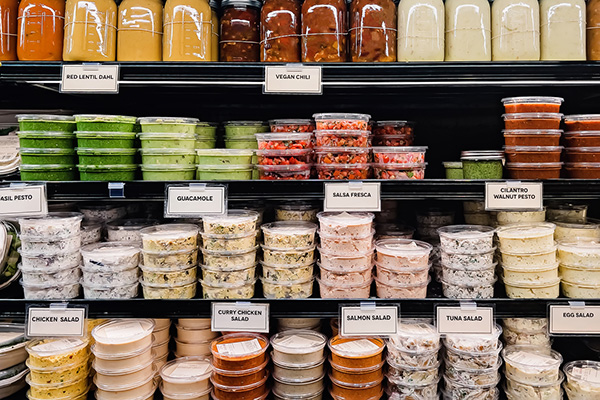 Image Credit: iStock/Chiociolla
Nature-Based Antimicrobials: Meeting Safety and Label Demands
Consumers today expect labels that reflect simplicity. According to recent data from Innova,2 27 percent of shoppers say "made with real ingredients" or natural claims are their top influence when buying prepared foods. For manufacturers, this creates an opportunity for differentiation and growth. This is because science-backed, naturally derived antimicrobials can provide strong protection against microbial threats while aligning with these clean-label priorities.
Ingredients such as cultured dextrose, vinegar, cultured sugar, and nature-based ferments offer broad-spectrum control of spoilage bacteria, yeast, and mold. Unlike traditional preservatives such as sorbates or benzoates, these fermentation-based ingredients are both label-friendly and help ensure food safety.
Many of these solutions can be integrated into formulations without affecting taste or texture, which is crucial for categories where flavor authenticity is paramount, such as deli salads, soups, or sauces. In some cases, these solutions can even improve savory taste. They also enable manufacturers to reduce waste by extending freshness windows and overall shelf life.
Predictive Modeling: Anticipating Problems Before They Arise
Traditionally, shelf life studies depended on trial-and-error testing of finished products. While this method can validate performance, it is often slow, costly, and reactive, uncovering vulnerabilities only after significant resources have already been invested. Predictive modeling tools offer a more efficient path forward. Tools like the Corbion Listeria Control Model (CLCM) enable manufacturers to anticipate microbial risks earlier in the development cycle, simulating how products will behave under various conditions. By replacing guesswork with data-driven insights, these models streamline decision-making, reduce development timelines, and strengthen confidence in food safety outcomes before products ever reach the shelves.
By simulating how formulations will perform across these scenarios or microbial challenges, predictive models can map out a product's likely behavior across its shelf life. They are codified in federal regulations as useful scientific resources for food safety plans and enable teams to identify weak points, such as ingredient interactions, packaging vulnerabilities, or distribution risks, and adjust proactively.
AI-driven tools now enhance these capabilities further, enabling faster data analysis and scenario modeling. The result is shorter development cycles, reduced risk of recalls, and greater confidence in product performance under real-world conditions.
Designing Safety First
Successful refrigerated food manufacturers no longer treat food safety as a compliance checkbox. They are designing it into formulations from the start. This "safety by design" mindset integrates antimicrobial strategies, predictive modeling, and shelf life stress testing at the concept stage rather than as late-stage adjustments.
Finding the right partners with preservation expertise in your application is proving especially valuable. For example, Corbion recently expanded its Verdad® Opti Powder portfolio, giving manufacturers new solutions to address yeast, mold, and gram-positive pathogens such as Listeria and Clostridia. Beyond ingredients, Corbion also provides consultative formulation guidance and AI-powered tools to help processors evaluate product safety, texture, and flavor holistically.
This type of support enables manufacturers to design for both safety and quality from the outset, thereby reducing the risk of costly reformulations or recalls down the line.
Balancing Safety, Quality, and Consumer Trust
The refrigerated foods category faces a unique challenge. Consumers expect foods that taste fresh, are clean label, and remain safe throughout distribution. For processors, achieving all three simultaneously requires not only the right tools but also a forward-looking strategy:
- For safety teams, the priority is controlling microbial growth in inherently risky products.
- For marketing teams, the priority is delivering products with labels that consumers trust and taste worthy of the spend.
- For operations, the priority is reducing returns, minimizing waste, and streamlining distribution.
The good news is that these goals are not mutually exclusive. With the right nature-based antimicrobial solutions, predictive safety modeling, and a "safety by design" approach, manufacturers can create products that check every box: safe, fresh, efficient, and consumer-friendly.
Looking Ahead
As the refrigerated category grows in variety and consumer demand, its complexities will only deepen. What can evolve, however, is the way manufacturers address these challenges. By integrating science-backed ingredients, predictive modeling, and proactive formulation design, companies can move beyond reactive problem-solving and embed resilience directly into their portfolios.
Food safety will always be a regulatory expectation, but in refrigerated foods it carries even greater weight. It has become a marker of brand integrity and a driver of consumer trust. In an environment where recalls make headlines and confidence in the food supply is fragile, the manufacturers that design safety into every product from the start will not only protect their brands; they will also differentiate themselves in a crowded marketplace.
References
IFIC Food & Health Survey, 2025
Innova Category Survey, 2025