Global Foodborne Disease Burden Comparable to Malaria, Per Updated WHO Estimates

The World Health Organization (WHO) has released its anticipated updated global burden of foodborne disease estimates, which suggest that 42 hazards caused approximately 866 million illnesses and 1.52 million deaths in 2021.
According to WHO, this burden of foodborne disease is similar to that from tuberculosis, HIV and AIDS, or malaria. Positively, however, the burden of foodborne diseases has been trending down since 2000.
What’s New in the 2026 Estimates
The estimates were produced by WHO’s Foodborne Disease Burden Epidemiology Reference Group (FERG) 2021–2025. The previous edition of the estimates, which was also the first time these estimates were produced, was published in 2015. The 2015 estimates considered 31 hazards.
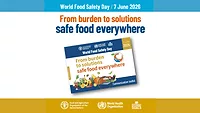
WHO released the new estimates ahead of World Food Safety Day (WFSD) on June 7, supporting this year’s theme, “From Burden to Solutions—Safe Food Everywhere,” which encourages national authorities and other stakeholders to invest in food safety systems and infrastructure, using data to target interventions and resources.
For example, the estimates use disability-adjusted life years (DALYs) as a common metric, enabling decision-makers to compare the impacts of different hazards and prioritize interventions.
The 2026 estimates also reveal national and regional differences in foodborne disease trends, as well as offer economic burden estimates to understand the costs of unsafe food.
The 2026 estimates cover 42 microbiological hazards (enteric pathogens, parasites, and chemicals) and incorporate updated methodologies, including strengthened source attribution models, standardized data collection, and enhanced probabilistic modeling. Notably, for the first time, the estimates show the burden from non-communicable diseases (e.g., cardiovascular disease, intellectual disability) resulting from dietary exposure to toxic heavy metals (i.e., arsenic, lead).
Looking for quick answers on food safety topics?
Try Ask FSM, our new smart AI search tool.
Ask FSM →
To learn more about the development of the 2026 estimates, listen to a special WFSD episode of the Food Safety Matters podcast with Elaine Borghi, Ph.D., Unit Head for Monitoring and Surveillance, Nutrition, and Food Safety at WHO, available on all major podcast players and here.
Additionally, earlier this year, WHO published findings from research conducted to support the foodborne disease burden estimates, including the proportion of hazards that are foodborne and figures specifically related to diarrheal diseases.
Key Figures and Trends
In 2021, WHO estimated that the 42 hazards caused a loss of approximately 1.57 million DALYs, alongside the previously mentioned 866 million illnesses and 1.52 million deaths. Chemical foodborne hazards were estimated to cause 6.26 million illnesses, while hazards causing diarrheal illness were attributed to approximately 666 million illnesses, and invasive enteric and parasitic disease hazards caused an estimated 1.94 million illnesses.
Specific estimates for hazards that contributed greatly to the overall burden of foodborne disease or are otherwise important foodborne hazards include (listed in descending order of DALYs):
- Inorganic arsenic: 2.21 million illnesses, 641 thousand deaths, 15.4 million DALYs.
- Lead: 1.66 million illnesses, 466 thousand deaths, 11.2 million DALYs
- Non-typhoidal Salmonella enterica: 23.5 million illnesses, 55.1 thousand deaths, 3.58 million DALYs
- Salmonella Typhi: 2.74 million illnesses, 36 thousand deaths, 2.84 million DALYs
- Methylmercury: 2.02 million illnesses, 0 deaths, 2.43 million DALYs
- Shigella: 118 million illnesses, 42.5 thousand deaths, 2.25 million DALYs
- Campylobacter (C. jejuni or C. coli): 148 million illnesses, 35.4 thousand deaths, 2.15 million DALYs
- Rotavirus: 25.4 million illnesses, 26 thousand deaths, 1.84 million DALYs
- Enterotoxigenic Escherichia coli: 131 thousand illnesses, 28 thousand deaths, 1.79 million DALYs
- Shiga toxin-producing E. coli (STEC): 51.9 million illnesses, 20.5 thousand deaths, 1.24 million DALYs
- Toxoplasma gondii: 26.1 million illnesses, 495 deaths, 887 thousand DALYs
- Cyclospora cayetanensis: 10.2 million illnesses, 14.6 thousand deaths, 857 thousand DALYs
- Vibrio cholerae: 23 million illnesses, 21.4 thousand deaths, 821 thousand DALYs
- Hepatitis A virus: 20 million illnesses, 11.9 thousand deaths, 821 thousand DALYs
- Norovirus: 54.8 million illnesses, 14.1 million deaths, 809 thousand DALYs
- Cryptosporidium: 16.2 million illnesses, 11.4 thousand deaths, 769 thousand DALYs
- Mycotoxin aflatoxin B1: 14 thousand illnesses, 13.2 thousand deaths, 412 thousand DALYs
- Listeria monocytogenes: 22.8 thousand illnesses, more than 5,200 deaths, 192 thousand DALYs.
Inorganic arsenic, lead, and non-typhoidal Salmonella enterica resulted in the most DALYs. High DALYs associated with arsenic and lead are largely attributable to cardiovascular disease outcomes.
Overall, WHO noted an “encouraging” reduction in lost DALYs between 2000 and 2021, which is most apparent in the reduced burden in the African region.
Burden of Chemical vs. Microbial Hazards
Together, all foodborne chemical hazards caused 1.12 million deaths. Despite chemical hazards only resulting in up to 7 percent of all foodborne illnesses globally, they were responsible for 73 percent of all deaths due to contaminated food. Inorganic arsenic was responsible for 42 percent and lead for 31 percent of all deaths due to contaminated food.
WHO cautions that, although the estimated burden from inorganic arsenic and lead are substantially higher than for many other hazards, it must not divert efforts to address microbial hazards. Dietary exposure to these metals only contribute to a small proportion of the global burden of cardiovascular diseases.
Regional Differences: Southeast Asia, Africa Most Affected
National-level estimates reveal substantial inequalities in the global burden of foodborne diseases. Foodborne disease burden is likely to be related to socioeconomic status, as well as cultural and epidemiological mechanisms.
The greatest burden of foodborne disease was in the Africa (13.66 million DALYs) and Southeast Asia (24.22 million DALYs) regions, where diarrheal and chemical hazards contributed most heavily, respectively. In contrast, Europe experienced the lowest burden (2.06 million DALYs).
Although the incidence of illness from some non-diarrheal parasitic hazards is minor in a global context, for specific, localized populations, they can present a high burden. Examples are foodborne transmission of Clonorchis sinensis in the Western Pacific region and Toxoplasma cruzi in the region of the Americas.
Young Children Disproportionately Affected
The incidence in children younger than five years was 2–7 times higher than in people aged five years or older, resulting in 4–3 times the rate of DALYs. The highest rates of foodborne burden of disease in children younger than five years were due to methylmercury, non-typhoidal Salmonella enterica, and rotavirus. By contrast, in individuals aged five years or older, the greatest burden resulted from inorganic arsenic, lead, and non-typhoidal S. enterica.
Economic Burden: $647 Billion
In 2021, the 42 hazards resulted in productivity losses of $310 billion USD in nominal terms, and $647 billion USD after adjusting for purchasing power parity. High-income countries accounted for just under $108 billion USD, and low-income and middle-income countries $202 billion USD. This loss was 0–52 percent of global gross domestic product (GDP), but 1–16 percent of GDP in low-income countries. After excluding children younger than five years, global productivity loss decreased from 0–52 percent to 0–31 percent of GDP.
In related research published in April, WHO estimated that every $1 USD invested in food safety infrastructure could result in a $46 return on investment (ROI) in the form of public health value.
Takeaway: Delaying Action ‘Costs Lives’
As foodborne disease remains an important public health problem globally, WHO encourages stakeholders to use the new estimates for policy development at national and international levels, informing their priorities and helping to tailor actions and allocate resources to improve food safety and monitor the impact of interventions.
“This report is a wake‑up call—but also a roadmap. The data show that foodborne diseases are not only persistent but are being made worse by climate change, which increases contamination risks, and by antimicrobial resistance, which makes infections harder to treat. We cannot tackle these threats alone,” said Yuki Minato, M.P.H., WHO Technical Officer for Food Safety and senior author of the paper in which the estimates were presented. “A One Health approach—integrating human, animal, plant, and environmental health—is essential. Countries must act urgently, using these estimates to target interventions, invest in surveillance, and break down the silos between health, agriculture, and environment sectors. Delay costs lives.”
“For the first time, countries have their own data to see where the burden is highest. With that knowledge, governments can prioritize the actions needed to protect people’s health,” remarked Tedros Adhanom Ghebreyesus, Ph.D., M.Sc., WHO Director-General.