A Formula for Food Processing Pest Management
"An ounce of prevention is worth a pound of cure," goes some sage advice from Benjamin Franklin. This is just as relevant to pest management as to other aspects of life. Whether you call them preventative or proactive, tactics to make the food plant environment unsuitable for pest development will be cheaper and more sustainable in the long run than reacting to pest problems after they occur.
The "Pest Management Pyramid" is an excellent tool for visualizing the integration of many tactics toward the goal of preventative and sustainable pest management:
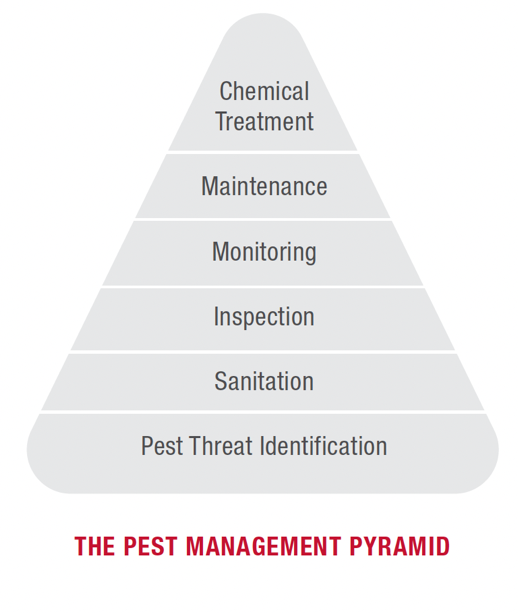
Image Credit: IFC
- The pyramid is built on a solid foundation of identification and biological information about pest threats. Biological information provides insight into the vulnerabilities of pests to the full range of management tools and techniques that are available for management, with dramatic success stories associated with proactive integrated pest management programs. Facilities have gained ten days or more of production time annually and eliminated fumigations thanks to well-integrated sanitation adjustments, harborage reduction, better monitoring analysis, and smarter pesticide use. Educational efforts in the grain industry are reaffirming good management techniques for grain quality management, including pest management. Preventative use of grain protectants has been gaining acceptance in the grain and milling industries as an alternative to fumigations after insects have already become established. Imagine the number of times some crack or crevice harborage might be sprayed over time, when it could be sealed permanently.e full range of tools and techniques available for management. Often, a very specific environmental requirement or aspect of behavior is the "chink in the armor" we can exploit. For example, pheromone mating disruption technology works so well against Indian meal moths only because the adults have such short lifespans and must mate successfully within three days.
- Sanitation to deprive pests of the food and harborage they need, or timed to break lifecycles, prevents infestations from developing. The preferred method for controlling small flies, for example, is not pesticide use but cleaning of drains and other developmental sites on at least a seven-day schedule.
- Inspection to catch problems early, prevent importation of pests with supplies, or better yet, to locate and correct conducive conditions, keeps infestations small or prevents them from ever developing. Certain stored product beetles are indicators of excess moisture and mold. The insects may be objectionable, but thank them for alerting you to a moisture issue.
- Monitoring and analyzing pest activity data elucidates developing trends and hotspots for early intervention. It may point to a batch of product that is aging in storage and needs to be moved out, or a structural issue like a door that is not closing properly and allowing pest invasions.
- Maintenance activities that improve exclusion or eliminate structural harborages are enormously helpful for correcting the source of pest problems.
- Pesticide applications can even be selected and timed with prevention in mind, rather than reacting to infestations.
There have been dramatic success stories associated with proactive integrated pest management programs. Facilities have gained more production time and eliminated emergency services thanks to well-integrated sanitation adjustments, harborage reduction, better monitoring analysis, and smarter pesticide use.
For more information, visit www.indfumco.com or call 800-477-4432.