Food Safety
search
Ask Food Safety AI
cart
facebook twitter linkedin instagram youtube
  • Sign In
  • Create Account
  • Sign Out
  • My Account
Food Safety
  • NEWS
    • Latest News
    • Sponsored Insights
    • Sponsored White Papers
  • PRODUCTS
  • TOPICS
    • Contamination Control
    • Food Types
    • Management
    • Process Control
    • Regulatory
    • Sanitation
    • Supply Chain
    • Testing and Analysis
  • PODCAST
  • EXCLUSIVES
    • Food Safety Five Newsreel
    • eBooks
    • FSM Distinguished Service Award
    • Interactive Product Spotlights
    • Videos
  • BUYER'S GUIDE
  • MORE
    • NEWSLETTERS >
      • Archive Issues
      • Subscribe to eNews
    • Store
    • ASK FSM AI
  • WEBINARS
  • FOOD SAFETY SUMMIT
  • EMAG
    • eMagazine
    • Archive Issues
    • Editorial Advisory Board
    • Contact
    • Advertise
  • SIGN UP!
Sponsored By
IFC
Contamination ControlProcess ControlRegulatorySanitation
Ifc logo with trademark 300x150
IFC
IFC specializes in Integrated Pest Management (IPM) programs based on prevention, fumigation, fogging, bird management, chlorine dioxide treatments, preventative strategies, and more.


Birds: A Flying, Nesting Risk for Your Facility
By Jerry Heath
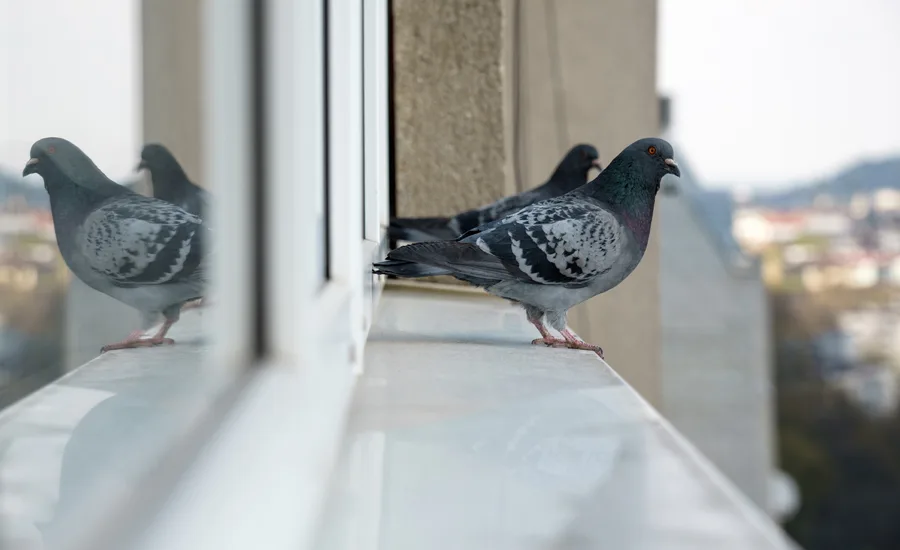
Pigeons are one of the most common pest birds at food processing facilities.
Getty Images/iStockphoto
Pigeons are one of the most common pest birds at food processing facilities.

Image provided by Getty

July 3, 2024

Birds may be the most difficult of all pests to control in the food industry, yet the need to control them is essential for food safety and audit compliance. Birds, including their droppings, feathers, and nesting materials, carry about 60 different pathogens of concern to product and worker safety. Bird droppings present slip and fall hazards, and can be corrosive. Nesting materials can clog equipment air intakes and exhausts. Needless to say, auditors do not want to see birds or bird filth. Compared to other pests, birds have unique mobility, vision, and intelligence. Bird control is complicated by human sympathies and affection for birds. The general public, or even some employees, will probably not tolerate seeing birds in distress, injured, or killed. However, most control methods are non-lethal.

The Problem for Food Processors

The fundamental requirements that birds have are the same as other pests: food, water, and harborage. Many food processing facilities offer all three in abundance, as well as other factors that can attract birds, including:

  • Spillage of grain, flour, or other ingredients from the rooftop all the way down to surrounding grounds
  • Very tall structures, such as grain elevators or towering buildings, that naturally appeal to cliff-dwelling birds like pigeons
  • Covered roof areas with good exposures for flocking birds to find sun or shade

The most conducive condition for a bird infestation may be cavities for nesting in the corrugations of roofing materials and other areas. Bird situations can develop over time, so an issue may take years to fully develop. For example, if a few birds found places to nest years ago without much notice or concern, it could become an ancestral rookery for a colony of birds, in addition to all the other attractions that may be provided. One of the most difficult pest issues to overcome is the attachment of birds to a nesting site.

Customizable Solutions for Your Facility

A bird specialist is usually required to analyze the attractive features and how birds are using a site (assessment of bird pressure or bird attachment to the site) to determine the best course of action. Once an assessment is completed, there are 100 or more fairly distinct devices or methods for bird control. Although no single device or method can guarantee success, often a few carefully selected tactics will be effective in combination. The level of bird pressure will dictate the best selections. There are also differences in behavior among the common pest birds, and the susceptibility of the target species to a device or method needs consideration, as well. When bird control is needed, you should look for a specialist with the capabilities to analyze a food plant situation and make reasonable recommendations that are achievable through a food plant and pest control provider partnership, and that has the ability to take on the scale of installation work that may be necessary.

Categories of Bird Control Methods and Devices

  • Chemical controls: Avicides (pesticides), baits, harassment chemicals, and repellents
  • Physical controls: Visual and audio scare devices, trapping, and exclusion devices

When an Outdoor Problem Comes Indoors

Almost every building is susceptible to an occasional bird flying in through an open door. Susceptibility increases with multiple doors and becomes even more of a risk with dock doors. Indoor birds are an immediate food safety hazard or risk for finished product rejection if droppings are found on product. Since susceptibility is universal, every facility should have an emergency plan for dealing with indoor birds. Here are some immediate actions that should be taken:

  • Attend to the most critical food safety risks. Exclude the bird from entering the most critical processing areas where products are exposed. Be prepared to cover critical lines and equipment quickly.
  • Try to allow the bird to fly out. Consider darkening the space and giving the bird an open-door opportunity. Try coordinating a crew of people to herd the bird toward an opening with flashlights or laser pointers. Birds will be drawn to the light of an open window or door in a dark area.
  • Be prepared with some equipment for fast trapping of indoor birds. Indoor birds often fall into the same patterns of flying; certain racetrack patterns or alleyways, or certain roosting spots are used repeatedly. Mist nets—very fine nets shaped like oversized volleyball nets that are invisible to birds—can be put up in flyways very quickly to entrap flying birds.

Bird control is an important ingredient in the recipe of integrated pest management for food processing facilities. Birds can cause a myriad of issues and are difficult to control, so it is imperative that you work with your provider to develop a comprehensive, proactive plan for dealing with these destructive pests. When there is a plan in place and your staff is aware of the procedures and protocols, your team will be a unified force against all pests, and especially birds.

For more information, visit www.indfumco.com or call 800-477-4432.

KEYWORDS: audits birds IPM Nesting

Share This Story

Jerry Heath, Board Certified Entomologist, serves a broad range of technical service needs for IFC's food industry clients. With nearly 40 years of experience, Jerry’s career has focused exclusively on the fields of entomology and pest management in academic and industrial settings. For more information, visit www.indfumco.com or call 800-477-4432.

Recommended Content

JOIN TODAY
to unlock your recommendations.

Already have an account? Sign In

  • people holding baby chicks

    Serovar Differences Matter: Utility of Deep Serotyping in Broiler Production and Processing

    This article discusses the significance of Salmonella in...
    Microbiological Control
    By: Nikki Shariat Ph.D.
  • woman washing hands

    Building a Culture of Hygiene in the Food Processing Plant

    Everyone entering a food processing facility needs to...
    Sanitation
    By: Richard F. Stier, M.S.
  • graphical representation of earth over dirt

    Climate Change and Emerging Risks to Food Safety: Building Climate Resilience

    This article examines the multifaceted threats to food...
    Best Practices
    By: Shamini Albert Raj M.A. and Maria Cristina Tirado Ph.D., D.V.M.
Manage My Account
  • eMagazine Subscription
  • Subscribe to Newsletters
  • Manage My Preferences
  • Website Registration
  • Subscription Customer Service

The Industrial Fumigant Company, LLC

Popular Stories

naturally colored cupcakes with sprinkles

Natural vs. Artificial Ingredients in Baking: What Food Manufacturers and Consumers Need to Know

dry instant noodles pack

Salmonella-Contaminated Instant Noodles Sicken Dozens of Children Across Europe

Cyclospora cayetanensis oocysts

Foodborne Parasite Cyclospora Sickens Hundreds Across U.S.

building a skilled workforce ebook

Events

July 21, 2026

Using AI Responsibly in Food Safety Management Systems

Live: July 21, 2026 at 2:00 pm EDT: This webinar will provide participants with guidance on how to effectively use generative artificial intelligence (AI) tools to develop key components of a food safety management system (FSMS).

August 6, 2026

Beyond Sanitation: Understanding the Hidden System Conditions That Allow Pathogens to Persist

Live: August 6, 2026 at 2:00 pm EDT: Attend this webinar to learn strategies for strengthening environmental control programs through a layered approach to pathogen management.

August 11, 2026

Beyond Sanitization: Reducing Contamination Risk Without Raising Operating Cost

Live: August 11, 2026 at 2:00 pm EDT: Attend this webinar to learn why ambient air is the largest and most overlooked contamination zone in food processing, and what it costs you between scheduled cleans.

View All

Products

Global Food Safety Microbial Interventions and Molecular Advancements

Global Food Safety Microbial Interventions and Molecular Advancements

See More Products

Related Articles

  • an automated industrial production line used in a modern food factory

    A Formula for Food Processing Pest Management

    See More
  • factory

    A Clean Break to Reset the Environment with Chlorine Dioxide

    See More
  • mold

    Tackling Mold Remediation in Food Processing Plants

    See More
×

Never miss the latest news and trends driving the food safety industry

Newsletters | Website | eMagazine

JOIN TODAY!
  • RESOURCES
    • Advertise
    • Contact Us
    • Directories
    • Store
    • Want More
  • SIGN UP TODAY
    • Create Account
    • eMagazine
    • Newsletters
    • Customer Service
    • Manage Preferences
  • SERVICES
    • Marketing Services
    • Reprints
    • Market Research
    • List Rental
    • Survey/Respondent Access
  • STAY CONNECTED
    • LinkedIn
    • Facebook
    • Instagram
    • X (Twitter)
  • PRIVACY
    • PRIVACY POLICY
    • TERMS & CONDITIONS
    • DO NOT SELL MY PERSONAL INFORMATION
    • PRIVACY REQUEST
    • ACCESSIBILITY

Copyright ©2026. All Rights Reserved BNP Media, Inc. and BNP Media II, LLC.

Design, CMS, Hosting & Web Development :: ePublishing