


Get Ahead of Spoilage in Food Manufacturing with Metagenomics for Preventive Monitoring
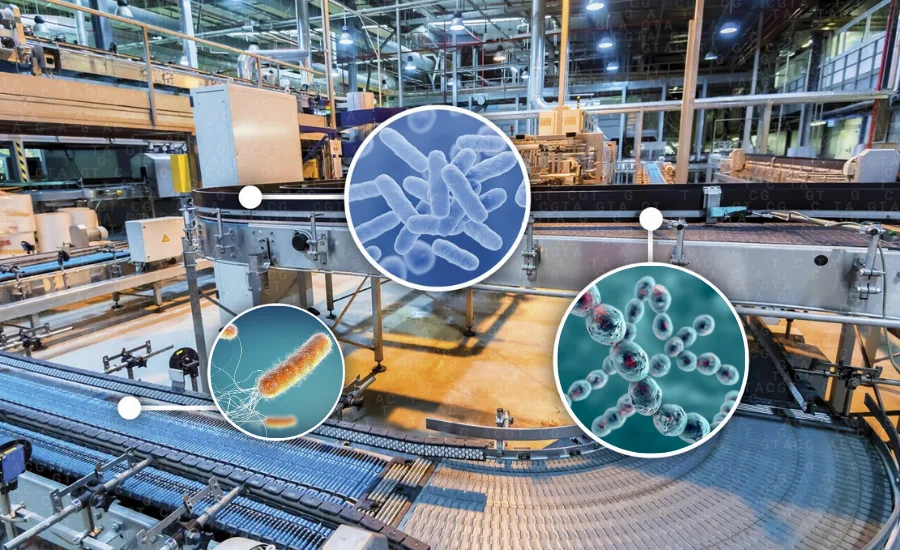

Spoilage microorganisms present an important and complex challenge for food manufacturers, affecting production processes, product quality, retailer relationships, consumer satisfaction, food loss and waste, and ultimately, the bottom line. Although many facilities have microbiological testing programs in place, spoilage investigations often begin only after a failure has already occurred. As a result, many food manufacturers are looking for ways to move from reactive problem solving toward preventive spoilage management.
Metagenomic techniques are increasingly being used to support such a shift. By characterizing the full microbial community present in a sample, metagenomic tools can help manufacturers identify spoilage organisms, determine where they are coming from within a facility, implement targeted corrective actions, and monitor whether those actions are effective over time. Innovative platforms utilizing metagenomic data can support spoilage investigations and preventive monitoring programs with actionable insights. For example, bioMérieux’s SMARTBIOME™ is an innovative solution that integrates high-precision DNA analysis, advanced bioinformatics, data science, an exclusive spoilers' knowledge base, and expert consulting.
 Image Credit: Captiva
 Looking Beyond Traditional Microbiology
Traditional microbiological analytical methods remain important for quality and food safety programs, but spoilage investigations present unique challenges requiring alternative solutions. Unlike pathogen testing, which typically focuses on a limited number of target organisms, spoilage can be caused by a much wider range of different bacteria, yeasts, and molds. Some of these organisms are difficult to detect using standard plating methods because they require highly specific growth conditions or nutrients found only in certain food products.
Instead of isolating individual organisms, metagenomic analysis evaluates all microorganisms present in a sample. Depending on the objective, processors can either use shotgun metagenomics to characterize all DNA present in a sample, or targeted sequencing methods (i.e., amplicon sequencing) to selectively characterize specific microorganisms (i.e., bacteria or fungi), including taxonomic groups such as clostridia and functional groups such as lactic acid bacteria.
 Image Credit: vitstudio / Adobe Stock
The result is a more complete picture of the microbial community, allowing facilities to identify spoilage organisms more quickly and understand how they may contribute to problems such as off-flavors, package swelling, color changes, rheological defects (e.g., sliminess in milk), or shortened shelf life.
Identifying Sources of Spoilage and Transmission Pathways
Finding the spoilage organism is only one part of an investigation. Food business operators also need to determine the sources of spoilage and how microorganisms move through the manufacturing process.
Metagenomic investigations can include finished products, raw materials, environmental swabs, clean-in-place rinse water, processing equipment, and filling systems. Comparing microbial populations across these sampling points can reveal transmission routes and help identify spoilage sources within a facility.
SMARTBIOME™ was developed to help highlight and visualize these relationships by linking organisms detected in products with organisms found elsewhere in the process. Such analyses can help determine whether the presence of spoilage microbes is associated with raw materials, sanitation failures, equipment niches, or post-process points. Combining metagenomics, the power of the SMARTBIOME™ software, expert analysis, and results interpretation, metagenomic investigations can aid root-cause analyses, guide targeted corrective actions, and inform routine monitoring to ensure that interventions remain effective as the facility evolves.
DISCOVER SMARTBIOME™ in video
Case Study: Fruit Juice Producer Solves Bottle Bloating
A spoilage investigation involving a fruit juice manufacturer illustrates how metagenomics can be used to move from problem identification to prevention.
The producer was experiencing increasing consumer complaints related to bloated juice bottles. Metagenomic analysis of finished products identified highly fermentative yeast species capable of altering the biochemical composition of the juice, affecting flavor, aroma, and shelf stability.
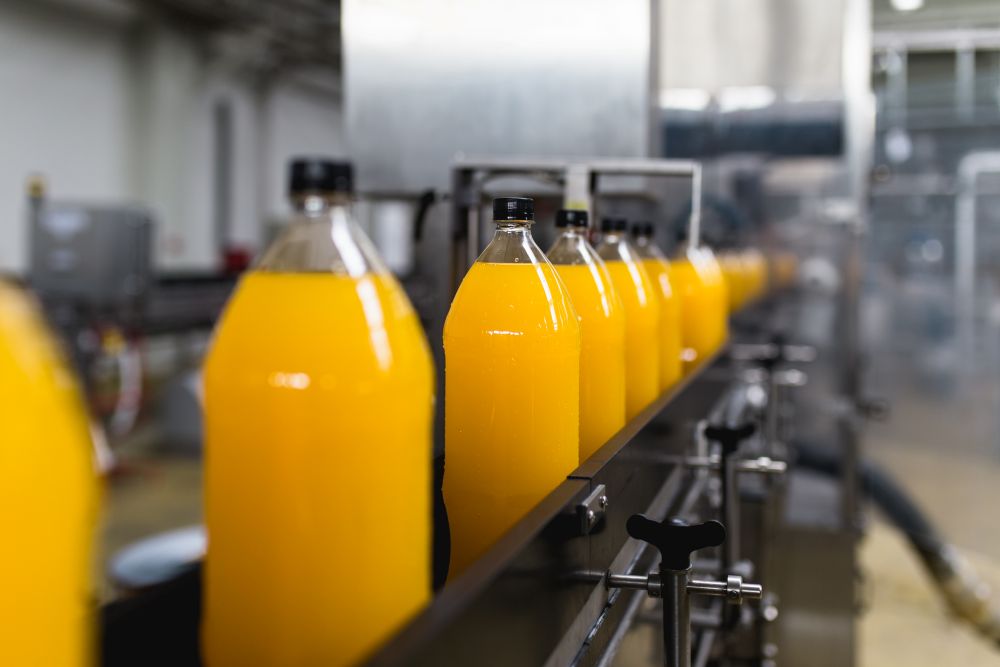 Image Credit: hedgehog94 / Adobe Stock
Investigators then expanded sampling to include critical control points throughout production, from raw materials through filling operations. Results showed that yeast were present before pasteurization but not afterward, indicating that pasteurization was performing effectively. However, yeasts were detected in filling equipment even after sanitation and were also found in finished product after filling.
The investigation identified a hygiene failure in the filling equipment as the root cause of the spoilage issue. Additional findings revealed other microbial risks in raw materials, rinse water, extractors, and tanks, allowing the facility to address multiple concerns during the same investigation. Corrective actions included revised cleaning protocols, targeted sanitation measures, revised sampling plans, and ongoing metagenomic surveillance.
As a result, the processor saw customer complaints fall by more than 50 percent within six months of implementing the solution, as well as improved product stability and fewer production losses.
Applications Beyond Spoilage Investigations
Monitoring Microorganisms that Affect Processes
Metagenomics also enables the proactive monitoring of microorganisms that affect processes and product quality. For example, maintaining effective ratios of fermentative organisms and ensuring fermentations run consistently within expected timeframes is critical for manufacturing facilities, and especially large operations. Metagenomics tools can be applied to fermentation monitoring, offering early warnings of when fermentation times might start to drift and cause operational problems.
Shelf-Life Studies and Runtime Extension
Metagenomics tools can also support shelf-life extension and run-time extension efforts.
Traditionally, evaluating an extended production run requires determining which indicator organisms should be monitored and how they should be tested. Metagenomic analysis allows processors to evaluate how microbial communities change throughout a production run. Stable microbial profiles may indicate that a process remains under control, while shifts in microbial populations may signal the emergence of contamination issues that require corrective action.
A similar approach can be applied to shelf-life studies. By monitoring microbial populations over time, facilities can identify which organisms increase during storage and then trace those organisms back to potential sources in the production environment.
Evaluating Cleaning and Sanitation Programs
Metagenomics can also be used to evaluate cleaning and sanitation programs. Comparing microbial populations before and after cleaning can reveal organisms that persist despite sanitation efforts. In some cases, these organisms may be associated with biofilms. In others, they may persist because they occupy equipment niches that are difficult to access during routine cleaning. Understanding which organisms remain and where they are located can help facilities determine whether changes to sanitation procedures, equipment disassembly practices, or hygienic design are needed.
Building a Data-Driven Preventive Strategy
Metagenomics offers a way to move beyond reactive, isolated investigations and establish routine surveillance programs that monitor microbial trends throughout a facility. By integrating data from products, equipment, environmental sites, and raw materials, processors can identify potential risks earlier, implement targeted corrective actions, and verify that those actions are effective.
For facilities looking to move from reacting to spoilage events toward a preventive strategy, metagenomic surveillance can provide the information needed to stay in control of microbial risks before they affect product quality or reach consumers.
 Image Credit: amorn / Adobe Stock

