Food Safety
search
Ask Food Safety AI
cart
facebook twitter linkedin instagram youtube
  • Sign In
  • Create Account
  • Sign Out
  • My Account
Food Safety
  • NEWS
    • Latest News
    • Food Safety Five Newsreel
  • PRODUCTS
  • TOPICS
    • Contamination Control
    • Food Types
    • Management
    • Process Control
    • Regulatory
    • Sanitation
    • Supply Chain
    • Testing and Analysis
  • PODCAST
  • EXCLUSIVES
    • eBooks
    • Sponsored Insights
    • Sponsored White Papers
    • FSM Distinguished Service Award
    • Interactive Product Spotlights
    • Videos
  • MORE
    • BUYER'S GUIDE
    • NEWSLETTERS >
      • Archive Issues
      • Subscribe to eNews
    • Store
    • ASK FSM AI
  • WEBINARS
  • FOOD SAFETY SUMMIT
  • FSM FEATURES
    • FSM Features Collection
    • eMag Archives
    • Editorial Advisory Board
    • Contact
    • Advertise
  • SIGN UP!
NewsContamination ControlFood TypeRegulatoryChemical ControlIngredientsFDA

FDA Quietly Included Provision in GRAS Proposed Rule to Expand One ‘Loophole’ While Tightening Another
By Bailee Henderson
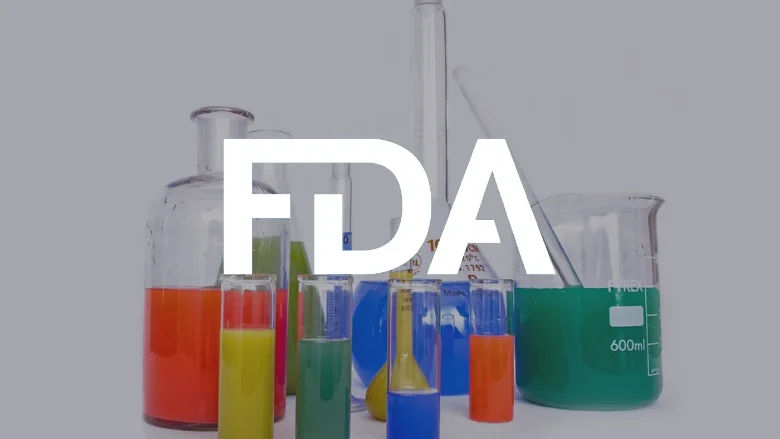
chemicals in beakers fda logo overlay
Image credit: PublicDomainPictures via Pixabay
October 14, 2026

Need to Know

  • FDA’s proposed rule to require mandatory GRAS notifications also has a provision to expand the Threshold of Regulation (TOR) exemption to include food additives and ingredients
  • Currently, TOR only applies to food contact substances that may migrate into food, exempting qualifying substances from regulation if they are not shown to be carcinogenic and dietary concentrations remain below 0.5 parts per billion (ppb)
  • The proposed expansion would allow TOR-qualifying substances directly or indirectly added to food to bypass formal FDA food additive review and GRAS notification requirements
  • Unlike GRAS submissions or food additive petitions, TOR submissions only require minimal data (e.g., identity, dietary exposure); a full safety narrative is not required for a TOR submission to FDA
  • Critics raised concerns that some chemicals may cause adverse health effects below 0.5 ppb even if they are not carcinogenic, and that TOR does not account for cumulative dietary exposure
  • The public comment period for FDA’s proposed GRAS rule, including the TOR expansion, remains open through December 9, 2026

When the U.S. Food and Drug Administration (FDA) proposed a rule in August to tighten the Generally Recognized as Safe (GRAS) pathway—which has long been criticized as a “loophole” that allows chemicals to enter the U.S. food supply without oversight—the agency quietly added a provision to expand another pathway used to allow the use of unreviewed food contact materials to also include food additives and substances.

FDA widely publicized the August GRAS proposed rule as a win for the “Make America Healthy Again” (MAHA) movement, as it would require companies to notify the agency when they conclude that a substance used in human or animal food is GRAS. Although companies would still be able to self-determine the safety of ingredients and additives if they can provide the requisite data and evidence of their safety, the proposed rule would end the existing voluntary notification system for most GRAS substances.

What the Administration did not publicize about the proposed rule, however, are revisions to 21 CFR 170.39, also known as the Threshold of Regulation (TOR), which would open a new pathway for food additives and ingredients to enter the food supply without formal FDA review through exemption.

The public has until December 9, 2026 to submit comments on the GRAS proposed rule, including the expansion of TOR, under “Docket FDA-2025-N-3262” in the Federal Register.

What is the Threshold of Regulation Exemption?

TOR, which currently only applies to substances used in food contact materials (e.g., packaging, manufacturing/processing equipment) that may be expected to migrate into food, allows a substance to be exempt from applicable regulations if it has not been shown to be a carcinogen and its resultant dietary concentration is less than 0.5 parts per billion (ppb). Unlike GRAS submissions or food additive petitions, TOR submissions to FDA only require minimal data (e.g., identity, dietary exposure); a full safety narrative is not required for a TOR submission.

FDA’s justification for TOR is that it applies to instances where “migration is so trivial there are no concerns for safety” and “very low dietary exposure presents no meaningful safety concern.”

The August GRAS proposed rule would amend TOR to include substances used in foods as well as food contact substances.

Looking for quick answers on food safety topics?
Try Ask FSM, our new smart AI search tool.
Ask FSM →

“We propose amending [TOR] to provide that any substance used in food (both directly or indirectly added to food) will be exempted from regulation as a food additive or from the GRAS notification requirement if it meets the TOR criteria,” FDA states in the proposed rule.

Some Substances Can Cause Harm Below TOR Threshold

According to experts who spoke to The Guardian (which was the first outlet to publish an analysis specifically highlighting the TOR exemption provision in the GRAS proposed rule), it is possible for many chemicals to cause harm—such as endocrine disruption, brain damage, and reproductive effects—at levels below 0.5 ppb, even if they are not carcinogenic. TOR expert Maricel Maffini, Ph.D., remarked, "FDA and industry have this position that 'if there’s only a little bit of something in the diet, then it’s not going to be problematic,' but that isn’t supported by science of any kind.”

Even in its current, more limited form, the TOR exemption has drawn criticism. For example, TOR enabled manufacturers to use perchlorate, more commonly known as a “rocket fuel chemical,” in grain bags, which the Environmental Defense Fund and allies said increased the amount of perchlorate detected in children’s cereals.

Other chemicals that could potentially cause harm at levels below 0.5 ppb include phthalates, bisphenols, and per- and polyfluoroalkyl substances (PFAS).

In a statement, Consumer Reports Director of Food Policy Brian Ronholm said the TOR expansion "rests on the scientifically unsupported assumption that substances present in food at dietary concentrations below 0.5 ppb—or 500 parts per trillion (ppt)—cannot pose a health risk. Current scientific data contradict this threshold, as [PFAS] such as PFOA and PFOS are known to cause adverse health effects at levels significantly lower than 500 ppt."

In an analysis for the chemicals industry (which does not take a stance "for" or "against" the proposed rule), chemicals expert and CCO of Alliance Chemical, Andre Taki, affirmed that "Some hormone-active substances are reported to have effects at very low doses, and a carcinogen screen does not test for those effects." However, he pointed out that, in the GRAS proposed rule, FDA reserves the right to refuse an exemption where “available information establishes that the proposed use may pose a public health risk."

TOR Does Not Consider Cumulative Exposure and Other Concerns

Mr. Ronholm and sources who spoke to The Guardian pointed out that TOR does not consider cumulative dietary exposure, that it creates a secondary loophole allowing carcinogens if the substance is created as an impurity, and that it provides no labeling provision enabling consumers to find out if a product contains a TOR chemical.

On cumulative exposure, Mr. Ronholm explained, "[TOR] neglects to consider that multiple direct and indirect food additives— each individually below the 500 ppt limit—could act on the same safety endpoint, potentially resulting in aggregate exposures that cause adverse health effects. Because the TOR framework operates without requiring comprehensive safety data or even ingredient identification, FDA would be virtually unable to identify these substances, rendering any evaluation of cumulative risk almost impossible."

Mr. Taki's analysis affirmed that the 0.5 ppb limit to qualify for TOR exemption is per substance, per use, which "does not account for many different substances, each present at a trace level."

Clarifying the claim that TOR allows for carcinogenic impurities, Mr. Taki explained that carcinogenic impurities are only TOR-qualifying at a lifetime cancer risk of no more than one in one million.

KEYWORDS: generally recognized as safe

Share This Story

1786925983615

Bailee Henderson is the Director of Content Strategy for Food Safety Magazine. In the day-to-day, she covers industry-relevant current events, regulatory affairs, and scientific developments. She also produces the Food Safety Five Newsreel, edits the twice-weekly Food Safety Digest newsletter, and manages the brand's social media channels. Notably, Bailee's coverage for Food Safety Magazine has been featured in national televised news segments including CBS Sunday Morning and MSNBC's Rachel Maddow Show. She can be reached at hendersonb@bnpmedia.com.

Recommended Content

JOIN TODAY
to unlock your recommendations.

Already have an account? Sign In

  • people holding baby chicks

    Serovar Differences Matter: Utility of Deep Serotyping in Broiler Production and Processing

    This article discusses the significance of Salmonella in...
    Testing & Analysis
    By: Nikki Shariat Ph.D.
  • woman washing hands

    Building a Culture of Hygiene in the Food Processing Plant

    Everyone entering a food processing facility needs to...
    Training
    By: Richard F. Stier, M.S.
  • graphical representation of earth over dirt

    Climate Change and Emerging Risks to Food Safety: Building Climate Resilience

    This article examines the multifaceted threats to food...
    Management
    By: Maria Cristina Tirado Ph.D., D.V.M. and Shamini Albert Raj M.A.
Manage My Account
  • eMagazine Subscription
  • Subscribe to Newsletters
  • Manage My Preferences
  • Website Registration
  • Subscription Customer Service

More Videos

Sponsored Content

Sponsored Content is a special paid section where industry companies provide high quality, objective, non-commercial content around topics of interest to the Food Safety Magazine audience. All Sponsored Content is supplied by the advertising company and any opinions expressed in this article are those of the author and not necessarily reflect the views of Food Safety Magazine or its parent company, BNP Media. Interested in participating in our Sponsored Content section? Contact your local rep!

close
  • Top view portrait of two factory workers standing by conveyor belt during quality inspection at food production, copy space
    Sponsored byFlexXray

    Foreign Material By the Numbers: What the 2026 Benchmark Report Reveals

  • a conveyorized industrial metal detector system that appears to resemble a Loma Systems IQ4 Metal Detector setup with an integrated conveyor belt and control panel for food or package inspection.
    Sponsored byMettler Toledo

    Beyond Detection: How to Avoid Physical Contamination in Food Through a Smarter Inspection Strategy

  • The image displays a bottling plant production line, commonly used in the beverage industry for filling and packaging soft drinks.
    Sponsored byBIOIONIX

    Sustainability with ROI: A Beverage Producer Case Study in Water Savings

Popular Stories

farmer walking through field of lettuce

With Cyclospora Lettuce Outbreak Over, Taylor Farms Speaks Up as FDA is Questioned

warehouse manager

FDA Announces Food Traceability Rule Exemption for Certain Small Businesses, Considers Additional Flexibilities

Managers discuss operations in canned fish production facility

Building Leadership Buy-In for Food Safety

allergens ebook

Events

October 15, 2026

How to Prevent Physical Contamination in Food Production and Strengthen Compliance

Live: October 15, 2026 at 2:00 pm EDT: Attend this webinar to gain insight into how product inspection helps protect your brand, reduce recall risk, and support compliance.

October 29, 2026

FDA Proposes Major GRAS Reform: What It Could Mean for Your Business

Live: October 29, 2026 at 2:00 pm EDT: Attend this webinar to examine potential implications for self-GRAS, Flavor and Extract Manufacturers Association (FEMA) GRAS, and food-contact substances.

November 5, 2026

How Middle Managers Shape Food Safety Culture and Risk Performance

Live: November 5, 2026 at 11:00 am EST: From this webinar, attendees will learn how investing in middle managers improves both FSQ strategy implementation and accountability across all levels of the company.

View All

Products

Global Food Safety Microbial Interventions and Molecular Advancements

Global Food Safety Microbial Interventions and Molecular Advancements

See More Products

Related Articles

  • assortment of processed food- chips candy cookies soda fries ketchup

    Regulatory Updates: GRAS Proposed Rule Clears OMB Review; FDA Sends UPF Whitepaper to OIRA

    See More
  • canned tuna

    FDA Issues Proposed Rule to Revise Standards of Identity, Fill of Container for Canned Tuna

    See More
  • FDA logo

    FDA publishes proposed rule to establish laboratory accreditation program for food testing

    See More

Related Products

See More Products
  • 9781138070912.jpg

    Trends in Food Safety and Protection

  • 1119237963.jpg

    Food Safety in China: Science, Technology, Management and Regulation

  • food-safety-making.jpg

    Food Safety: Making Foods Safe and Free From Pathogens

See More Products

Events

View AllSubmit An Event
  • October 29, 2026

    FDA Proposes Major GRAS Reform: What It Could Mean for Your Business

    Live: October 29, 2026 at 2:00 pm EDT: Attend this webinar to examine potential implications for self-GRAS, Flavor and Extract Manufacturers Association (FEMA) GRAS, and food-contact substances.
  • March 31, 2026

    Regulatory Risk, Ingredient Safety, and GRAS: What Companies Need to Act on Now

    On Demand: From this webinar, attendees will recognize patterns in food policy affecting dietary guidelines, UPFs, state legislative actions, and expected GRAS reform.
View AllSubmit An Event

Related Directories

  • Provision Analytics

    Provision’s cloud software provides food and beverage enterprises with a scalable solution for centralizing food safety management. With one unified hub to manage SOPs, tasks, records, and reporting across many locations and compliance programs, Provision ensures consistent execution and real-time visibility into food safety performance. The platform is known for its intuitive design and ease of use, empowering frontline operators to stay compliant without added overhead. With a focus on risk management, Provision transforms fragmented compliance efforts into structured, actionable insights, helping organizations scale confidently while minimizing their likelihood of non-conformance.
  • Women In Food Safety

    Women in Food Safety is a US-based global nonprofit organization dedicated to empowering and advancing women in the food safety and quality industry. Women In Food Safety provides a platform for professionals at all stages of their careers to grow, share knowledge, and support one another. Through community events, educational initiatives, and leadership development, we are building a more inclusive and resilient future for food safety worldwide. Together, we can do BETTER!
  • MDB

    MDB is a specialized advisory firm focused on supply chain traceability, transparency, and sustainability for food, CPG, and pharmaceutical organizations. We support clients in navigating evolving regulatory requirements, including FSMA Rule 204, while building capabilities that enhance operational efficiency, risk management, and data-driven decision-making.
×

Never miss the latest news and trends driving the food safety industry

Newsletters | Website | FSM Features Collection

JOIN TODAY!
  • RESOURCES
    • Advertise
    • Contact Us
    • Directories
    • Store
    • Want More
  • SIGN UP TODAY
    • Create Account
    • eMagazine
    • Newsletters
    • Customer Service
    • Manage Preferences
  • SERVICES
    • Marketing Services
    • Reprints
    • Market Research
    • List Rental
    • Survey/Respondent Access
  • STAY CONNECTED
    • LinkedIn
    • Facebook
    • Instagram
    • X (Twitter)
  • PRIVACY
    • PRIVACY POLICY
    • TERMS & CONDITIONS
    • DO NOT SELL MY PERSONAL INFORMATION
    • PRIVACY REQUEST
    • ACCESSIBILITY

Copyright ©2026. All Rights Reserved BNP Media, Inc. and BNP Media II, LLC.

Design, CMS, Hosting & Web Development :: ePublishing