FDA Proposes Requiring Mandatory Notifications for Self-GRAS Determinations
Need to Know
- FDA's proposed rule would replace voluntary GRAS notifications with mandatory submissions for food ingredients and food-contact substances
- The proposal would establish a streamlined notification pathway for certain GRAS substances already on the market, with submissions due within one year of the final rule's effective date
- Mandatory notification would not constitute FDA premarket approval or eliminate the statutory GRAS exemption under the Federal Food, Drug, and Cosmetic Act
- Although the proposal could improve transparency and FDA's post-market oversight, statutory enforcement limitations and agency resource constraints could hinder its effectiveness
In an April 2025 address at a summit sponsored by the Ocean Plastics Leadership Network, Robert F. Kennedy Jr., Secretary of the U.S. Department of Health and Human Services (HHS), announced to an audience that included leaders of the food and food packaging industry, that he was "interested in a revolution" in the regulation of their products. He proposed a half-dozen ways in which he intended to achieve this goal, including elimination of the self-determined generally recognized as safe (GRAS) pathway to marketing new products and a systematic post-market review program to review previously approved "food additive chemicals and food contact chemicals."1
True to his word, following a lengthy, eight-month-plus review by the White House Office of Management and Budget, the U.S. Food and Drug Administration (FDA) published in the Federal Register on August 11, 2026 a proposed rule requiring mandatory notifications to the Agency for self-determined GRAS conclusions, which would replace the current voluntary GRAS notification regulation.2 The proposal also addresses the manner in which the review of the mandatory notifications may be integrated with FDA's recently established Post-Market Review program.
The justification for the proposal is described by FDA as "provid[ing] greater transparency about substances that are added to food (including substances already in the food supply and those being introduced into interstate commerce for use in food for the first time), so that FDA can more efficiently determine if the use of a substance constitutes a food additive use that is subject to FDA review and approval under the [Food, Drug, and Cosmetic] Act."3 FDA further explains that this "change is expected to provide FDA with information to help identify the use of potentially unsafe substances in food, thereby enabling FDA to take action as appropriate and regulate the safety of food substances more effectively."4
At first glance, the proposed rule appears to substantially strengthen FDA's authority over GRAS substances by imposing a new regulatory mandate on industry. However, while the proposal may provide FDA with more information on GRAS substances marketed for use in or with food, the regulatory framework lacks provisions to enforce the proposal's requirements.
While the proposed rule, if adopted, may successfully achieve its goal of providing greater transparency on substances used in the food supply and potentially equip FDA with a better mechanism to identify potentially unsafe substances being marketed for use in food, the rule does not—and legally cannot—transform the GRAS pathway into an FDA premarket approval program. Absent affirmative congressional action to alter the statutory definition of a "food additive," the proposal's effectiveness as a regulatory and enforcement tool remains inherently constrained by the boundaries of the Federal Food, Drug, and Cosmetic Act (FD&C Act).5
The Evolution of the GRAS Exemption
FDA's newly proposed rule finds its historical and statutory origins in the Food Additives Amendment of 1958. This legislation amended the FD&C Act to provide FDA authority to regulate the use of food additives in the production of food and food packaging materials. The FD&C Act defined a "food additive" as "any substance the intended use of which is reasonably expected to result, directly or indirectly, in its becoming a component or otherwise affecting the characteristics of any food" with some exceptions and exclusions.6 These so-defined food additives statutorily require review and clearance by FDA prior to their use in food. Failure to obtain such clearance prior to use makes them "unapproved food additives" and, by definition, renders the food in or with which they are used automatically adulterated.7
Originally, manufacturers or users of these substances would obtain FDA review and premarket clearance through submission of food additive petitions to FDA. Many years later, the statute was again amended, allowing substances intended for use in contact with food (such as food packaging materials) to be reviewed and cleared by FDA through a premarket Food Contact Notification (FCN) process.8
Looking for quick answers on food safety topics?
Try Ask FSM, our new smart AI search tool.
Ask FSM →
Importantly, excluded from the food additive definition are "substances generally recognized, among experts qualified by scientific training and experience to evaluate its safety, as having been adequately shown through scientific procedures (or in cases of substances used prior to January 1, 1958, also by common use in food) to be safe under the conditions of its intended use," i.e., GRAS substances.9 As GRAS substances are not defined as "food additives," they are not subject to the petitioning and premarket clearance requirements of Section 409 of the FD&C Act. Instead, substances that are GRAS may be used without prior authorization if they are found by qualified experts (or through common use in food prior to 1958) to be safe.
FDA promulgated regulations establishing the criteria upon which determinations must be based to declare a substance's intended use to be GRAS. Among the criteria are the need for "common knowledge about the substance throughout the scientific community knowledgeable about the safety of substances directly or indirectly added to food," and a determination that is based on "the same quality and quantity of scientific evidence as is required to obtain a food additive regulation for the ingredient."10 The regulations also call for the determination to be based upon "published studies which may also be corroborated by unpublished studies and other data and information."11
In the decades following the enactment of the Food Additives Amendment, FDA attempted to gain control over the process by which these decisions were made. To that end, FDA first implemented a voluntary process by which companies could petition FDA to affirm the GRAS status of a substance. Later, FDA moved to a voluntary notification scheme under a 1997 proposed rule,12 which, for almost 20 years, FDA operated as an informal system for reviewing GRAS determinations until the agency adopted a final GRAS rule in 2016.13 This rule established a voluntary notification procedure, allowing companies to submit GRAS conclusions to FDA for evaluation. Upon review, if FDA found the data sufficient, it would issue a "No Questions" letter signifying that it had no further questions at that time regarding the notifier's conclusion that the substance is GRAS.
Although the 2016 final rule withstood subsequent legal challenges from public advocacy groups,14 the voluntary nature of the notification process remained a lightning rod for criticism. Critics, who cleverly recast GRAS substances as "Generally Recognized as Secret,"15 argued that FDA and the public were left in the dark regarding numerous chemical substances being added directly to food or migrating from packaging, raising the question as to whether the food supply lacked adequate federal oversight under the current system. A 2010 report by the Government Accountability Office (GAO) echoed some of these concerns.16 This was followed in subsequent years by the introduction in Congress of several bills to overhaul the FD&C Act to reign in or eliminate the GRAS exemption. None of these bills reached the floor of either legislative chamber or saw a vote on the floor.
Enter Robert F. Kennedy Jr. On the 2024 presidential campaign trail, Kennedy embraced many of the same criticisms and repeatedly declared it was time to end the "GRAS loophole" in FDA's premarket clearance system.17 Upon being named Secretary of HHS, which oversees FDA, the current proposed rule is the culmination of Secretary Kennedy's efforts, but it does not quite achieve his goal.
Deconstructing the Changes Introduced by the Proposed Rule
FDA's proposed rule introduces structural changes designed to overhaul how both industry and the agency deal with GRAS determinations. FDA notes three primary actions on its part. The first is to institute a mandatory notification requirement for all GRAS food ingredients that are intended to be used in food or in food-contact materials (Figure 1). The second is to identify categorical exceptions from the aforenoted GRAS notice requirement, which, importantly, include a time-limited option to make a streamlined submission to FDA for certain substances already in use in interstate commerce. The third is to identify uses of substances that are not eligible to be the subject of a GRAS notification. We will concentrate on the first two actions.
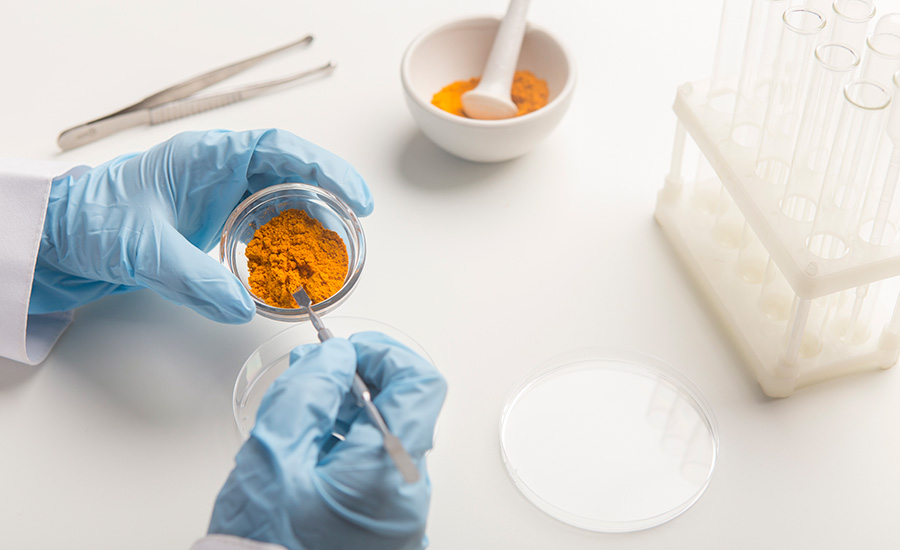
For prospective GRAS applications, FDA is expecting industry to submit comprehensive technical dossiers that include specific chemical identity, detailed manufacturing methods, dietary exposure data, and a comprehensive narrative demonstrating that the scientific evidence satisfies the legal and scientific standards for general recognition of safety. These mandatory GRAS notifications would extend to any materials that otherwise meet the definition of a food additive under the FD&C Act, including "any substance intended for use in producing, manufacturing, packing, processing, preparing, treating, packaging, transporting, or holding food,"18 thereby clearly bringing food packaging and other food-contact materials within its scope.
For GRAS substances that are already on the market but are not the subject of a voluntary GRAS notification, or which otherwise have not already been questioned or rejected by FDA as GRAS (with some limited exceptions), FDA proposes a categorical exception by way of a time-limited, streamlined notification pathway. This pathway permits these "legacy" substances to continue to be marketed while providing the agency with limited information on the substances' identity, intended use, level of use, and purpose.
For these substances, the agency is not proposing to require submission of the underlying information or data pertaining to a conclusion of GRAS status. In fact, the regulations as proposed do not require any justification of safety. However, submitters of these streamlined notices must include evidence of the substance's presence in interstate commerce prior to the effective date of the final rule. This streamlined submission is required to be filed with the agency within one year after the effective date of the final rule. No further submission will be required unless requested by the agency as part of a post-market review. Of course, it would not be surprising to see many of the same critics of the GRAS "loophole" attack this exception as a continuation of the agency's failure to require full transparency for all substances found in the food supply.
FDA also suggests that substances that are the subject of an exemption from regulation provided by the agency through its Threshold of Regulation (TOR) rule19 are also not required to submit a GRAS notification, streamlined or otherwise. By way of background, in 1995, the agency amended food additive regulations to formally establish a process for determining when the migration of a food-contact substance to food is "so trivial as not to require regulation of the substance as a food additive."20
The TOR permits FDA to exempt a food-contact material from regulation based on exposure and toxicology. The dietary exposure of the material must be less than 0.5 parts per billion (ppb) or, if it is already cleared for use as a directive additive, exposure from the food-contact use must be less than 1 percent of the Accepted Daily Intake (ADI). With respect to toxicology data, the food-contact material cannot be carcinogenic or have any impurities that are potent carcinogens. On its face, this exception to the GRAS notification requirements is wholly unnecessary, as a TOR exemption provided by FDA for a specific substance for a specific intended use is, in fact, already cleared for use by the agency. No additional clearance is, nor should be, needed. Furthermore, if FDA wanted to make the TOR exemption a more attractive alternative to the GRAS pathway, it would permit the use of the rule by industry without providing review and clearance by FDA. Instead, a notice to the agency should suffice.
In an interesting twist, however, FDA is proposing an expansion of the TOR to include substances directly added to food. The TOR rule does not currently include within its scope substances added directly to food. Now, under the new proposal, certain general food ingredients and food processing substances that meet similarly negligible exposure thresholds would not need to be cleared by a food additive regulation to permit their use nor require the submission of a GRAS notification. This expansion, however, is not likely to provide much of a meaningful alternative to the GRAS pathway, as these substances are usually used at levels that would exceed the dietary exposure limits required in the current rule.
The Limits of the Proposed Rule
There are real limits on what the proposed rule changes and what it cannot. First and foremost, submission of a self-determined GRAS notification does not change the legal and regulatory status of the substance. The constraint facing FDA is Section 201(s) of the FD&C Act, which provides a broad definition of what constitutes a "food additive" while explicitly carving out GRAS substances as excluded from the definition. As a GRAS substance is legally not a food additive, it does not require premarket clearance by FDA, thereby preventing FDA from using its traditional enforcement tools (including seizing adulterated goods, enjoining commercial distribution, or issuing warning letters), unless the Agency can establish that the substance is an unapproved food additive and not GRAS at all.
The proposed rule changes the procedural steps a company must take regarding its safety conclusion, but it leaves the legal status of a GRAS substance untouched. A company may continue to market a substance based on its own GRAS determination while FDA reviews the notification. Even after FDA responds favorably to the notification, the substance remains a GRAS substance and is not a regulated food additive or a cleared food-contact substance.
In other words, a mandatory GRAS notification is merely a disclosure mechanism; it informs FDA of a company's safety conclusion, but it does not convert that conclusion into an FDA-issued imprimatur. Indeed, even if FDA disputed a GRAS conclusion, the agency would need to take additional steps to remove the substance from the market if the purveyor resists the agency's conclusion, however difficult it may be to find willing buyers for a substance that FDA has publicly stated poses an actual or potential safety hazard.
Conclusion: A Transparency Reform, not a Regulatory Revolution
The proposal would seem to have the potential to strengthen FDA's information-gathering, monitoring, and triage capabilities with respect to identifying GRAS substances that are present in the food supply. Greater insight indeed may increase the effectiveness of the agency's risk management abilities by giving its toxicologists and other staff scientists the data and information needed to target problematic substances with greater precision.
However, FDA would need to overcome some institutional and structural barriers before the proposal can truly be effective. First, in March of last year, a significant reduction in the FDA workforce took place, involving some 3,500 FDA employees.21 While some of these layoffs were subsequently rescinded, FDA still lost staff from voluntary retirements or departures; many of these positions were not refilled. Indeed, according to Dr. Heidi Overton, President Trump's pick for the next FDA Commissioner, testifying at her Senate confirmation hearing on September 24, 2026, "The agency would need more resources in its Human Foods Program to properly be able to do all of those mandatory notifications."22
Second, the old expression, "locks are for honest people," bears some reflection here. Among the food industry, little doubt exists that major brands and their suppliers abide by corporate policies regarding compliance with the law and strict adherence to safety standards. While accidents do happen, and the occasional incident does arise in which willful actions or omissions result in injury, the latter scenario is by far the exception. For those companies that play more loosely when it comes to adherence to federal and state laws and regulations, little upside exists to drive submission of GRAS notifications, whether streamlined for substances already on the market or full submissions for newly introduced products. With respect to these products, FDA would be unable to apply its post-market paradigm as envisioned in the proposed rule. As evident in the examples FDA provides in the proposed rule involving food products containing THC, caffeine in alcoholic beverages, and similar situations, FDA will identify the hazards such products present only after they occur and use its available enforcement tools accordingly at that time.23
In conclusion, any concern that this proposal eradicates the GRAS exemption is unfounded. Once the proposal becomes final, GRAS will remain a statutory exemption to FDA premarket clearance for the uses of food (and food-contact) substances that have been properly deemed to be such under the FD&C Act and FDA regulations. The agency will continue to bear the burden of showing that a substance is not GRAS whenever it seeks to challenge such a substance's intended use. While the proposed rule may be effective in advancing agency monitoring and data-collection activities, transparency, and accountability, it in no way does away with the GRAS exemption. In that sense, it hardly constitutes a "revolution" in the regulation of the food supply.
References
- Ocean Plastics Leadership Network. Chemicals of Concern Policy Summit, Charlotte, North Carolina, April 23, 2025. Remarks of U.S. Department of Health and Human Services Secretary Robert F. Kennedy Jr. https://www.youtube.com/watch?v=qNR2W63R-rQ.
- U.S. Food and Drug Administration (FDA). Substances Generally Recognized as Safe (Proposed Rule). 91 Federal Register 51834. August 11, 2026. https://www.federalregister.gov/documents/2026/08/11/2026-16296/substances-generally-recognized-as-safe.
- Id. at 51835.
- Id.
- Food Additives Amendment to the Food, Drug, and Cosmetic Act (FD&C Act). Public Law 85-929. 1958. https://www.govinfo.gov/content/pkg/STATUTE-72/pdf/STATUTE-72-Pg1784.pdf.
- 21 U.S.C. § 321(s).
- 21 U.S.C. § 348(a); 21 U.S.C. § 342(a)(2)(C).
- 21 U.S.C. § 348(h).
- 21 U.S.C. § 321(s).
- 21 C.F.R. § 170.30(b).
- Id.
- 62 Fed. Reg. 18938 (Apr. 17, 1997).
- 81 Fed. Reg. 54960 (Aug. 17, 2016).
- Ctr. for Food Safety v. Becerra, 565 F.Supp.3d 519 (S.D. N.Y. 2021).
- Neltner, T. and M. Maffini. "Generally Recognized as Secret: Chemicals Added to Food in the United States." Natural Resources Defense Council. April 2014. https://www.nrdc.org/sites/default/files/safety-loophole-for-chemicals-in-food-report.pdf.
- U.S. Government Accountability Office (GAO). Food Safety: FDA Should Strengthen its Oversight of Food Ingredients Determined to be Generally Recognized as Safe (GRAS). GAO-10-246. February 3, 2010. https://www.gao.gov/products/gao-10-246.
- U.S. Department of Health and Human Services (HHS). "HHS Secretary Kennedy Directs FDA to Explore Rulemaking to Eliminate Pathway for Companies to Self-Affirm Food Ingredients are Safe." March 10, 2025. https://www.hhs.gov/press-room/revising-gras-pathway.html.
- 21 U.S.C. § 348(h)(6).
- HHS and FDA. Food Additives; Threshold of Regulation for Substances Used in Food-Contact Articles (Final Rule). 60 Federal Register 36582. July 17, 1995. https://www.ecfr.gov/current/title-21/chapter-I/subchapter-B/part-170/subpart-B/section-170.39.
- Id.
- Misko, G. "The Views of Robert F. Kennedy Jr. on Food and Food Packaging Safety." Food Safety Magazine August/September 2025. https://www.food-safety.com/articles/10626-the-views-of-robert-f-kennedy-jr-on-food-and-food-packaging-safety.
- U.S. Senate Committee on Health, Education, Labor and Pensions. "Nomination of Heidi Overton to be Commissioner of Food and Drugs." September 24, 2026. https://www.help.senate.gov/hearings/nomination-of-heidi-overton-to-be-commissioner-of-food-and-drugs.
- 91 Federal Register 51841.