Food Safety
search
Ask Food Safety AI
cart
facebook twitter linkedin instagram youtube
  • Sign In
  • Create Account
  • Sign Out
  • My Account
Food Safety
  • NEWS
    • Latest News
    • Sponsored Insights
    • Sponsored White Papers
  • PRODUCTS
  • TOPICS
    • Contamination Control
    • Food Types
    • Management
    • Process Control
    • Regulatory
    • Sanitation
    • Supply Chain
    • Testing and Analysis
  • PODCAST
  • EXCLUSIVES
    • Food Safety Five Newsreel
    • eBooks
    • FSM Distinguished Service Award
    • Interactive Product Spotlights
    • Videos
  • BUYER'S GUIDE
  • MORE
    • NEWSLETTERS >
      • Archive Issues
      • Subscribe to eNews
    • Store
    • ASK FSM AI
  • WEBINARS
  • FOOD SAFETY SUMMIT
  • EMAG
    • eMagazine
    • Archive Issues
    • Editorial Advisory Board
    • Contact
    • Advertise
  • SIGN UP!
NewsManagementProcess ControlRegulatoryInternationalPackagingInternational Standards/Harmonization

Codex Moves to Adopt Standardized Precautionary Allergen Labeling, Kicks UPFs Can Down the Road
By Bailee Henderson
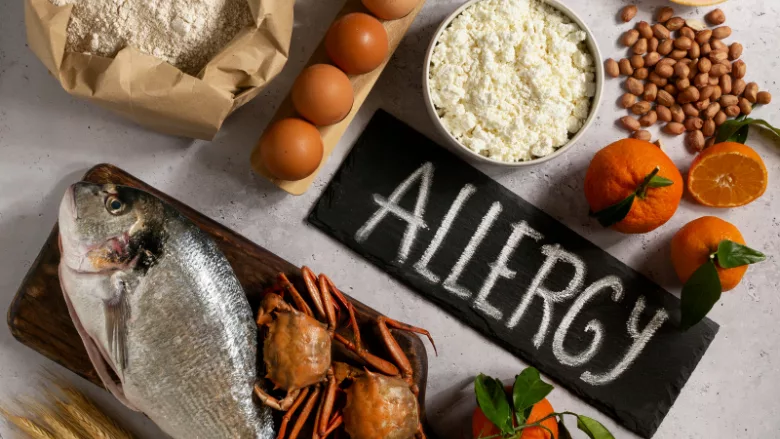
common food allergens and the word ALLERGY
Image credit: Freepik via Magnific
May 19, 2026

The 49th Meeting of the Codex Committee on Food Labeling (CCFL49) was held in Ottawa, Canada on May 11–15, 2026, where it advanced work on several standards and guidelines related to food labeling.

Specifically, three documents were recommended for adoption during CCFL49 on standardized precautionary allergen labeling (PAL), labeling provisions for multipacks, and flexible labeling guidelines for emergencies. These standards will be considered for final adoption at the upcoming 49th Meeting of the Codex Alimentarius Commission (CAC) this July in Geneva, Switzerland.

Interestingly, CCFL also declined a proposal to initiate work related to ultra-processed foods (UPFs).

Risk-Based Precautionary Allergen Labeling Guidelines

Notably, after making revisions for clarity and consistency, CCFL completed and recommended the adoption of guidelines on the use of PAL under the General Standard for the Labeling of Pre-Packaged Foods. These guidelines incorporate a risk-based framework for PAL and recommend a systematic, uniform approach to utilizing PAL statements based on established threshold levels and reference doses for priority food allergens, including gluten.

Recognizing Codex’s progress toward the official adoption of risk-based PAL, several countries, including the U.S., UK, and EU, have already opened discussions around the possible adoption of such a framework.

During CCFL49, members of the regional Codex Coordinating Committees for Latin America, Africa, Europe, and the Near East underlined the importance of training and national capacity-building to support the adoption of risk-based food allergen labeling. On behalf of their respective Coordinating Committees, representatives from Uruguay and Gambia specifically called for expanded, region-specific capacity-building workshops held by the Food and Agriculture Organization of the United Nations (FAO) and the World Health Organization (WHO) on allergen risk assessment, focusing on knowledge development and the practical application of tools. FAO and WHO representatives confirmed their willingness to support such capacity-building activities.

CCFL also requested that the Codex Committees on Food Hygiene (CCFH) and on Nutrition and Foods for Special Dietary Uses (CCNFSDU) respectively review the Code of Practice on Allergen Management for Food Business Operators and the Standard for Foods for Special Dietary Use for Persons Intolerant to Gluten to ensure consistency with the new PAL guidelines.

Looking for quick answers on food safety topics?
Try Ask FSM, our new smart AI search tool.
Ask FSM →

The guidelines were recommended by CCFL for adoption at Step 8 in the process of elaborating Codex Alimentarius standards, which is the last step where a draft standard is submitted to the Executive Committee for critical review. It is then forwarded to CAC for final adoption as a Codex standard.

Labeling Provisions for Multipacks

Provisions relevant to multipack foods under the General Standard for the Labeling of Pre-Packaged Foods were forwarded for adoption at Step 5/8, which expedites the adoption process by recommending that draft documents submitted at Step 5 bypass the comments and revisions cycle at Steps 6 and 7, moving directly to Step 8 for consideration before final adoption.

These provisions specify how products’ ingredient lists, net contents, and expiration dates should be labeled on multipacks or jointly presented food items, for transparency and clarity.

Emergency Flexible Labeling Guidelines 

Also advanced at CCFL49 were the Guidelines on the Application of Food Labeling Provisions in Emergencies, which outline principles and decision-making criteria for the application of flexible food labeling requirements in emergencies that cause supply chain disruptions, to help maintain an adequate and safe food supply.

Prior to CCFL49, infant and maternal health stakeholders expressed their opposition to the inclusion of infant formula products in these guidelines, arguing that flexible labeling would put vulnerable populations experiencing food insecurity at risk. This opinion was reiterated by observers during CCFL49, who called for the exclusion of infant formula from the guidelines. CCFL considered this request, but ultimately concluded that a blanket exclusion could restrict access to essential foods for vulnerable groups during shortages, and decided that the scope would remain general to cover all foods, including those intended for infants and children.

CCFL agreed to advance the text of the guidelines for final adoption by CAC.

Work on Ultra-Processed Foods Would Be ‘Premature’

Finally, CCFL declined a proposal to initiate work on UPFs during CCFL49, which had been submitted as a new potential work item for CCFL.

Committee members noted that no discussion paper or project document on UPF had been submitted to support the initiation of work, and that there is currently no clear scientific consensus on the definition of UPF. Moreover, members indicated that the relevance of UPF to the mandate of CCFL, particularly in relation to food labeling, is not yet sufficiently clear, and it is therefore premature to start new work in this area. The Codex Secretariat emphasized the importance of clearly identifying the problem to be addressed, supported by a discussion paper, before initiating new work. Therefore, CCFL agreed to remove UPF from the inventory of potential new work.


 

KEYWORDS: Codex labeling precautionary allergen labeling ultra-processed foods

Share This Story

Baileehendersonmay23

Bailee Henderson is the Director of Content Strategy for Food Safety Magazine. In the day-to-day, she covers industry-relevant current events, regulatory affairs, and scientific developments. She also produces the Food Safety Five Newsreel and edits the twice-weekly Food Safety Digest newsletter. Notably, Bailee's coverage for Food Safety Magazine has been featured in national televised news segments including CBS Sunday Morning and MSNBC's Rachel Maddow Show. She can be reached at hendersonb@bnpmedia.com.

Recommended Content

JOIN TODAY
to unlock your recommendations.

Already have an account? Sign In

  • people holding baby chicks

    Serovar Differences Matter: Utility of Deep Serotyping in Broiler Production and Processing

    This article discusses the significance of Salmonella in...
    Methods
    By: Nikki Shariat Ph.D.
  • woman washing hands

    Building a Culture of Hygiene in the Food Processing Plant

    Everyone entering a food processing facility needs to...
    Facilities
    By: Richard F. Stier, M.S.
  • graphical representation of earth over dirt

    Climate Change and Emerging Risks to Food Safety: Building Climate Resilience

    This article examines the multifaceted threats to food...
    International
    By: Shamini Albert Raj M.A. and Maria Cristina Tirado Ph.D., D.V.M.
Manage My Account
  • eMagazine Subscription
  • Subscribe to Newsletters
  • Manage My Preferences
  • Website Registration
  • Subscription Customer Service

More Videos

Sponsored Content

Sponsored Content is a special paid section where industry companies provide high quality, objective, non-commercial content around topics of interest to the Food Safety Magazine audience. All Sponsored Content is supplied by the advertising company and any opinions expressed in this article are those of the author and not necessarily reflect the views of Food Safety Magazine or its parent company, BNP Media. Interested in participating in our Sponsored Content section? Contact your local rep!

close
  • an automated industrial production line used in a modern food factory
    Sponsored byIFC

    A Formula for Food Processing Pest Management

  • fly
    Sponsored byOrkin Commercial

    Fly Control in Food Processing Facilities: Managing Seasonal Food Safety Risks

  • Darkling Beetle
    Sponsored byElanco Animal Health

    Integrated Pest Management: Protecting Poultry Operations as Seasons Change

Popular Stories

U.S. Food and Drug Administration (FDA).

FDA to Hire 2,200 Staffers as it Narrows Search for Commissioner, Names Produce Safety Director

dry instant noodles pack

Salmonella-Contaminated Instant Noodles Sicken Dozens of Children Across Europe

alfalfa sprouted seeds

Salmonella-Tainted Alfalfa Sprouts Sicken 109 People in 11 European Countries, One Death Reported

building a skilled workforce ebook

Events

July 21, 2026

Using AI Responsibly in Food Safety Management Systems

Live: July 21, 2026 at 2:00 pm EDT: This webinar will provide participants with guidance on how to effectively use generative artificial intelligence (AI) tools to develop key components of a food safety management system (FSMS).

August 6, 2026

Beyond Sanitation: Understanding the Hidden System Conditions That Allow Pathogens to Persist

Live: August 6, 2026 at 2:00 pm EDT: Attend this webinar to learn strategies for strengthening environmental control programs through a layered approach to pathogen management.

August 25, 2026

Don’t Wing It: Bird Control for Food Processing Facilities

Live: August 25, 2026 at 2:00 pm EDT: This webinar will cover why managing bird activity should be a priority for your business, the complexities involved in effective bird control, and proactive strategies to help protect your facility.

View All

Products

Global Food Safety Microbial Interventions and Molecular Advancements

Global Food Safety Microbial Interventions and Molecular Advancements

See More Products

Related Articles

  • male shopper reading food product label

    UK FSA Shows Support for Codex Precautionary Allergen Labeling Proposals

    See More
  • Red "X" over a jar of peanut butter

    FAO/WHO Recommend Uniform Precautionary Allergen Labeling as Codex Develops Guidance

    See More
  • table with array of major food allergens and plaque that says allergy

    Allergen Bureau Transitions to VITAL 4.0 Standard for Precautionary Allergen Labeling

    See More

Related Products

See More Products
  • 1119053595.jpg

    Food Safety for the 21st Century: Managing HACCP and Food Safety throughout the Global Supply Chain, 2E

  • 1119258073.jpg

    FSMA and Food Safety Systems: Understanding and Implementing the Rules

  • 9781138198463.jpg

    Food Safety Management Programs: Applications, Best Practices, and Compliance

See More Products

Events

View AllSubmit An Event
  • May 6, 2026

    Allergen Uncertainty: Risk Assessment, Reference Doses, and Codex Management Guidance

    On Demand: Attendees will gain insight into the importance of preparing for the industry's shift from detection-based methods to risk-based allergen management.
View AllSubmit An Event

Related Directories

  • Gold Standard Diagnostics

    Gold Standard Diagnostics develops and markets rapid test kits and analyzers for a wide range of food contaminants including: allergens, pathogens, patulin and mycotoxins, glyphosate and pesticides, VDRs, GMOs and more. Get accurate results in minutes on-site with Gold Standard Diagnostics test kits.
×

Never miss the latest news and trends driving the food safety industry

Newsletters | Website | eMagazine

JOIN TODAY!
  • RESOURCES
    • Advertise
    • Contact Us
    • Directories
    • Store
    • Want More
  • SIGN UP TODAY
    • Create Account
    • eMagazine
    • Newsletters
    • Customer Service
    • Manage Preferences
  • SERVICES
    • Marketing Services
    • Reprints
    • Market Research
    • List Rental
    • Survey/Respondent Access
  • STAY CONNECTED
    • LinkedIn
    • Facebook
    • Instagram
    • X (Twitter)
  • PRIVACY
    • PRIVACY POLICY
    • TERMS & CONDITIONS
    • DO NOT SELL MY PERSONAL INFORMATION
    • PRIVACY REQUEST
    • ACCESSIBILITY

Copyright ©2026. All Rights Reserved BNP Media, Inc. and BNP Media II, LLC.

Design, CMS, Hosting & Web Development :: ePublishing