Codex Adopts Internationally Harmonized Precautionary Allergen Labeling at CAC49

After years of development and deliberation, on July 7 at the 49th Session of the Codex Alimentarius Commission (CAC49), the global standards-setting body formally adopted international guidelines on the use of risk-based precautionary allergen labeling (PAL).
CAC49 is taking place July 6–10, 2026 in Geneva, Switzerland. Several other standards, in addition to the new PAL guidelines, have already been adopted or are slated for adoption during the meeting.
Concurrently with CAC49, the Commission also published its Strategic Plan 2026–2031, which outlines its overarching goals for the next six years.
Internationally Harmonized, Risk-Based PAL Statements
The new PAL guidelines have been adopted as an annex to the General Standard for the Labeling of Pre-Packaged Foods. They incorporate a risk-based framework for PAL and recommend a systematic, uniform approach to utilizing PAL statements based on established threshold levels and reference doses for priority food allergens, including gluten.
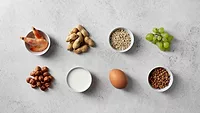
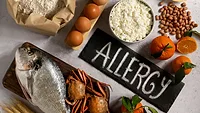
The guidelines are intended to address the issue of allergen warning statements that differ across the world and lack standardization in many countries. Such inconsistencies make it difficult for allergic consumers to realistically understand the risk associated with eating a food with an allergen warning statement. Therefore, the new Codex guidance aims to ensure such warnings are used only when the risk of unintended allergen presence has been scientifically assessed and cannot be adequately controlled through good allergen management practices.
Recognizing Codex’s progress toward the official adoption of risk-based PAL, several countries, including the U.S., UK, and EU, have already opened discussions around adopting such a framework nationally.
Other Standards Adopted at CAC49
Aside from the new PAL guidelines, additional standards adopted during the first day of CAC49 include:
- Revised Guidelines for the control of Campylobacter and Salmonella in chicken meat (CXG 78-2011): This revision follows updated expert advice from the Food and Agriculture Organization of the United Nations (FAO)/World Health Organization (WHO) Joint Expert Meetings on Microbiological Risk Assessment (JEMRA), which provided new recommendations on the management of risks associated with Campylobacter and Salmonella in chicken meat from primary production to consumption.
- Revised Guidelines on the application of general principles of food hygiene to the control of Listeria monocytogenes in foods (CXG 61-2007): These revisions follow updates to JEMRA’s risk assessments of L. monocytogenes in food commodities including ready-to-eat (RTE) diced cantaloupe, frozen vegetables, and RTE cold-smoked fish. The guidelines advise food business operators and competent authorities on a framework for the control of L. monocytogenes, with the primary purpose of minimizing the likelihood of illness arising from the presence of L. monocytogenes in foods. They focus on control measures that can be used, where appropriate, to minimize and/or prevent the contamination and/or the growth of L. monocytogenes in foods. The revision also provides updated guidance on environmental monitoring programs, characterizing isolates, and identifying RTE foods in which the growth of L. monocytogenes will not occur.
- Standard for baker’s yeast: In the absence of a harmonized international standard for yeast, in 2024, CAC47 approved new work on the development of a standard for bakers’ yeast. The standard applies to baker’s yeast as a food ingredient in the production of baked foods. As a widely traded commodity, different regions have different requirements for physical and chemical properties in baker’s yeast products, which may lead to trade barriers in importing and exporting these products between countries and regions. This is the first commodity standard fully elaborated by the Codex Committee on Food Additives (CCFA), which mainly elaborates maximum levels for food additives.
- Revisions to the General standard for food additives (GSFA, CXS 192-1995)–Polyglycerol esters of fatty acids (INS 475): Based on a sweeping review that considered the latest dietary exposure assessments, CCFA lowered use levels for 19 of the 54 Codex provisions related to polyglycerol ester emulsifiers. Examples include lowering the level in the food category “Fruit-based desserts, including fruit-flavored water-based desserts” from 5,000 milligrams per kilogram (mg/kg) to 100 mg/kg. CCFA also agreed to revoke six provisions, such as the use of “Steamed breads and buns” in the food category.
- Standard for Maamoul: This newly adopted standard establishes unified technical requirements for Maamoul—a traditional, date-filled pastry made with flour or semolina dough—and supports the access of high-quality national products to local and global markets, according to the Saudi Food and Drug Authority (SFDA). It was developed by the Codex Coordinating Committee for the Near East, chaired by SFDA on behalf of the the Kingdom of Saudi Arabia, which is a leading global producer of Maamoul. Previously, SFDA co-chaired the working group that developed the first-ever global standard for fresh dates, which was adopted at CAC48
- Standard for spices derived from dried or dehydrated fruits and berries—requirements for vanilla: This new commodity standard establishes international requirements for vanilla traded as a spice, including provisions for product quality, identity, and labelling. During adoption, some members expressed reservations about country of harvest and country of origin labelling provisions, but the standard was adopted with agreement that those issues could be revisited by the Codex Committee on Spices and Culinary Herbs (CCSCH).
- Standard for spices in the form of dried fruits and berries—requirements for large cardamom: This new standard establishes harmonized international quality and identity requirements for dried large cardamom to facilitate fair trade and ensure consistent product specifications.
- Standard for spices in the form of dried seeds—requirements for coriander: This new commodity standard establishes internationally harmonized requirements for dried coriander seed intended for use as a spice, supporting consistent quality requirements in international trade.
- Standard for fresh curry leaves: This new Codex standard establishes international requirements for fresh curry leaves, supporting harmonized quality specifications and facilitating international trade in the commodity.
- Regional Standard for Quick Frozen Dumplings (Asia): Developed by the FAO/WHO Coordinating Committee for Asia (CCASIA), this new regional standard establishes harmonized requirements for quick frozen dumplings traded within the region, supporting fair trade and consistent product quality.
The full CAC49 report can be found here.
Note from the Editor: This article will be edited to include future updates regarding standards adopted at CAC49.
Looking for quick answers on food safety topics?
Try Ask FSM, our new smart AI search tool.
Ask FSM →