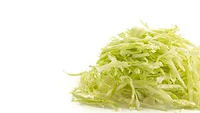
FDA Begins Inspection at Taylor Farms Mexico as Official Cyclospora Outbreak Case Count Exceeds 10,000
Need to Know
- FDA has begun onsite inspections and sampling at Taylor Farms of Mexico where the implicated iceberg lettuce outbreak was grown as the official case count reaches 10,930 illnesses across 17 states, including two deaths
- Beyond the outbreak, CDC reports 17,180 laboratory-confirmed domestically acquired cases and is aware of thousands more requiring analysis, while FDA is investigating six additional outbreaks with unknown food vehicles
- Legislators and food safety stakeholders are questioning Taylor Farms’ response and urging an end to the delay of FDA’s Food Traceability Rule, as well as adequate funding and staffing for surveillance.
Editor's note: This story has been edited to include the latest outbreak updates, listed chronologically at the bottom of the article.
On August 13, 2026, the U.S. Food and Drug Administration (FDA) announced that it had begun onsite inspections and sampling at Taylor Farms of Mexico, where the iceberg lettuce implicated in the ongoing multi-state cyclosporiasis outbreak was grown, in coordination with Mexican officials.
The agency also updated the official outbreak case count to include 9,481 illnesses reported across 17 states: Arkansas, Iowa, Illinois, Indiana, Kansas, Kentucky, Massachusetts, Maine, Michigan, Missouri, Nebraska, New Hampshire, North Carolina, Ohio, Oklahoma, Pennsylvania, and West Virginia.
Additionally, two deaths due to cyclosporiasis-induced dehydration in patients with underlying health conditions have been associated with this outbreak.
Recalled product distribution has been confirmed in 31 states: Alabama, Arkansas, Connecticut, Florida, Georgia, Iowa, Illinois, Indiana, Kansas, Kentucky, Louisiana, Massachusetts, Maryland, Maine, Michigan, Missouri, Mississippi, North Carolina, Nebraska, New Hampshire, New Jersey, New York, Ohio, Oklahoma, Pennsylvania, South Carolina, Tennessee, Texas, Virginia, Wisconsin, and West Virginia.
FDA also said that it is “confident that all recalled iceberg lettuce related to this specific Cyclospora outbreak is off the market.”
Other Cyclosporiasis Cases and Outbreaks Nationwide
Meanwhile, the number of Cyclospora infections reported by the U.S. Centers for Disease Control and Prevention (CDC) and states, including those associated with the Taylor Farms lettuce outbreak and sporadic cases or those linked to other outbreaks, is much higher.
Looking for quick answers on food safety topics?
Try Ask FSM, our new smart AI search tool.
Ask FSM →
Per an August 11 update, CDC has received reports of 13,895 laboratory-confirmed, domestically acquired cases of cyclosporiasis since May 1 of this year. The agency is also aware of at least 10,455 additional cases of Cyclospora infection requiring further investigation and analysis.
In Michigan alone, where the most cases have been reported, the Department of Health is aware of 13,909 Cyclospora infections, resulting in 314 hospitalizations and two deaths (presumably the same two deaths that are part of the Taylor Farms lettuce outbreak).
In Ohio, another heavily impacted state, a total of 3,299 cyclosporiasis cases have been reported just in the state’s Northwestern counties.
Aside from the Taylor Farms outbreak, FDA is currently investigating six other cyclosporiasis clusters, accounting for two, eight, 11, 18, 25, and 172 illnesses each. No food vehicle of illness has yet been identified for any of these six outbreaks.
Taylor Farms Under Fire for Handling of Outbreak; Stakeholders Urge Traceability Rule Enforcement
Legislators and the public are questioning Taylor Farms’ response to the cyclosporiasis outbreak.
On July 27, U.S. Representative Robert Garcia, Democratic Ranking Member on the U.S. House Committee on Oversight and Government Reform, demanded answers from Taylor Farms about its response to the outbreak, citing reports about Taylor Farms’ alleged attempts to influence the White House and FDA, as well as the company’s “contradictory and confusing” public statements.
Notably, the letter also called into question Taylor Farms’ donations to President Donald Trump and lobbying related to food safety legislation, pointing out that a $1 million donation to a Trump super PAC occurred one week before the Administration delayed FDA’s Food Traceability Rule (also known as FSMA 204) until July 20, 2028. If not delayed, the rule would have gone into effect in January 2026, making it easier to trace contaminated foods implicated in foodborne illness outbreaks and more swiftly remove them from the market.
Echoing this, on August 12, the Safe Food Coalition submitted a letter to congressional leaders, urging them to rescind an appropriations rider that prevents FDA from using federal funds to administer or enforce its Food Traceability Rule before July 20, 2028. The provision also directed FDA to identify potential additional flexibilities for meeting the rule’s lot-level tracking requirements, which “prods FDA to abandon the linchpin—lot codes—of its traceability framework, and to go back to the drawing board,” per the Safe Food Coalition.
The Safe Food Coalition also joined experts, legislators, and the public in calling for adequate funding and staffing to be restored to CDC and states for foodborne illness surveillance and outbreak response.
Additionally, in response to the news that FDA was beginning onsite investigations at Taylor Farms of Mexico, Consumer Reports, a member of the Safe Food Coalition, said, "It’s alarming that it took this long for the FDA to go down there and identify the potential factors that could have contributed to this outbreak. They should have sent investigators down there right away once an initial link was established. Being on the ground gives investigators an up-close look at the operations that testing alone can’t replicate and an opportunity to identify conditions that could have contributed to this outbreak. There is also the potential for investigators to learn important lessons that could help prevent future outbreaks."
Update, August 20, 2026: Since May 1, 2026, CDC has received reports of 15,716 laboratory-confirmed cases of cyclosporiasis acquired in the United States. For comparison, 1,180 cases were reported in the United States between May 1 and August 31, 2025. At least 11,841 additional cases of cyclosporiasis may require further investigation and analysis. The Taylor Farms lettuce outbreak has contributed significantly to the increase of Cyclospora cases in 2026, but CDC has not updated its official outbreak-specific case count since August 13.
Update, August 21, 2026: The total case count associated with the multistate lettuce outbreak is now 10,930 illnesses reported from 17 states.
Update, August 26, 2026: Since May 1, 2026, CDC has received reports of 17,180 laboratory-confirmed cases of cyclosporiasis acquired in the U.S., resulting in 922 hospitalizations and two deaths. These data include the cases reported in the ongoing multistate outbreak linked to iceberg lettuce and cases not linked to that outbreak.
Update, August 28, 2026: The total case count associated with this multistate outbreak is now 11,458 illnesses reported from 20 states. Since the last FDA update, three additional states have been added: Georgia, Tennessee, and Texas.
FDA’s onsite inspections and sampling at iceberg lettuce growers and the processing facility in Mexico, in coordination with Mexican officials, are ongoing. The agency is confident that all recalled iceberg lettuce related to this specific Cyclospora outbreak is off the market.
Additionally, FDA has given the Taylor Fresh Foods iceberg lettuce recall Class I status, accompanied by a statement clarifying what FDA’s recall classification means and why it should not be cause for public panic. Read more here.
Update, September 7, 2026: Michigan has reported 14,718 cyclosporiasis cases, resulting in 366 hospitalizations and two deaths.
Update, September 9, 2026: Between May 1 and August 31, CDC received reports of 19,595 laboratory-confirmed, domestically acquired cases, resulting in 1,043 hospitalizations and two deaths. For comparison, 1,180 cases were reported in the U.S during the same period in 2025. This total includes the cases associated with the Taylor Farms lettuce outbreak, other outbreaks, and non-outbreak-associated cases.
Update, October 5, 2026: FDA has closed its outbreak investigation. Details here.