Food Safety
search
Ask Food Safety AI
cart
facebook twitter linkedin
  • Sign In
  • Create Account
  • Sign Out
  • My Account
Food Safety
  • NEWS
    • Latest News
    • White Papers
  • PRODUCTS
  • TOPICS
    • Contamination Control
    • Food Types
    • Management
    • Process Control
    • Regulatory
    • Sanitation
    • Supply Chain
    • Testing and Analysis
  • PODCAST
  • EXCLUSIVES
    • Food Safety Five Newsreel
    • eBooks
    • FSM Distinguished Service Award
    • Interactive Product Spotlights
    • Videos
  • BUYER'S GUIDE
  • MORE
    • NEWSLETTERS >
      • Archive Issues
      • Subscribe to eNews
    • Store
    • Sponsor Insights
    • ASK FSM AI
  • WEBINARS
  • FOOD SAFETY SUMMIT
  • EMAG
    • eMagazine
    • Archive Issues
    • Editorial Advisory Board
    • Contact
    • Advertise
  • SIGN UP!
NewsProcess Control

Researchers Develop Guiding Principles for Scientifically Rigorous Food Processing Classification
By Food Safety Magazine Editorial Team
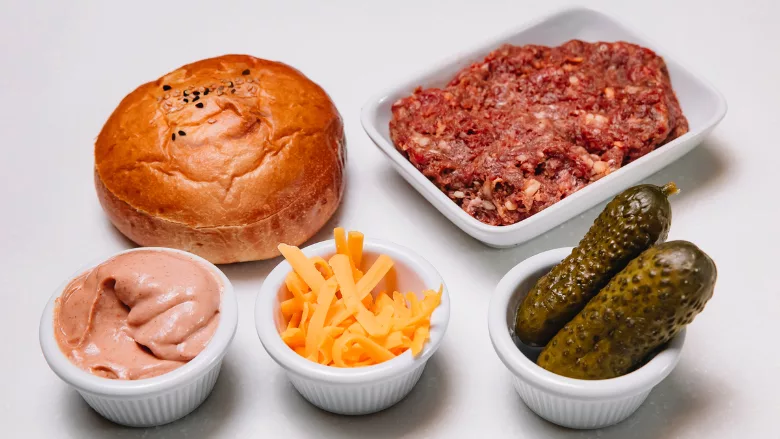
burger ingredients (bun, cheese, pickle, ground beef, sauce) representing foods of different levels of processing
Image credit: stockking via Freepik
January 21, 2026

The Institute for the Advancement of Food and Nutrition Sciences (IAFNS) has published a set of governing principles for food formulation and processing classification systems. The principles are intended to guide researchers and decision-makers in navigating controversy and confusion surrounding food processing and formulation.

Steps considered “processing” can include cooling, heating, freezing, mixing, extruding, filtering, cooking, fermenting, drying, and forming. These processes can have positive, negative, or neutral impacts on a food’s physical, biological, or chemical characteristics. However, some food classification schemes imply that processing is inherently harmful.

Contributing to the current conversation around food processing, IAFNS formed a working group comprising government, industry, and academic scientists. This group in turn charged a separate, six-member independent writing team of public sector researchers to generate guiding principles around food processing research and classification. The principles were then vetted at an in-person, cross-sector stakeholder meeting.

Classifying Processed Foods While Keeping Science at the Forefront

The new principles call for classification systems to be transparent, reproducible, biologically plausible, and linked to health outcomes (i.e., nutrition) to distinguish processing from formulation and evolve with advancing science. They call for realism by emphasizing the need for controlled human trials instead of basing decisions on observed correlations between certain foods and health impacts. The authors note that correlation studies alone are limited in their ability to establish causation.

Specifically, IAFNS’ nine guiding principles for food formulation and processing classification systems, which are explained in a paper published in Advances in Nutrition, are:

  1. Documentation and definitions that allow for reproducibility, rigor, and transparency should be provided
  2. Properties for which there is evidence of a biological link with a health-related endpoint should be used to differentiate foods
  3. Associations without robust causal evidence should be considered preliminary
  4. The impact that processing steps have on the final composition and structure of the food in terms of a putative effect on a health-related endpoint should be considered
  5. The impact of formulation on the final composition and structure of the food in terms of a putative effect on a health-related endpoint should be considered
  6. Systems should evolve over time to reflect advancements in science and changes in the food supply, with previous versions of a system being distinguishable from updated versions
  7. Current scientific evaluations from scientific bodies with relevant expertise should be consulted for each iteration
  8. The context(s) in which a system was validated should be considered in its application
  9. The probative value of a research question or proposed classification system should be considered before engaging in analysis or development.

The paper also identifies research priorities and areas for investment while providing guidance on cautionary action in the absence of complete data.

Drawbacks of Popular Classifications like “Ultra-Processed Foods”

Additionally, the principles are intended to provide a shared foundation and standardized approach to help researchers advance food processing knowledge without endorsing or advocating for the creation or use of any single classification scheme. Some schemes have been criticized due to inconsistencies, ambiguities, limited evidence, misalignment with dietary guidance, and the potential for overgeneralization. A common critique of the term “ultra-processed foods,” typically referring to the NOVA classification scheme, is that it lacks clarity and is not rigorously defined.

Through their research, the authors found that some ways foods are classified are not aligned with other public health nutrition concepts. For example, in some food classification schemes, foods with added fibers fall into the category of the highest level of processing, implying they should be avoided. However, avoiding these foods may incur negative health outcomes, as fiber intake is one of the largest and most consistent nutrient gaps in the U.S. population.

Looking for quick answers on food safety topics?
Try Ask FSM, our new smart AI search tool.
Ask FSM →

Designing Classification Schemes that are Fit-for-Purpose

Given the resource-intensive nature of developing, analyzing, or applying food classification schemes, researchers should prioritize efforts with the greatest potential for meaningful impact, the authors found.

The principles are targeted primarily to researchers who are applying classification schemes or interpreting existing science. Other audiences include users of research—such as policy professionals and other decision-makers—and developers of food classification schemes. The principles are intended to serve as a foundation to support impactful research on food classification schemes, and subsequently, public health policy.

The authors posit that food classification schemes can be developed and applied for a wide range of use cases, and they may be helpful for those implementing interventions or health policies. In this context, the principles offer a framework for assessing whether the research behind such schemes is fit-for-purpose.


KEYWORDS: Institute for the Advancement of Food and Nutrition Sciences (IAFNS) study ultra-processed foods

Share This Story

Fsm purple logo 200x200

The Food Safety Magazine editorial team comprises Bailee Henderson, Digital Editor ✉; Adrienne Blume, M.A., Editorial Director; and Stacy Atchison, Publisher.

Recommended Content

JOIN TODAY
to unlock your recommendations.

Already have an account? Sign In

  • people holding baby chicks

    Serovar Differences Matter: Utility of Deep Serotyping in Broiler Production and Processing

    This article discusses the significance of Salmonella in...
    Food Type
    By: Nikki Shariat Ph.D.
  • woman washing hands

    Building a Culture of Hygiene in the Food Processing Plant

    Everyone entering a food processing facility needs to...
    Food Prep/Handling
    By: Richard F. Stier, M.S.
  • graphical representation of earth over dirt

    Climate Change and Emerging Risks to Food Safety: Building Climate Resilience

    This article examines the multifaceted threats to food...
    Management
    By: Maria Cristina Tirado Ph.D., D.V.M. and Shamini Albert Raj M.A.
Manage My Account
  • eMagazine Subscription
  • Subscribe to Newsletters
  • Manage My Preferences
  • Website Registration
  • Subscription Customer Service

More Videos

Sponsored Content

Sponsored Content is a special paid section where industry companies provide high quality, objective, non-commercial content around topics of interest to the Food Safety Magazine audience. All Sponsored Content is supplied by the advertising company and any opinions expressed in this article are those of the author and not necessarily reflect the views of Food Safety Magazine or its parent company, BNP Media. Interested in participating in our Sponsored Content section? Contact your local rep!

close
  • Salmonella bacteria
    Sponsored byThermoFisher

    Food Microbiology Testing Methods: Salmonella species

  • a diagram explaining indicator organisms
    Sponsored byHygiena

    How Proactive Listeria Testing Helps Prevent Six- and Seven-Figure Recalls

  • woman grocery shopping
    Sponsored byCorbion

    Designing Safety Into Every Bite: Proactive Risk Mitigation for Refrigerated Foods

Popular Stories

brand new newborn drinking bottle

Florida Launches Food Contaminant Testing Program with Report on Metals in Infant Formula

illustration of colony of microorganisms under microscope

Food Safety Implications of Emerging Alternative Interventions for Salmonella Biofilms

cute baby in high chair feeding himself a bottle

‘Operation Stork Speed’ Expert Panel Highlights Infant Formula Safety Vulnerabilities

Events

January 27, 2026

Strategies for Reinforcing Food Safety Culture Among Temporary and Seasonal Staff

Live: January 27, 2026 at 2:00 pm EST: From this webinar, attendees will learn common areas where companies encounter challenges in their food defense strategies and how to address them.

May 11, 2026

The Food Safety Summit

Stay informed on the latest food safety trends, innovations, emerging challenges, and expert analysis. Leave the Summit with actionable insights ready to drive measurable improvements in your organization. Do not miss this opportunity to learn from experts about contamination control, food safety culture, regulations, sanitation, supply chain traceability, and so much more.

View All

Products

Global Food Safety Microbial Interventions and Molecular Advancements

Global Food Safety Microbial Interventions and Molecular Advancements

See More Products

Related Articles

  • two researchers standing in front of large screen that says AI

    Using RASFF Data, Researchers Develop Integrated AI Framework for Improved Food Safety Risk Assessment

    See More
  • small wheel of goat cheese on charcuterie board next to cheese knife and green grapes

    Researchers Develop Predictive Model for Listeria Growth in RTE Artisanal Cheeses

    See More
  • pathogen detection device

    Researchers Develop Rapid Onsite Test for 16 Foodborne Pathogens

    See More

Related Products

See More Products
  • 9781498721776.jpg

    Handbook of Food Processing: Food Safety, Quality, and Manufacturing Processes

  • 1119053595.jpg

    Food Safety for the 21st Century: Managing HACCP and Food Safety throughout the Global Supply Chain, 2E

  • 1119160553.jpg

    Food Safety: Innovative Analytical Tools for Safety Assessment

See More Products

Events

View AllSubmit An Event
  • December 11, 2025

    How to Develop and Implement an Effective Food Defense Strategy

    On Demand: From this webinar, attendees will learn common areas where companies encounter challenges in their food defense strategies and how to address them.
View AllSubmit An Event
×

Never miss the latest news and trends driving the food safety industry

Newsletters | Website | eMagazine

JOIN TODAY!
  • RESOURCES
    • Advertise
    • Contact Us
    • Directories
    • Store
    • Want More
  • SIGN UP TODAY
    • Create Account
    • eMagazine
    • Newsletters
    • Customer Service
    • Manage Preferences
  • SERVICES
    • Marketing Services
    • Reprints
    • Market Research
    • List Rental
    • Survey/Respondent Access
  • STAY CONNECTED
    • LinkedIn
    • Facebook
    • Instagram
    • X (Twitter)
  • PRIVACY
    • PRIVACY POLICY
    • TERMS & CONDITIONS
    • DO NOT SELL MY PERSONAL INFORMATION
    • PRIVACY REQUEST
    • ACCESSIBILITY

Copyright ©2026. All Rights Reserved BNP Media.

Design, CMS, Hosting & Web Development :: ePublishing