Researchers Develop AI Tool for Accurate, Rapid Identification of Pathogens in Food Samples
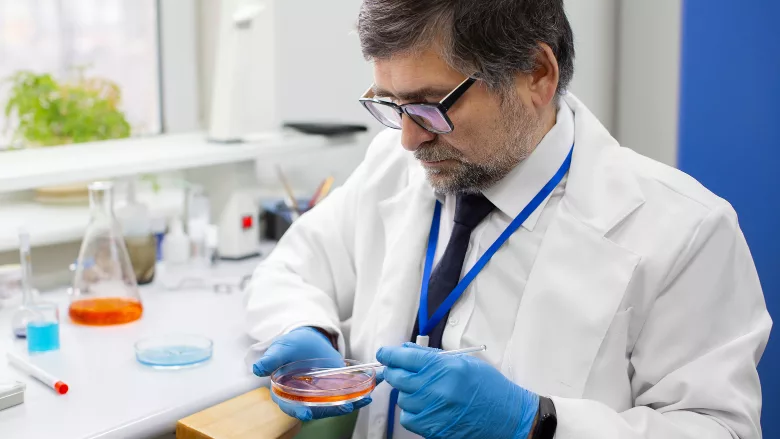
Researchers have developed an artificial intelligence (AI) tool that can rapidly detect bacterial contamination in food.
Supported by U.S. Department of Agriculture (USDA) grants, the project was conducted by researchers at Oregon State University, the University of California, Davis, and Florida State University. Their work was published in npj Science of Food.
The researchers developed a deep learning model and trained it to distinguish between pathogenic bacteria and food debris that resemble microorganisms. Specifically, the model was trained on Escherichia coli, Listeria monocytogenes, Bacillus subtilis, and debris from chicken, spinach, and cheese.
The model trained on bacteria and debris was able to detect the presence of foodborne pathogens in complex food matrices in as little as three hours with 0 percent false positives, 94 percent recall, and 100 percent precision. In comparison, a model trained only on bacteria had a 24 percent false positive rate, misclassifying debris as microorganisms.
The deep learning-based rapid bacterial detection approach involved the following steps:
- Incubation of bacterial samples using a standard bacterial plating method
- Preparation of food debris samples by homogenizing spinach, chicken breast, or Cotija cheese, followed by plating to mimic the standard food sample preparation workflow used for microbial analysis
- Acquisition of microscopic images of bacterial microcolonies and food debris under simple white light illumination
- Training the AI-based bacterial detection model with and without food debris images
- Application of the robust bacterial detection AI model in food matrices.
The researchers are now working to optimize the AI tool for industry adoption.
Looking for quick answers on food safety topics?
Try Ask FSM, our new smart AI search tool.
Ask FSM →








