Food Safety
search
Ask Food Safety AI
cart
facebook twitter linkedin
  • Sign In
  • Create Account
  • Sign Out
  • My Account
Food Safety
  • NEWS
    • Latest News
    • White Papers
  • PRODUCTS
  • TOPICS
    • Contamination Control
    • Food Types
    • Management
    • Process Control
    • Regulatory
    • Sanitation
    • Supply Chain
    • Testing and Analysis
  • PODCAST
  • EXCLUSIVES
    • Food Safety Five Newsreel
    • eBooks
    • FSM Distinguished Service Award
    • Interactive Product Spotlights
    • Videos
  • BUYER'S GUIDE
  • MORE
    • ENEWSLETTER >
      • Archive Issues
      • Subscribe to eNews
    • Store
    • Sponsor Insights
    • ASK FSM AI
  • WEBINARS
  • FOOD SAFETY SUMMIT
  • EMAG
    • eMagazine
    • Archive Issues
    • Editorial Advisory Board
    • Contact
    • Advertise
  • SIGN UP!
NewsManagementRisk Assessment

Using RASFF Data, Researchers Develop Integrated AI Framework for Improved Food Safety Risk Assessment

By Food Safety Magazine Editorial Team
two researchers standing in front of large screen that says AI

Image credit: DC Studio via Freepik

April 10, 2025

Using EU Rapid Alert System for Food and Feed (RASFF) data, researchers have demonstrated the utility of artificial intelligence (AI) technology for food safety risk assessments. Published in Food and Bioprocess Technology, the study was authored by researchers from the University of Portsmouth and the Institute for Food Science and Technology (IFST).

With an increasing amount of food safety data available, AI techniques are being explored as an important solution for processing and analyzing these large pools of data to improve risk assessment and decision-making, ultimately enabling more informed food safety management and improving overall food safety. However, more research is required to understand the differences in the effectiveness of different AI technologies—like machine learning, deep learning, and explainable AI (XAI)—as well as to overcome the existing limitations to their predictive accuracy.

In this context, the present study aimed to develop an advanced food safety risk prediction system to improve traditional food safety risk assessment methods and decrease the ambiguity of risk management decisions. Using the RASFF dataset, the researchers explored the integration of machine learning, deep learning, and transformer-based models, enhanced with XAI techniques, to improve both model transparency and interpretability.

Established in 1979, RASFF facilitates the exchange of information between EU Member States regarding food safety incidents in support of swift response by authorities to mitigate risks to public health. Containing more than 61,000 entries, the database is a comprehensive repository of notifications regarding food and feed safety concerns, including risks identified both within the EU and risks originating from outside the EU.

Overall, the researchers were able to demonstrate the potential of combining advanced machine learning, deep learning, and transformer-based models with XAI techniques for food safety risk assessment. The critical importance of data enrichment, advanced architectures, and model interpretability in improving prediction accuracy and fostering trust in automated systems was noted.

Data enrichment was especially pivotal to improving model performance across all categories. By addressing challenges such as short explanations and underrepresented classes in the RASFF dataset, data augmentation contributed to enhanced generalizability and classification accuracy. Importantly, enriched datasets not only improved predictive capabilities, but also uncovered additional critical features such as heavy metals and botulinum toxin that strengthened the model’s decision-making process.

Moreover, XAI techniques (e.g., SHAP) helped elucidate the models’ decision-making processes, improving transparency and interpretability. By identifying the most influential features for risk assessment decisions, XAI provided actionable insights that are highly relevant to food safety regulatory bodies; for example, features like Salmonella, aflatoxins, and Listeria monocytogenes were associated with serious risk management decisions.

Looking for quick answers on food safety topics?
Try Ask FSM, our new smart AI search tool.
Ask FSM →

Comparatively, transformer-based models (e.g., BERT and RoBERTa) outperformed both traditional machine learning models and deep learning architectures, and their accuracy and robustness in handling complex and highly dimensional textual data make them most suitable for nuanced tasks like food safety classification. On the other hand, traditional machine learning models, while still effective, had greater limitations when presented with imbalanced and intricate datasets.

Despite the promise of the integrated AI approach to food safety risk assessment demonstrated in the study, roadblocks to the practical implementation of such models still exist. Specifically, the computational complexity of models like BERT and RoBERTa require substantial resources and may be impractical in resource-constrained settings. Additionally, adoption of these techniques by regulators who prefer more transparent models may be a challenge, underlining the importance of explainable AI models. Scalability is also a technical concern due to different data formats, standards, and legal frameworks used in different regions. Finally, the potential for misleading outcomes arising from training data biases is always an issue, and generalizing the approach to new or significantly different datasets may require additional training or fine-tuning due to regional divergences.

The researchers recommend further exploration to improve their AI framework for food safety risk assessment, such as expanding the dataset to include additional contextual factors like geographic data, supply chain information, and temporal trends. Another area for future work is the application of these methods to real-time data streams, enabling continuous monitoring and assessment of food safety risks.


KEYWORDS: artificial intelligence machine learning

Share This Story

Fsm purple logo 200x200

The Food Safety Magazine editorial team comprises Bailee Henderson, Digital Editor ✉; Adrienne Blume, M.A., Editorial Director; and Stacy Atchison, Publisher.

Recommended Content

JOIN TODAY
to unlock your recommendations.

Already have an account? Sign In

  • people holding baby chicks

    Serovar Differences Matter: Utility of Deep Serotyping in Broiler Production and Processing

    This article discusses the significance of Salmonella in...
    Contamination Control
    By: Nikki Shariat Ph.D.
  • woman washing hands

    Building a Culture of Hygiene in the Food Processing Plant

    Everyone entering a food processing facility needs to...
    Management
    By: Richard F. Stier, M.S.
  • graphical representation of earth over dirt

    Climate Change and Emerging Risks to Food Safety: Building Climate Resilience

    This article examines the multifaceted threats to food...
    Contamination Control
    By: Maria Cristina Tirado Ph.D., D.V.M. and Shamini Albert Raj M.A.
Manage My Account
  • eMagazine Subscription
  • Subscribe to eNewsletter
  • Manage My Preferences
  • Website Registration
  • Subscription Customer Service

More Videos

Sponsored Content

Sponsored Content is a special paid section where industry companies provide high quality, objective, non-commercial content around topics of interest to the Food Safety Magazine audience. All Sponsored Content is supplied by the advertising company and any opinions expressed in this article are those of the author and not necessarily reflect the views of Food Safety Magazine or its parent company, BNP Media. Interested in participating in our Sponsored Content section? Contact your local rep!

close
  • Salmonella bacteria
    Sponsored byThermoFisher

    Food Microbiology Testing Methods: Salmonella species

  • a diagram explaining indicator organisms
    Sponsored byHygiena

    How Proactive Listeria Testing Helps Prevent Six- and Seven-Figure Recalls

  • woman grocery shopping
    Sponsored byCorbion

    Designing Safety Into Every Bite: Proactive Risk Mitigation for Refrigerated Foods

Popular Stories

NRTE breaded stuffed chicken

USDA Indefinitely Delays Enforcement of Salmonella as Adulterant in Raw Breaded, Stuffed Chicken

digital map of europe

EU Publishes Food Fraud Tool Mapping Thousands of Cases Since 2016

non-conforming product

How to Handle Non-Conforming Product

Events

December 11, 2025

How to Develop and Implement an Effective Food Defense Strategy

Live: December 11, 2025 at 2:00 pm EDT: From this webinar, attendees will learn common areas where companies encounter challenges in their food defense strategies and how to address them.

May 11, 2026

The Food Safety Summit

Stay informed on the latest food safety trends, innovations, emerging challenges, and expert analysis. Leave the Summit with actionable insights ready to drive measurable improvements in your organization. Do not miss this opportunity to learn from experts about contamination control, food safety culture, regulations, sanitation, supply chain traceability, and so much more.

View All

Products

Global Food Safety Microbial Interventions and Molecular Advancements

Global Food Safety Microbial Interventions and Molecular Advancements

See More Products

Related Articles

  • Food Safety Matters Podcast

    Hygiena: Optimizing Data for Improved Food Safety Risk Management and Compliance

    See More
  • cartoon illustration of doctors examining gut microbiome

    FAO Identifies Needs for Including Gut Microbiome Data in Food Chemical Safety Risk Assessment

    See More
  • precut watermelon in packaging

    Researchers Develop New Quantitative Risk Assessment Model for Foodborne Illness Outbreak Investigations

    See More

Related Products

See More Products
  • food safety.jpg

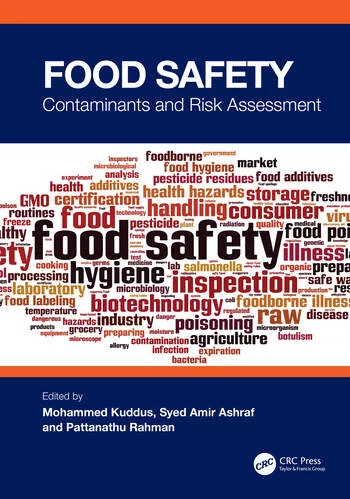
    Food Safety Contaminants and Risk Assessment

  • 1119160553.jpg

    Food Safety: Innovative Analytical Tools for Safety Assessment

  • 1119071127.jpg

    Food Safety, Risk Intelligence and Benchmarking

See More Products

Events

View AllSubmit An Event
  • August 7, 2025

    Achieve Active Managerial Control of Major Risk Factors Using a Food Safety Management System

    On Demand: From this webinar, attendees will learn about changes to the FDA Food Code, which now includes a requirement for FSMS. 
  • May 14, 2025

    Leveraging AI for a Safer Today and Tomorrow

    On Demand: This session will highlight some of the early and visible benefits of using AI for data-informed decision making.
View AllSubmit An Event

Related Directories

  • FoodReady

    FoodReady offers complete Traceability, Food Safety & Quality, and Supply Chain software to digitize everything related to quality, food safety, sanitation, and traceability. FoodReady also offers complete consulting services for GFSI audit-preparation, HACCP consulting and development, process authority, FDA consulting, USDA consulting, and master sanitation consulting services from a team of longtime auditors, former Directors of Quality at the largest food companies.
×

Never miss the latest news and trends driving the food safety industry

eNewsletter | Website | eMagazine

JOIN TODAY!
  • RESOURCES
    • Advertise
    • Contact Us
    • Directories
    • Store
    • Want More
  • SIGN UP TODAY
    • Create Account
    • eMagazine
    • eNewsletter
    • Customer Service
    • Manage Preferences
  • SERVICES
    • Marketing Services
    • Reprints
    • Market Research
    • List Rental
    • Survey/Respondent Access
  • STAY CONNECTED
    • LinkedIn
    • Facebook
    • Instagram
    • X (Twitter)
  • PRIVACY
    • PRIVACY POLICY
    • TERMS & CONDITIONS
    • DO NOT SELL MY PERSONAL INFORMATION
    • PRIVACY REQUEST
    • ACCESSIBILITY

Copyright ©2025. All Rights Reserved BNP Media.

Design, CMS, Hosting & Web Development :: ePublishing