Researchers to Develop E. coli Risk Assessment Model for Produce Grown Near Animal Feedlots
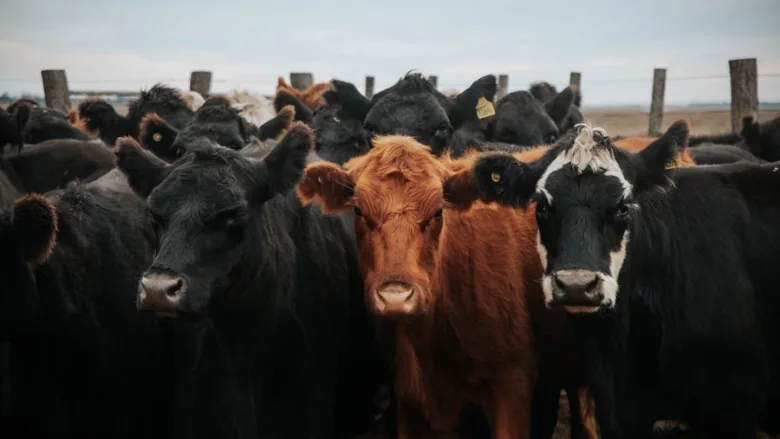
A Center for Produce (CPS)-funded study is looking to fill data gaps about the Escherichia coli contamination risks posed by concentrated animal feeding operations (CAFO) near produce growing fields. Despite the implication of CAFOs in several leafy greens E. coli outbreaks, little data exists about how far potential contamination risks may extend and weather’s role.
University of Arkansas’ Kerry Cooper, Ph.D. is leading the development of a risk assessment model for E. coli O157:H7 transmission from a CAFO to adjacent land based on weather, environmental conditions, and proximity. Dr. Cooper is joined by co-investigators Erika Austhof, Ph.D., at the University of Arizona, and Jim Bono, Ph.D., with the U.S. Department of Agriculture’s Agricultural Research Service (USDA-ARS).
Research will be conducted at the U.S. Meat Animal Research Center (MARC) in Clay, Nebraska, where Dr. Bono is based. The MARC is home to a herd of 6,000 cattle and is located in an area that experiences predominant wind patterns. Although the MARC is not close to leafy greens growing operations, it provides several advantages for Dr. Cooper’s research, as USDA is giving the team full access to the feedlot and cattle for sampling.
The researchers set up 24 sample sights in eight directions from the feedlot center at distances between 100 meters and 1,500 meters (approximately one mile). The sites each comprise two sets of soil, air, water, and surrogate plant surface sampling.
In the absence of real leafy green fields, the researchers are clipping vegetation at the sample sites to test for the presence of pathogens while working on a substrate that can serve as an adequate stand-in. Their first attempt to use a synthetic surface instead of leafy greens crops proved ineffective.
As part of the project, the researchers will collect data from onsite weather stations and conduct enhanced sampling before and after extreme weather, such as flooding, high winds, and storms. The data will be merged with additional drought and weather indices and wildlife migration information to assess other potential transmission sources.
In addition to weather and proximity factors, the researchers are considering the effect of a tree line to the west of the feedlot on pathogen dispersion. They are also assaying flies leaving the feedlot for the presence of E. coli.
Looking for quick answers on food safety topics?
Try Ask FSM, our new smart AI search tool.
Ask FSM →
The data collected through the project will help inform the development of risk assessment and predictive models for potential produce contamination based on positive samples, persistence, and varying distances from an animal feeding operation. Although the current project is serving as a proof-of-concept, Dr. Cooper hopes his research will translate into a user-friendly model, ideally formatted as an app, that industry can implement in the future.
Despite the project’s focus on cattle feedlots, Dr. Cooper believes the general risk assessment concepts should be applicable to other types of animal feeding operations.
The two-year project is scheduled to wrap up by end-2026.