Food Safety
search
Ask Food Safety AI
cart
facebook twitter linkedin
  • Sign In
  • Create Account
  • Sign Out
  • My Account
Food Safety
  • NEWS
    • Latest News
    • White Papers
  • PRODUCTS
  • TOPICS
    • Contamination Control
    • Food Types
    • Management
    • Process Control
    • Regulatory
    • Sanitation
    • Supply Chain
    • Testing and Analysis
  • PODCAST
  • EXCLUSIVES
    • Food Safety Five Newsreel
    • eBooks
    • FSM Distinguished Service Award
    • Interactive Product Spotlights
    • Videos
  • BUYER'S GUIDE
  • MORE
    • ENEWSLETTER >
      • Archive Issues
      • Subscribe to eNews
    • Store
    • Sponsor Insights
    • ASK FSM AI
  • WEBINARS
  • FOOD SAFETY SUMMIT
  • EMAG
    • eMagazine
    • Archive Issues
    • Editorial Advisory Board
    • Contact
    • Advertise
  • SIGN UP!
NewsContamination ControlFood TypeMicrobiologicalDairy/EggsReady-to-eat

Researchers Develop Predictive Model for Listeria Growth in RTE Artisanal Cheeses

By Food Safety Magazine Editorial Team
small wheel of goat cheese on charcuterie board next to cheese knife and green grapes

Image credit: Freepik

April 3, 2025

Researchers from the University of Córdoba in Spain have developed a model for predicting the growth of Listeria monocytogenes in artisanal cheeses.

The model is especially relevant for producers in the European market following the EU’s November 2024 amendment of Commission Regulation (EU) 2073/2005 on the microbiological criteria for foods, which expanded the requirements for food business operators regarding L. monocytogenes. Specifically, the amended regulation extends the requirement to ensure that the pathogen is not going to exceed specific concentrations in ready-to-eat (RTE) foods able to support its growth from just primary manufacturers to all relevant firms across the supply chain.

Publishing their findings in Food Control, the researchers validated their mathematical model in artisanal fresh goat milk cheeses due to their recent association with cases of foodborne illness in Spain, and because they are considered RTE. Factoring in variables like production and storage conditions, product composition, and pH and water activity, the model was designed to predict L. monocytogenes’ growth over time in final artisanal cheese products.

The predictive model was developed by measuring the effect of different storage temperatures (4 °C, 12 °C, 18 °C, and 25 °C) on inoculated lab-scale fresh goat milk cheeses over a period of 5–20 days. Data was collected to describe the relationship between L. monocytogenes concentration, growth rate, storage temperature, and time. A higher variability of growth data was observed at 4 °C, as well as a linear relationship between microbial growth rate and temperature. A more rapid decrease of pH was also seen at higher temperatures. The researchers validated their model under both consistent temperature conditions and dynamic temperature conditions simulating real-world scenarios.

Based on their findings, after four days in storage at 4 °C, the specific goat milk cheese product used in the study would not be compliant with the recently amended EU regulations for controlling L. monocytogenes in RTE foods.

Although the model will be helpful for producers that need to demonstrate its product will not support L. monocytogenes growth exceeding EU regulatory limits, the study’s immediate findings are not universally applicable to all types of artisanal cheeses. Before using the model for other cheeses, it should be validated for each product, and adjusted for specific manufacturing, storage, composition, and pH/water activity variables.

The project was conducted by the Food Hygiene Research Group (HIBRO Group) in University of Córdoba’s Department of Bromatology and Food Technology, in collaboration with researchers from the Polytechnic Institute of Bragança in Portugal, Ibn Zohr University in Morocco, and the University of Sohag in Egypt.


Looking for quick answers on food safety topics?
Try Ask FSM, our new smart AI search tool.
Ask FSM →


KEYWORDS: cheese EU Europe listeria modeling study University of Cordoba

Share This Story

Fsm purple logo 200x200

The Food Safety Magazine editorial team comprises Bailee Henderson, Digital Editor ✉; Adrienne Blume, M.A., Editorial Director; and Stacy Atchison, Publisher.

Recommended Content

JOIN TODAY
to unlock your recommendations.

Already have an account? Sign In

  • people holding baby chicks

    Serovar Differences Matter: Utility of Deep Serotyping in Broiler Production and Processing

    This article discusses the significance of Salmonella in...
    Methods
    By: Nikki Shariat Ph.D.
  • woman washing hands

    Building a Culture of Hygiene in the Food Processing Plant

    Everyone entering a food processing facility needs to...
    Sanitation
    By: Richard F. Stier, M.S.
  • graphical representation of earth over dirt

    Climate Change and Emerging Risks to Food Safety: Building Climate Resilience

    This article examines the multifaceted threats to food...
    Management
    By: Maria Cristina Tirado Ph.D., D.V.M. and Shamini Albert Raj M.A.
Manage My Account
  • eMagazine Subscription
  • Subscribe to eNewsletter
  • Manage My Preferences
  • Website Registration
  • Subscription Customer Service

More Videos

Sponsored Content

Sponsored Content is a special paid section where industry companies provide high quality, objective, non-commercial content around topics of interest to the Food Safety Magazine audience. All Sponsored Content is supplied by the advertising company and any opinions expressed in this article are those of the author and not necessarily reflect the views of Food Safety Magazine or its parent company, BNP Media. Interested in participating in our Sponsored Content section? Contact your local rep!

close
  • Salmonella bacteria
    Sponsored byThermoFisher

    Food Microbiology Testing Methods: Salmonella species

  • a diagram explaining indicator organisms
    Sponsored byHygiena

    How Proactive Listeria Testing Helps Prevent Six- and Seven-Figure Recalls

  • woman grocery shopping
    Sponsored byCorbion

    Designing Safety Into Every Bite: Proactive Risk Mitigation for Refrigerated Foods

Popular Stories

NRTE breaded stuffed chicken

USDA Indefinitely Delays Enforcement of Salmonella as Adulterant in Raw Breaded, Stuffed Chicken

digital map of europe

EU Publishes Food Fraud Tool Mapping Thousands of Cases Since 2016

non-conforming product

How to Handle Non-Conforming Product

Events

December 11, 2025

How to Develop and Implement an Effective Food Defense Strategy

Live: December 11, 2025 at 2:00 pm EDT: From this webinar, attendees will learn common areas where companies encounter challenges in their food defense strategies and how to address them.

May 11, 2026

The Food Safety Summit

Stay informed on the latest food safety trends, innovations, emerging challenges, and expert analysis. Leave the Summit with actionable insights ready to drive measurable improvements in your organization. Do not miss this opportunity to learn from experts about contamination control, food safety culture, regulations, sanitation, supply chain traceability, and so much more.

View All

Products

Global Food Safety Microbial Interventions and Molecular Advancements

Global Food Safety Microbial Interventions and Molecular Advancements

See More Products

Related Articles

  • smoked salmon toast

    Listeria From Multispecies Biofilms More Prone to Growth in RTE Foods, Study Shows

    See More
  • goat cheese

    Food Safety Five Ep. 12: New Sanitation and Growth Prediction Methods for Listeria

    See More
  • employees high fiving

    Danish Researchers Develop Change Agent Model for Food Safety Culture

    See More

Related Products

See More Products
  • 9781138070912.jpg

    Trends in Food Safety and Protection

  • 1119053595.jpg

    Food Safety for the 21st Century: Managing HACCP and Food Safety throughout the Global Supply Chain, 2E

  • 1119160553.jpg

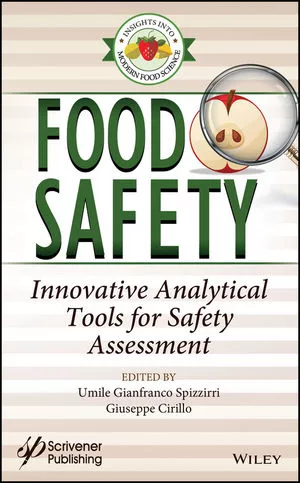
    Food Safety: Innovative Analytical Tools for Safety Assessment

See More Products

Events

View AllSubmit An Event
  • December 4, 2025

    Beyond Detection: How Integrated PCR Diagnostics Strengthen Food Safety in RTE Manufacturing

    On Demand: From this webinar, attendees will learn best practices for prevention of FM contamination at the corporate and plant levels.
View AllSubmit An Event
×

Never miss the latest news and trends driving the food safety industry

eNewsletter | Website | eMagazine

JOIN TODAY!
  • RESOURCES
    • Advertise
    • Contact Us
    • Directories
    • Store
    • Want More
  • SIGN UP TODAY
    • Create Account
    • eMagazine
    • eNewsletter
    • Customer Service
    • Manage Preferences
  • SERVICES
    • Marketing Services
    • Reprints
    • Market Research
    • List Rental
    • Survey/Respondent Access
  • STAY CONNECTED
    • LinkedIn
    • Facebook
    • Instagram
    • X (Twitter)
  • PRIVACY
    • PRIVACY POLICY
    • TERMS & CONDITIONS
    • DO NOT SELL MY PERSONAL INFORMATION
    • PRIVACY REQUEST
    • ACCESSIBILITY

Copyright ©2025. All Rights Reserved BNP Media.

Design, CMS, Hosting & Web Development :: ePublishing