The cover story for the December ‘25/January ‘26 issue of Food Safety Magazine discusses how investment in food safety is not only good business practice, but can also be a boon to a company's bottom line. Additional features examine the food safety aspects of precision fermentation-derived dairy; the management of food safety risks associated with the movement of people and equipment in a food processing facility; and the adoption, benefits, and necessary advancements of whole genome sequencing (WGS) for food safety.
In a global food and beverage industry under pressure from recalls, regulation, litigation, and consumer expectations, food safety is not just about staying compliant; it is about staying in business
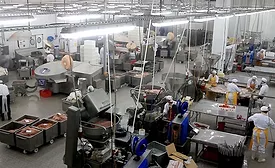
This article looks at how the movement of people and equipment in a food processing plant affects food safety risks and how these risks can be successfully managed.
Whole genome sequencing is gaining traction within the food industry, but advancements in technology, regulatory clarity, standardization in sequencing, and results interpretation are needed
This article discusses the results of a 2024 follow-up survey to a 2019 workshop on the food industry's use of whole genome sequencing (WGS), the benefits and challenges of this technology, and necessary advancements for its continued acceptance and effective use in ensuring food safety.
As consumers encounter more reports of detectable impurities in everyday foods, concern is likely to grow unless these findings are clearly communicated in the context of potential health risk
Monitoring impurities in foods is an important tool for protecting vulnerable populations. However, as consumers encounter more reports of detectable impurities in everyday foods, concern is likely to grow unless these findings are clearly communicated in the context of potential health risk.
Several tools and data sources are used in signal detection to evaluate genetic and epidemiologic information linked to foodborne outbreak investigations
This article provides background information about FDA’s CORE+EP Signals team's day-to-day work in detecting foodborne illness outbreaks and triaging incidents, and highlights some real-world examples and partnerships that have occurred to improve food safety and protect consumers.
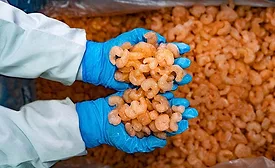
This article focuses on the fundamentals of shrimp processing and the various steps in which facilities can manage food safety and quality challenges to generate wholesome and safe products for global markets.
This article discusses the results of a survey of food processors worldwide regarding food safety culture and the preventive controls-aligned key performance indicators (KPIs) used to measure daily operations and continuous improvement.
Conducting a food fraud vulnerability assessment helps identify potential weaknesses in the supply chain and assist in establishing effective controls to mitigate those risks
This article presents data on food fraud in global supply chains and discusses how to identify supply chain vulnerabilities by conducting a food fraud vulnerability assessment.
By examining global standards such as HACCP, GFSI, and SQF, this article explores the gaps in current competency assessments and the risks posed by these gaps. It also provides actionable strategies to empower frontline leaders and quality assurance teams to improve where necessary.
Supplier preventive controls are a key element of food safety assurance in the end-to-end supply chain of food manufacturing to retail foodservice and sales
This article explores how supplier preventive controls are a key element of food safety assurance in the end-to-end supply chain of food manufacturing to retail foodservice and sales.
The Regulatory and Laboratory Training System (RLTS) is designed to make training simpler, faster, and more consistent
December 11, 2025
The Regulatory and Laboratory Training System (RLTS), built on the National Curriculum Standards, represents the next generation of training for regulatory food protection professionals. It is guided by a national steering committee that includes FDA, CDC, USDA, NEHA, NACCHO, APHL, AFDO, and other organizations.
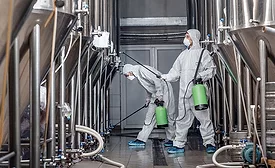
Without proper sanitation, surfaces and other areas in food processing facilities provide an ideal environment for the growth of biofilm on food contact and non-food contact surfaces. This article discusses biofilm mitigation solutions for food processing operations.
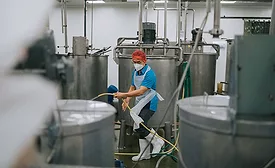
This article discusses how an operation should develop, document, implement, and maintain a program to properly manage the many chemicals that are used in food processing.
If FDA plans to elevate its post-market chemical review to a new level, it should introduce a robust regulatory scheme that is adopted through a regular rulemaking procedure
The U.S. Food and Drug Administration (FDA) is making progress on its planned endeavor to take a closer look at substances added to or otherwise found in food and food contact materials.
Most prominent among wartime threats for food, agriculture, and water systems is the probability of continuous and coordinated cyberattacks and other forms of sabotage
Most prominent among wartime threats for U.S. food, agriculture, and water systems is the probability of continuous and coordinated cyberattacks and other forms of sabotage.