PFAS-Free Food Packaging by August 2026
What the EU PPWR Means for Analytical Labs, and How to Build Defensible Data
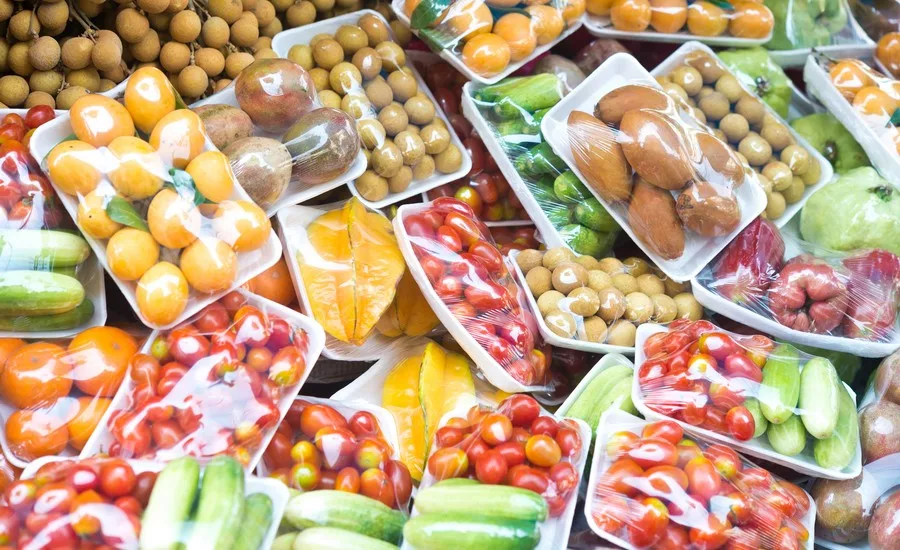

As the EU moves to meet goals set for climate neutrality and achieve a circular economy, EU Regulation 2025/40 dictates rules and procedures to reduce packaging waste, without causing adverse risk to the consumer. Adopted in 2024 and with additional aspects of the regulation coming into force this year, manufacturers, importers, and distributors are seeking to ensure their obligations under extended producer responsibility (EPR) are met. Part of this relates to new restrictions placed on PFAS and BPA, with additional substances of concern to be reported in December 2026.
With increased attention on product safety and regulatory compliance, the regulation is driving a greater need for testing using reliable, accurate, and reproducible methods that minimize uncertainty in reported results (Figure 1). This need is expected to grow as additional substances of concern may be identified in the coming years. At the same time, the risk of contamination may increase as packaging manufacturers expand the use of recycled materials to meet 2030 sustainability targets and beyond.
Image credit: Anzhela - stock.adobe.com
Why the PPWR Changes the Conversation in Food-Contact Packaging
Across Europe, packaging policy is moving from "waste management" to "materials governance." The Packaging and Packaging Waste Regulation (PPWR), Regulation (EU) 2025/40, adopted in December 2024, sets a long-term framework that links circularity targets (i.e., recyclability and recycled content) with a stricter approach to substances of concern, including PFAS, in food-contact packaging.
The timeline matters. The PPWR entered into force in February 2025 and generally applies from August 12, 2026, which is also when the PPWR's PFAS limit values for food-contact packaging take effect. In parallel, food-contact materials must still comply with the overarching safety requirements of Framework Regulation (EC) No 1935/2004 and plastics-specific requirements under Regulation (EU) No 10/2011. For recycled plastics intended for food contact, Regulation (EU) 2022/1616 continues to shape expectations around process control and decontamination performance.
For analytical laboratories, the result is a "two-speed" pressure curve. Now through 2026, brands and converters are accelerating reformulation to remove fluorinated chemistries from grease- and water-resistant packaging, and they need practical testing strategies to demonstrate compliance. From 2030 and beyond, minimum recycled-content requirements begin to scale across plastic packaging categories, meaning labs will increasingly be asked to generate evidence not only that materials are "PFAS-compliant," but also that recycled-content packaging is demonstrably safe, including managing cross-contaminants, degradation products, and non-intentionally-added substances (NIAS).
What "PFAS-Free" Means in the PPWR: Thresholds and Test Implications
In regulatory language, "PFAS-free" does not mean "zero PFAS." From August 12, 2026, food‑contact packaging must comply with the PPWR limit values. Results at or above the thresholds can trigger non‑compliance decisions, so labs need low uncertainty near the limits. The thresholds are framed around targeted PFAS analysis and total fluorine screening:
- 25 ppb for any individual PFAS measured through targeted analysis (excluding polymeric PFAS)
- 250 ppb for the sum of PFAS measured as the sum of targeted PFAS analysis (excluding polymeric PFAS)
- 50 ppm for total fluorine/total PFAS, including polymeric PFAS.
Practically, these thresholds drive three major lab considerations:
- Two-tier logic: screening to targeted. Total fluorine is frequently used as an indicator strategy when PFAS may be present in polymeric forms or when unknown fluorinated substances are suspected. If total fluorine determined exceeds the 50 mg/kg limit, then technical documentation (including test reports) must be provided by the relevant party (e.g., manufacturer or importer). This may create an analytical pathway: screen (total fluorine), then confirm and quantify (targeted PFAS).
- Method scope and analyte lists. As defined by Article 5, paragraph 5, PFAS is "any substance that contains at least one fully fluorinated methyl or methylene carbon atom," with certain exceptions stated. The method used must be reliable, accurate, and reproducible, with value placed on accreditation—all with the goal to ensure low uncertainty in the reported results.
- Matrix complexity. Food-contact packaging is a broad category, with many parties contributing to the supply chain. Testing should take the intended use of the packaging into account (e.g., food type that is to be packaged or single-or repeat-use packaging), all while employing best practices to control the ever-present nature of PFAS in the analytical environment.
Building Defensible PFAS Data: A Practical Analytical Playbook
Prepare your Working Environment
Before you even think about extraction conditions, PFAS testing lives or dies on contamination control. PFAS are pervasive in the lab environment, so the first job is to reduce the risk of false positives and inflated blanks.
In practical terms, that means establishing PFAS-aware housekeeping: verified consumables, defined cleaning protocols for benches and equipment, documented solvent and water quality checks, and routine procedural blanks to monitor background. Labs should also standardize how samples are handled and stored (including what is allowed near the workflow, markers, tapes, waterproof coatings, treated labware), and train analysts to treat PFAS control like trace metals: the environment is part of the method.
Be Analysis-Ready
The PPWR introduces clear decision thresholds. Labs supporting manufacturer compliance and market surveillance will need methods that are not only sensitive but repeatable under routine throughput, with tight quality control and transparent reporting.
"Analysis-ready" means investing in trusted, reproducible workflows: defined method scope aligned to the PPWR definition of PFAS, calibration strategies that hold up across packaging types, and quality control that catches drift early (e.g., procedural blanks, spikes, duplicates, and decision-threshold checks). It also means being explicit about what the lab can and cannot conclude based on the sample received and the test requested—so customers do not confuse a measurement with a compliance statement when upstream assumptions are not controlled.
Future-Proof Your Investment
PFAS limits are the immediate driver, but they are not the only "substances of concern" pressure point. Labs that build capability only for today's PFAS question may find themselves rebuilding again as regulations and customer expectations expand. These concerns may include bisphenol A (BPA) and evolving requirements for other intentionally added substances of concern, NIAS concerns in recycled content, and broader surveillance expectations.
Future-proofing is less about buying "the biggest instrument" and more about choosing workflows and infrastructure that can adapt: modular sample prep approaches, scalable data review and reporting, and a method development mindset that can accommodate new target lists and changing compliance questions without starting from scratch.
An operational tip is to build your documentation pack early. Most packaging stakeholders will expect not only test reports, but also a clear chain of evidence, method scope, LOQ at decision thresholds, blank controls, uncertainty statements, and a concise compliance summary that can feed into supplier declarations and internal risk assessments. Implementing methodology early allows for accreditation and demonstration of proficiency, offering your customers increased confidence in your analytical offering.
Assessing Packaging Safety: Beyond PFAS to Broader Chemical Characterization
PFAS compliance is only one part of a wider question: is packaging, especially recycled packaging, chemically safe and fit for food contact? To answer this question, labs typically combine targeted methods (for known additives and regulated substances) with suspect and non-target screening approaches to identify NIAS. In practice, this often means a multi-technique toolkit:
- Targeted, quantitative, and confirmatory methods: GC-MS/MS for volatiles and semi-volatiles and LC-MS/MS for non-volatiles and polar species
- Non-targeted, elucidation, and discovery methods using GC-HRMS and LC-HRMS for identifying NIAS
- Complementary screening for elements or specific classes, as needed.
A practical way to think about capability building is that today's PPWR PFAS requirement can be the starting point, not the endpoint. Once a lab has a robust, targeted workflow in place (e.g., a validated triple quadrupole method with good contamination control and decision-threshold performance), that same targeted platform can often be extended to other known substances of concern as requirements evolve (Figure 2). Such substances may include BPA and additional compounds that may become priorities as the PPWR framework matures and market surveillance expands.
At the same time, the industry-wide push to increase recycled content in packaging changes the risk profile. Recycled streams can introduce broader chemical variability, cross-contamination, and degradation products, driving renewed attention to the hardest part of food-contact chemistry: NIAS.
As highlighted in Waters and BASF's 2025 food contact materials workshop discussion: "Food companies require very, very clean material because they're responsible, by law, for the safety of their products. The use of recycled materials in FCMs creates more risk, thereby requiring new analytical capabilities for these companies to claim compatibility and compliance."
That is where materials testing laboratories may add an advanced identification layer when needed: high-resolution MS for suspect/non-target workflows, and (optionally) ion mobility to provide an additional orthogonal datapoint, collision cross-section (CCS), that can increase confidence and reduce ambiguity when interpreting complex, non-targeted NIAS results. Put simply: "CCS is the only constant parameter; it doesn't depend on chromatography or brand."
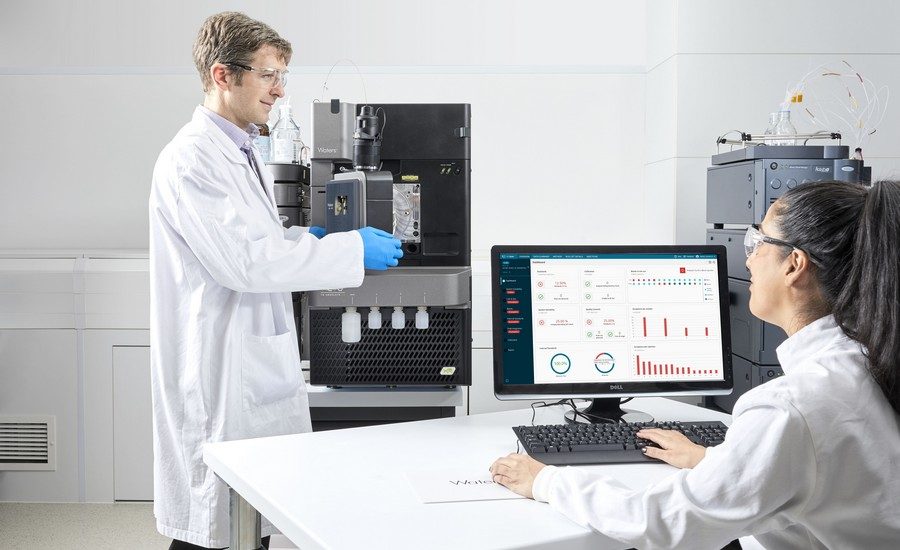
Image credit: Waters Corporation
How Waters Can Support PFAS-Free Packaging and Recycled Plastics Testing
Waters works with food and packaging laboratories to translate emerging regulations into robust, high-throughput workflows. In practice, that support typically spans:
- Targeted quantitation for regulated analytes, including PFAS, BPA, and other substances of concern, on LC-MS/MS and GC-MS/MS platforms designed for reliable, routine operation
- High-resolution MS workflows for suspect and non-target screening of NIAS, helping labs characterize unknowns in recycled polymers and complex packaging structures
- Informatics that supports streamlined review, consistent reporting, and the management of libraries and identification evidence across teams and sites.
For laboratories preparing for the PPWR timeline, the priority is not only instrument performance, but also confidence—confidence in data quality near thresholds, confidence in comparability across stakeholders, and confidence that food packaging can be evaluated with a modern, defensible analytical toolbox.
Resources
- European Commission. "Packaging waste." https://environment.ec.europa.eu/topics/waste-and-recycling/packaging-waste_en.
- European Commission. "Packaging Waste Regulation: Boosting Business and Protecting the Planet." https://environment.ec.europa.eu/topics/waste-and-recycling/packaging-waste/packaging-packaging-waste-regulation_en.
- Henderson, B. "EU Regulation Limits PFAS in Food Packaging, Bans Single-Use Plastic Packaging for Produce." Food Safety Magazine. January 28, 2025. https://www.food-safety.com/articles/10087-eu-regulation-limits-pfas-in-food-packaging-bans-single-use-plastic-packaging-for-produce.
- Lee, J.X., Y.L. Chew, and W. Zhang. "Automated Sample Preparation Using Andrew+™ Pipetting Robot Configured with Extraction+ for Solid Phase Extraction (SPE) of Per- and Polyfluoroalkyl Substances (PFAS) in Food Packaging Material Analysis." Waters Corporation. https://www.waters.com/nextgen/gb/en/library/application-notes/2025/automated-sample-preparation-using-andrew-pipetting-robot-configured-with-extraction-for-solid-phase-extraction-spe-of-per-and-polyfluoroalkyl-substances-pfas-in-food-packaging-material-analysis.html.
- Waters Corporation. "Safety Challenges of Incorporating Recycled Plastics in Food Contact Materials." https://www.waters.com/nextgen/gb/en/library/library-details.html?documentid=720007803&t=Waters-SafetyChallengesofIncorporatingRecycledPlasticsinFoodContactMaterials-720007803.