Footsteps and Forklifts: The Dance of the Production Floor
Food safety alert: things that move can take other things on unwanted journeys
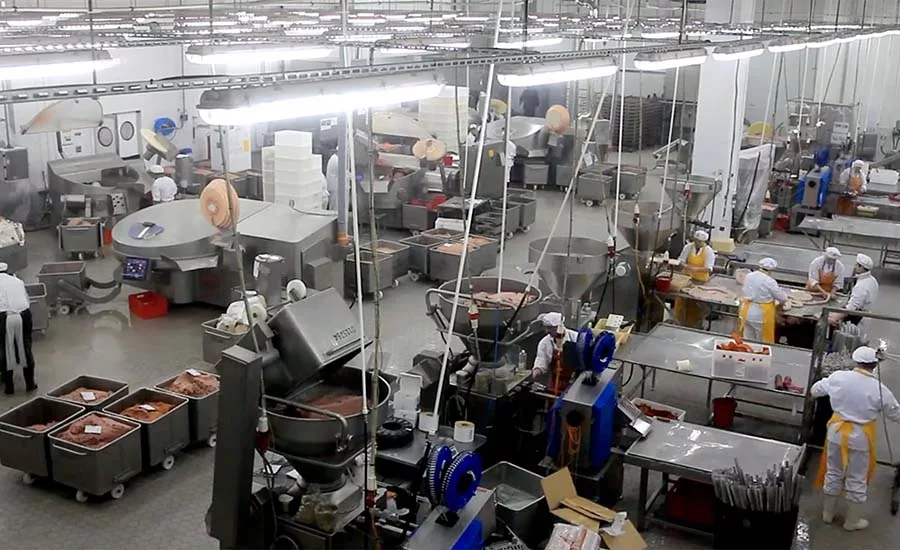
This article focuses on all the movement that occurs in a food plant. People and equipment move around and often take bacteria and allergens with them. How do these events affect food safety risks, and how can they be managed?
We share examples and insights about all this movement, with suggested actions that can help with food safety risk identification and management. These principles are separate yet related to those which relate to sanitation programs, environmental monitoring, sanitation standard operating procedures (SSOPs), and good manufacturing practices (GMPs). Although "everyone knows" that movement in a plant can cause issues, there is not much published literature to help with understanding it. This article is intended to help with that.
Things That Move
To increase your awareness about this topic, think about all the different types of movement that can occur in a plant:
- Fork trucks and pallet jacks moving pallets from a warehouse to a production zone
- Stainless steel carts wheeled from one production line to another
- Maintenance toolboxes being set on the floor, and then later carried to another location
- Electrician carts being moved from an unsanitary work area into a production area
- Employees walking to their workstations
- Employees moving from a controlled hygienic zone to an uncontrolled zone, and vice versa
- Frontline team members taking the shortest path to the restrooms or break areas, cutting through active production areas
- Dirty equipment being moved to a cleaning area via a path that goes through an active production area
- Portable production equipment (e.g., conveyors, mixers) being moved around the production area
- Equipment being moved out of service and new equipment being brought in
- Clean PPE (e.g., smocks, gloves) being moved from the laundry or receiving area through to donning areas adjacent to production
- Waste and garbage (e.g., outer packaging, strapping, discarded PPE) being removed from production lines
- Sanitation equipment (e.g., for servicing restrooms, portable foamers, floor scrubbers) left in production areas
- Line changeovers from one allergen to another, with people and materials moving between dedicated allergen lines.
Conveyed materials can be a carrier for contamination, particularly in close quarters. Any movement of people or materials can introduce risk. Also, employees touch and brush up against things all the time!
Where are all these people and equipment going? They are all doing their best to go from Point A to Point B, likely single-mindedly. How many of those employees are truly aware of their surroundings from a food safety risk point of view?
Let's say that at "Point A" are employees working on a packaging line, and they want to get to "Point B," their break area. To do this quickly and in the shortest distance, they have to walk through a raw meat processing area. They should obviously not do this, so they must instead circle around it to go through controlled hygiene areas. Sometimes, the right path to take between two points is circuitous (Figure 1).
Things That Interact
Picture a square. In each corner of the square lies Listeria. In one corner, Listeria is hiding underneath a biofilm. In another corner, it is growing underneath the leg of a large, stainless-steel mixer. In another corner, it is underneath a wall/floor junction where a small leak comes through the wall. In the final corner, Listeria is being harbored underneath a drain cover.
Now, assume that all four corners are hidden—all you can really see is everything in between. Picture another square. In each corner of the square there are allergens. In one corner, dairy products are being packaged. In another corner, egg products are being packed. In another corner, soy products. And in the final corner, products are being packed that contain no allergens.
Looking for quick answers on food safety topics?
Try Ask FSM, our new smart AI search tool.
Ask FSM →
Now assume that the four corners are in different parts of the plant, not visible to each other.
Within the four corners are the employees and all the other production equipment needed to blend, mix, pump, and transfer products to the packaging lines. How do you make sure that equipment and foot traffic are controlled so there is no allergen cross-contact? Not doing so risks contamination of your product and poses danger to consumers.
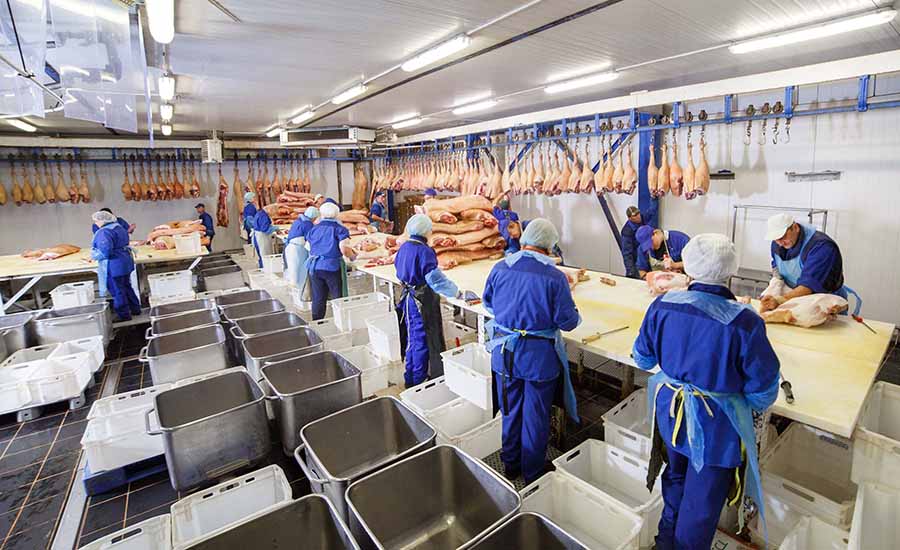
Control of the "corners" does not guarantee a risk-free environment (Figure 2).
Shining a Light
We need truly effective actions to minimize the potentially negative food safety effects of people and equipment moving in the wrong ways.
Let's focus on the "corners." These are harborage points (for bacteria) or residence points (for allergens). Bacteria hide in crevices, and allergens reside in recipes and bags of ingredients. The food safety and quality assurance (FSQA) team must precisely identify where bacteria might be and where allergens exist in food being made.
In a pathogen or allergen crisis situation, it is essential to find the root source of the pathogen or allergen. That source is going to be one of the harborage or residence points.
By contrast, transfer points are those areas in which the harborage and residence points intersect with people or things being moved around. These are the opportunities for the bacteria or allergen to move. A stepwise allergen example might be:
- A creamy milk base is being blended, and some splashes onto the floor
- An employee walks through the splashed liquid
- The employee walks up steps to a mixer that is blending a soy mixture
- A different employee rests a stainless-steel mixing tool on the steps
- That employee later uses that tool to stir the soy mixture.
Obviously, a dairy allergen could have gotten into the soy mix unintentionally. This same type of transfer could occur with bacteria. Without proper and acute awareness by every employee of the potential for cross-contamination or allergen cross-contact, it will inevitably happen.
This problem can also be viewed systemically, i.e., from a process point of view. Employees may have no choice but to take certain pathways (faulty plant design) or to use hard-to-clean equipment (faulty equipment design). Hence, solely blaming employees could be the wrong thing to do. Implementing more training programs ("wash your hands") could also be counterproductive. Such approaches are typically ineffective in the long run.
The charge to the organization is to attack the problem of movement—e.g., cross-contact and product contamination—holistically. This propensity for things to move, taking along unwanted actors, encompasses the idea of vectors, defined as "anything (air and other gases, water and other liquids, physical objects or people) that carries or transfers a pathogen from one place to another."1
Outlined below are some suggestions for how to handle this "propensity for movement" successfully.
Controlling the Movement of People and Things
Where to start? First, "know thyself," as the Greek aphorism instructs. A fantastic way to get started is by mapping everything. Who or what goes where, and when?
Suggestions for a mapping exercise include:
- Map product zones, hygienic zones, and high-risk/high-care zones.
- Map flow of equipment, people, and materials (raw materials and packaging materials).
- Map drains and ventilation ducting, including as-built conditions and how they are configured now.
- Conduct focus groups with key groups—maintenance, production, sanitation, and those tasked with providing floor supplies. Start with a blank floor plan and ask these groups to map their movements.
- Ask the FSQA group to assess the history of infractions and problematic behaviors related to traffic patterns.
Where else to start? Be a discoverer. Mapping typically yields insights into how things are supposed to move, with employees stating what they think are the right answers.
These learnings can be easily confirmed by some hands-on work:
- Open up equipment that has been used for years without being challenged—e.g., "It's working fine, and we pasteurize." Drains should be examined, too—covers and the pipes inside. These can all serve as harborage or residence points that can result in a bad actor being transported elsewhere.
- Audit compliance with traffic signage. If signs and rules are being ignored, this can reflect a deeper issue with values, beliefs, and norms in the organization—and/or you have bad signage.
- Consider the types of movement that take place during emergency situations or drills. Could hygienic zoning or allergen segregation be compromised? Similarly, consider how employees look at egress in normal situations (e.g., going outside for a break, leaving after a shift).
- Spray water on the floor to see if it traverses common traffic areas.
- Use strong flashlights to visualize hard-to-see areas. Add these areas to planned lighting improvements.
- Look above and below. Everything always looks good at eye level!
Where else to start? Take action.
Once there is an understanding of what is supposed to happen, verify this, and then validate the controls necessary for food safety:
- Verify and validate sanitation practices and procedures.
- Observe employee practices on the front line and throughout the facility, even in support areas. What you see might surprise you (e.g., a path that provides a shortcut to a restroom but traverses through an unsanitary area).
- Make observations on all shifts and during downtime. Pay particular attention to periods of high traffic—shift changes, break times, and product changeovers.
- If cameras are used in the facility, review recorded movements at different times and different shifts, including break times and line changeovers.
- Analyze data from the environmental monitoring program (EMP). Where are suspect harborage and transfer points?
- Get input from third-party experts such as a microbiology lab, chemical company, and auditors. You likely already work with these experts.
- Interview the pest control service provider, the sanitation support provider, contractors, and any other "outside eyes" with a regular view of your facility. They may have insights into employee movements that you might have missed or consider "normal."
- Utilize the "ABC model,"2 a method to analyze the causes and effects of behavior. Analyze the antecedents driving behaviors and explore the ways to use consequences to modify those antecedents when necessary. For example, perhaps people are taking unauthorized shortcuts to the break room to beat the crowds. Better scheduling of break times to prevent crowding could curb this problematic behavior.
Guidance from Food Safety Standards
The BRC Global Standards (BRCGS) are helpful with regard to plant movements. These standards are prescriptive in requiring mapping, much more so than most other GFSI-related auditing schemes. Clause 4.3.2 is particularly applicable in its direct requirement for a map of the site.3 Minimum requirements include, among others:
- Production risk zones.
- Access points for personnel and raw materials.
- Routes of movement for personnel, raw materials, waste, and rework.
- Location of staff facilities (e.g., restrooms, smoking areas).
- Production process flows.
- Mapping of areas where "time segregation" is used to complete different activities.
Importantly, Clause 4.3.4 reiterates that "movement" is a risk factor and needs to be considered in the facility's overall risk assessment: "The movement of personnel, raw materials, packaging, rework and/or waste shall not compromise the safety of products. The process flow, together with the use of demonstrably effective procedures, shall be in place to minimize the risk of the contamination of raw materials, intermediate/semi-processed products, packaging and finished products."3
In addition, the BRCGS "Interpretation Guide"4 has further helpful guidance regarding the site map. The map is expected to support the site's risk assessments and prevention of cross-contamination and cross-contact. Examples given include the following:
- Product risk zones: Ensure that the standards of environmental hygiene are appropriate for the work being undertaken and ensure that flow of product and people will not compromise food safety.
- Access points for personnel and raw materials: Identify designated walkways to ensure adequate separation of people and materials.
- Routes of movement: Include the location of the pathogen control steps on the map for sites that are high-risk or high-care areas.
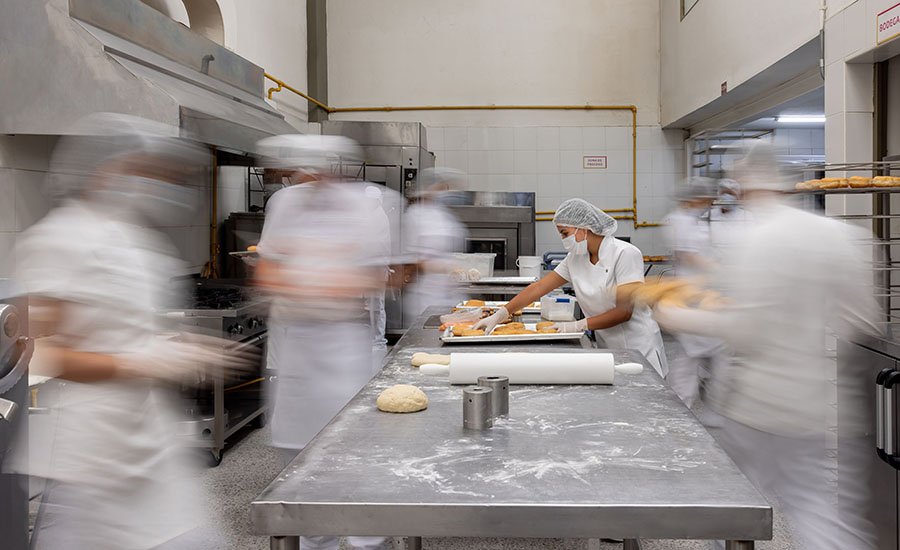
Of note, the standard does not mention equipment in these clauses. Since equipment can also serve as a transfer point (just like people and products), it should be included in risk analysis and mapping (Figure 3).
Furthermore, the Canadian Food Inspection Agency (CFIA) has published a guidance document5 on preventing cross-contamination. This document is required as part of a company's preventive controls plan. The document outlines factors that can result in cross-contamination and provides recommendations on how to prevent it.
Getting Things Straight
Now that traffic pathways have been understood, what can we do to prevent issues from occurring, or to eliminate root sources of pathogen contamination, or to take corrective actions to prevent allergen cross-contact?
Here is a paradigm shift for many people: although the root source for a bacterial contamination is likely to be a growth niche (e.g., a hiding spot for Listeria), one of the best ways to find that growth niche is by following the transfer points. Find the likely transfer points and then follow the trail backward and forward (and sometimes up, e.g., a faulty wall or ceiling, or down, e.g., a drain). "Following the trail" means physically and visually, using some of the techniques noted above, such as spraying water and using flashlights.
Understanding and mapping movements can provide a lot of leverage for finding Listeria. For example, a recent paper by Townsend et al.6 looked at product distribution centers. The authors identified cold storage rooms and shipping docks as likely transfer points, and floors and cleaning equipment as harborage sites.
Allergen Controls
Allergens can be tracked in a similar manner, whereas in their case the harborage sites are the products/ingredients containing the allergen. These are easy to identify, unlike trying to "see" bacteria. Transfer points are likely to be footwear, hands, and mixing implements. They are also present wherever an allergen-containing mix has spilled onto the floor. Most employees may be single-mindedly focused on cleaning up the spill, not recognizing that they are handling an allergen.
For allergen controls, we often see the use of differently colored smocks and hairnets. But are different traffic patterns in place, depending on the allergen, or do vectors of cross-contact exist between lines? The same is true for hygienic zoning (e.g., raw meat to cooked meat).
Movement of rework and work in progress (WIP) around the plant, typically from one line to another, is an additional area to consider. As mentioned earlier, this can be a huge issue for allergen cross-contact.
'Nudging' to Correct Behavior
When a new plant is being built or an existing plant is being expanded, opportunities arise to design in the optimal pathways for movement. During design and installation, employee traffic patterns are often the last consideration. From a food safety perspective, however, the ways in which employees move around the plant need to be considered as fundamental to the design of a facility. Establish the easiest path to the restrooms and then plan your equipment layout around that. This easy path nudges the employees to do the right thing, every time.
Nobel Prize winner Richard Thaler, who teaches behavioral economics, writes about the power of "nudging" in his book on improving decisions.7 Jespersen et al.8 have integrated this concept into a food safety context.
Also think about movement during construction (for a new plant, or changes being made in an existing plant, such as a new line). The European Hygienic Engineering and Design Group (EHEDG) published a whitepaper on "GFSI Hygienic Design."9 The group wrote, "It is important to control the movement of people around a site during construction … Temporary access for contractors … are considered part of the project plan to ensure areas can be temporarily cordoned off … It is good practice to minimize the overlap between contractor and employee routes wherever possible."9
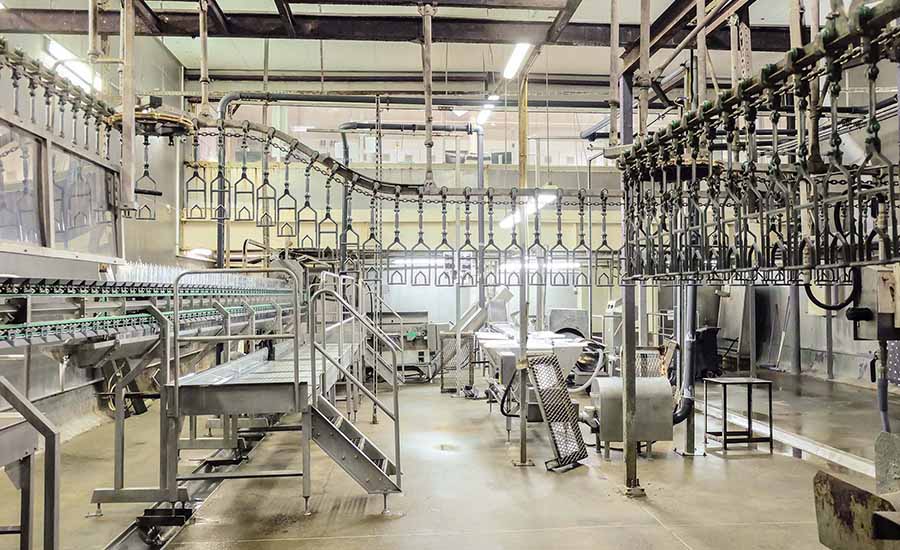
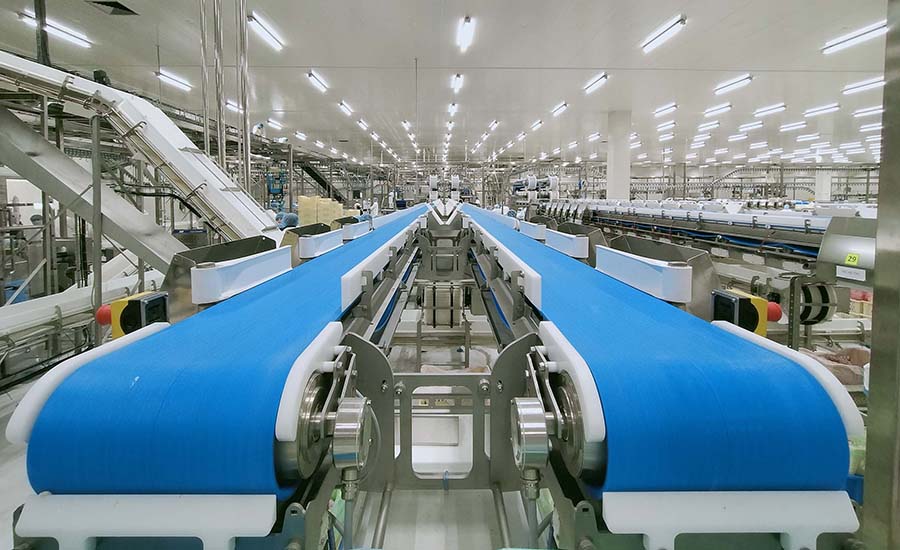
The EHEDG whitepaper advises that "Construction activities are to be evaluated considering and addressing their potential impact on identified cross-contamination risks."9 They specifically call out pathogens and allergens. We think about the flow of the product along conveyors, but we do not often think about the movement of personnel around those conveyors (Figure 4).
What about the movement of infrequent visitors—upper management, office staff, plant visitors, contractors, pest control, and sanitation chemical service agents? Are obvious pathways established to prevent potential contamination events? Also consider temporary employees. Do they always require supervision, or are traffic patterns established and easy to determine—even if it is a worker's first day in the facility?
Taking Control of Movement
The proper systemic fixes to all these potential issues make it that much easier for employees to practice the right behaviors. For example, dirty/used stainless-steel bowls may simply be wheeled in and out of a cleaning room. To better control this traffic, stainless-steel guardrails can be installed to split that cleaning room in half—dirty bowls are wheeled in on one side, while clean bowls are wheeled out on the other. One-way gates can be used to ensure proper direction.
For example, a recent article by Davis10 reviews where pathogens can originate in a food plant. The article comments on "traffic patterns" as potential sources, and suggests the use of active controls (e.g., doors, gates, rails) rather than passive controls.
Takeaway
A plant that is completely static is one that is not in production. Even during periods of downtime, movements of people and materials can eventually compromise food safety, if not controlled. To ensure minimal risk, it is necessary to analyze and control the patterns of movement in your facility. This analysis must cover all potential patterns of movement, on different shifts, in different seasons, and in periods of peak productivity as well as slow periods.
Movements in a food plant can be complex and intertwine with other activities. It is only when we look at the complete picture that we can begin to unravel the pathways. Ultimately, we are looking for traffic patterns that are designed so that the easiest path to take is the right one, and the one that helps ensure food safety. When the correct action to take is complicated and difficult to discern, we have a situation where employees will be tempted to take an easier action that could compromise the food products.
People and culture play big roles in this analysis. What are the rules in place, and what are the pressures to bend those rules? Is it considered normal and "no big deal" if these rules are broken? As always, when we look at employee behaviors, we must look beyond the written programs at the shared values, beliefs, and norms that influence how people within the plant think and act regarding these rules.
Pathways matter, not just what is located along the way. Everything is connected to everything.
References
- Holah, J., E. Margas, R. Hagberg, B. Warren, J. Fraser-Heaps, and S. Mortimore. "Identifying and Controlling Microbiological Cross-Contamination." Food Safety Magazine February/March 2012. https://www.food-safety.com/articles/3801-identifying-and-controlling-microbiological-cross-contamination.
- Braksick, L.W. Unlock Behavior, Unleash Profits: Developing Leadership Behavior That Drives Profitability in Your Organization. McGraw Hill, May 2007. https://www.mheducation.com/highered/mhp/product/unlock-behavior-unleash-profits-developing-leadership-behavior-drives-profitability-your-organization.html.
- BRCGS. "Global Standard Food Safety, Issue 9." August 1, 2022. Free version available (under "Format"). https://www.brcgs.com/product/global-standard-food-safety-(issue-9)/p-13279/.
- BRCGS. "Global Standard Food Safety, Issue 9: Interpretation Guideline." August 1, 2022. https://www.brcgs.com/product/global-standard-food-safety-issue-9-interpretation-guideline/p-12227/.
- Canadian Food Inspection Agency, "Preventing Cross-Contamination." 2021. Available at: https://inspection.canada.ca/en/preventive-controls/cross-contamination.
- Townsend, A., L. Strawn, B. Chapman, M. Yavelak, A. Mishra, and L. Dunn. "Factors that Predict Listeria Prevalence in Distribution Centers Handling Fresh Produce." Food Microbiology 107 (October 2022): 104065. https://www.sciencedirect.com/science/article/abs/pii/S0740002022000892.
- Thaler, R.H. and C.R. Sunstein. Nudge. Yale University Press, September 2021. https://yalebooks.yale.edu/book/9780300262285/nudge/.
- Jespersen, L., N. Raja, L. Russell, S. Tongyu Wu, and C. Wallace. "Using Frontline Feedback to Nudge Food Safety Culture Improvements." Food Safety Magazine April/May 2023. https://www.food-safety.com/articles/8500-using-frontline-feedback-to-nudge-food-safety-culture-improvements.
- European Hygienic Engineering and Design Group (EHEDG). "EHEDG White Paper on GFSI Hygienic Design Scopes JI & JII." 1st Ed. October 2022. https://www.ehedg.org/guidelines-working-groups/guidelines/guidelines/guidelines/guidelines/detail/white-paper-1-test.
- Davis, J. "Sources and Harborages of Pathogens in the Plant." Food Processing. June 3, 2024. https://www.foodprocessing.com/food-safety/cleaning-sanitation-hygiene/article/55042157/sources-and-harborages-of-pathogens-in-the-plant.
Bob Lijana, M.Sc. is Editor in Chief at Cultivate SA and has held director- and VP-level positions in food safety, quality, and operations for over 35 years at companies producing ready-to-eat foods, prepared meals, and pasteurized juices. He has a B.Sc. and an M.Sc. in chemical engineering from the Massachusetts Institute of Technology and the University of California–Berkeley, respectively.
John Boyce has over 45 years of experience in various aspects of food production, food safety, quality assurance, sanitation, training, and auditing. He spent 25 years with Trident Seafoods, starting as a crab fisherman and then working in roles in plant management, corporate human resources, regulatory compliance, national account sales, food safety and quality assurance, and then as Director of Training and Development for the company. He spent four years with Diversey, supporting sanitation teams, and eight years with AIB International, conducting food safety audits around the world. John is now an independent food safety consultant based in Vancouver, British Columbia. He enjoys working with clients to help them ensure food-safe products. He is also an expert partner at Cultivate SA for assessing and changing food safety culture in food businesses.