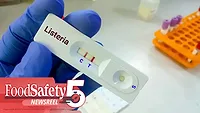
Food Safety Five Ep. 20: The Latest Research on Listeria Biofilms, E. coli, and the UPFs Debate
This episode of Food Safety Five discusses a study that evaluated the antimicrobial efficacy of chlorine and peracetic acid (PAA) against Listeria monocytogenes biofilms, a first-of-its kind application of experimental evolution to understand the genetic and phenotypic adaptations that enable L. monocytogenes to form robust biofilms, and an ongoing project investigating a reoccurring, emerging, and persisting (REP) Escherichia coli strain that has been linked to multiple leafy greens-associated foodborne illness outbreaks. Additionally, we mention the U.S. debate over a potential, federally recognized definition for “ultra processed foods” (UPFs), and several other regulatory updates from the UK, Canada, and the United Arab Emirates (UAE).
News Articles:
- Study Explores Sanitizer Limitations Against Listeria Biofilms in Leafy Greens Production
- First-of-its-Kind Study Shows How Listeria Strains Evolve Into Strong Biofilm Formers
- Researchers Developing Tool to Help Leafy Greens Growers Mitigate REP E. coli Strain
- Food Industry Stakeholders Share Input on FDA, USDA’s Intent to Define UPFs
- Canada Reduces Regulatory Red Tape for Produce, Eggs
- UK Updates Food Law Codes of Practice
- Abu Dhabi to Establish Novel Foods Regulatory Framework
Looking for quick answers on food safety topics?
Try Ask FSM, our new smart AI search tool.
Ask FSM →