Food Industry Stakeholders Share Input on FDA, USDA’s Intent to Define UPFs
In July, the U.S. Department of Agriculture (USDA) and the U.S. Food and Drug Administration (FDA) issued a joint Request for Information (RFI) to gather information and data to help establish a federally recognized, uniform definition for ultra-processed foods (UPFs). This definition would support federal efforts to address concerns around UPFs and diet-related chronic disease—a core tenet of U.S. Health Secretary Robert F. Kennedy Jr.’s “Make America Healthy Again” (MAHA) agenda.
The RFI closed for comment on October 23, with mixed responses from food system stakeholders. Meat industry representatives, such as the National Chicken Council (NCC) and National Pork Producers Council (NPPC), discouraged FDA and USDA from legally defining UPFs. On the other hand, consumer protection organizations, such as the Center for Science in the Public Interest (CSPI) and the Consumer Federation of America (CFA), expressed support for addressing UPFs—with some caveats, and while providing specific input on how the category should be defined.
Background on the Term “Ultra-Processed Foods” and MAHA’s Focus on UPFs
At present, there is no single, authoritative definition for ultra-processed foods for the U.S. food supply; however, the term is most commonly associated with the four-category NOVA food classification system, which defines Category 4 UPFs as “industrially manufactured food products made up of several ingredients (formulations) including sugar, oils, fats, and salt and food substances of no or rare culinary use.”
UPFs are a topic of focus mentioned throughout the Trump Administration’s final MAHA Report, which was published in September. The report calls attention to the fact that the current Dietary Guidelines for Americans do not explicitly address UPFs.
Legally defining UPFs at the federal level could allow regulatory agencies like FDA and USDA to pursue specific rules and policies for the food category.
At the state level, in October, California enacted the Real Food, Healthy Kids Act, which is first-of-its kind legislation that establishes a legal definition for UPFs and tasks the state Department of Public Health with identifying and phasing out the “most harmful” UPFs from California schools. The law defines ultra-processed foods as those “high in” saturated fat, added sugar (or containing a non-sugar sweetener), or sodium, and containing one or more of certain additives, including artificial dyes, flavors, sweeteners, emulsifiers, and thickening agents. Raw agricultural products, minimally processed foods, and pasteurized milk are exempt from California's definition of UPFs.
Comments in Opposition to Defining “Ultra-Processed Foods”
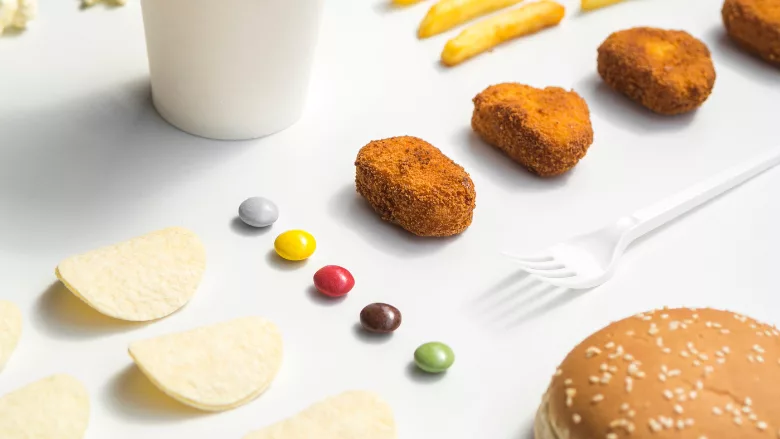
Meat industry representatives raised the point that adopting a definition for UPFs similar to the NOVA classification, which focuses on processing steps of a food rather than nutritive content, could place meat products like chicken nuggets in the same category as foods like candy, despite their vastly different nutritional profiles.
Looking for quick answers on food safety topics?
Try Ask FSM, our new smart AI search tool.
Ask FSM →
In its comments, NCC expressed general concerns about a classification system and suggested that, instead of pursuing a classification system, FDA and USDA should bolster existing frameworks and consumer education as science evolves. Should the agencies choose to move forward with a classification system, however, NCC urges the use of a uniform, science-based approach to characterizing foods—one that prioritizes nutritional composition and ingredient function over the number of processing steps or ingredients. Furthermore, NCC stresses that FDA and USDA should only develop a classification system in accordance with the Administrative Procedure Act.
NPPC also shared its apprehension about a possible definition for UPFs, saying that it could be “damaging” for consumers of pork products. The group called the NOVA classification system “problematic” and discouraged USDA and FDA from:
- Relying on a categorization system that focuses on the processing of foods rather than their nutritional benefits
- Categorizing food as ultra-processed that contains ingredients that enhance food safety, shelf stability, and nutrient availability, since such ingredients protect public health and allow nutrient-dense foods to reach consumers
- Defining UPFs in a way that conflicts with FDA’s Standards of Identity regulations, which detail what specific foods must contain, the amount or proportion of ingredients or components, and sometimes the method of production or formulation.
Rather than “ultra-processed foods,” NPPC recommends that FDA use a term such as “discretionary foods” for food products characterized by lower nutritional quality.
Comments in Support of Defining “Ultra-Processed Foods”
Groups representing the interests of consumers, such as CSPI and CFA, agreed that there is a need to define the category of foods commonly referred to as UPFs. The two groups did not align in their views on how exactly this category should be defined, however.
In its comments, CFA urges FDA to adopt a federal UPF definition grounded in the NOVA classification system, which informs the research linking UPFs to diet-related disease—and to resist calls to conflate its UPF definition with other factors related to dietary quality, such as nutritive content, or to circumscribe its definition to exclude foods that meet the NOVA definition. CFA acknowledges that some UPFs may fit into a healthy dietary pattern, while other, less processed, foods may be comparatively unhealthy, but it warns FDA that attempting to create a new UPF definition, different from NOVA, would cause confusion among consumers and undermine the agency’s credibility. The comments also urge FDA to clarify that use of certain “industrial processes,” such as extrusion, which may not be reflected in the ingredients label on manufactured foods, will qualify those foods as UPFs.
On the other hand, CSPI supports a definition for the category of processed foods that has been scientifically linked to health concerns so that government policies can assist people with limiting those foods in their diets; however, the group encourages FDA and USDA to consider an alternative term that would more precisely convey harm. In CSPI’s opinion, the term should include processed foods that meet one of six criteria:
- High unhealthy nutrient density (i.e., excess sugar, sodium, or saturated fat)
- High calorie density
- Processed meat
- Sweetened beverages
- Processed refined carbohydrates
- Ingredients strongly linked to cancer or other serious health concerns.
CSPI also pointed out “many actions that FDA and USDA can and should take to address the harms of [the] industrially processed food supply,” even before UPFs are formally defined, including:
- Closing the Generally Recognized as Safe (GRAS) “loophole”—an avenue FDA is already exploring
- Improving post-market food chemical safety reassessment and addressing unsafe ingredients currently in the food supply
- Strengthening and finalizing FDA’s proposed rule on front-of-package nutrition labeling
- Requiring cancer warnings on processed meats
- Requiring specific disclosure of all food ingredients
- Supporting more healthy, wholesome meals in schools.
Once a definition for UPFs is finalized, CSPI urges FDA and USDA to explore taxes, marketing restrictions, warning labels, and federal procurement restrictions on certain UPFs.
Update, November 5, 2025: The Institute of Food Technologists (IFT) recently shared its comments in response to FDA's/USDA's RFI on UPFs, which made eight key points, distinguishing between product formulations versus processing, and emphasizing the importance of not contributing to further stigmatization of processing:
- As it is currently used, the term “ultra-processed” can be stigmatizing and lacks scientific precision. Ensuring consistency between future definitions and federal nutrition policy will be essential.
- As processing plays a role in ensuring food safety, extending shelf life, enhancing nutrient availability, future UPF definitions should emphasize nutrient content, recognize the benefits of processing, and avoid stigmatizing language about processing. A definition for UPFs should focus on nutritional imbalances rather than processing alone.
- Added ingredients should be evaluated in context, considering their function and nutritional contribution, rather than their presence alone.
- Future definitions should clearly distinguish between "processing" and "formulation," which are often confused in the current conversations around UPFs.
- No single processing technique—which vary widely, and include physical, biological, and chemical processes such as cutting, fermentation, pasteurization, and pH adjustment—should define ultra-processed food.
- The term “ultra-processed” is imprecise and potentially stigmatizing. Alternatives that focus on nutritional quality, such as “high in fat, sugar, or salt (HFSS),” or that emphasize formulation over processing, may better capture key concerns and align with existing dietary guidance.
- Nutrient content and density should be central when defining foods for dietary guidance, rather than the degree of processing.
- Definitions should be science-based, flexible, and aligned with the Dietary Guidelines for Americans to avoid misclassifying nutrient-dense, fortified, or affordable foods.
Read IFT's full comment letter here.