Food Safety
search
Ask Food Safety AI
cart
facebook twitter linkedin
  • Sign In
  • Create Account
  • Sign Out
  • My Account
Food Safety
  • NEWS
    • Latest News
    • White Papers
  • PRODUCTS
  • TOPICS
    • Contamination Control
    • Food Types
    • Management
    • Process Control
    • Regulatory
    • Sanitation
    • Supply Chain
    • Testing and Analysis
  • PODCAST
  • EXCLUSIVES
    • Food Safety Five Newsreel
    • eBooks
    • FSM Distinguished Service Award
    • Interactive Product Spotlights
    • Videos
  • BUYER'S GUIDE
  • MORE
    • ENEWSLETTER >
      • Archive Issues
      • Subscribe to eNews
    • Store
    • Sponsor Insights
    • ASK FSM AI
  • WEBINARS
  • FOOD SAFETY SUMMIT
  • EMAG
    • eMagazine
    • Archive Issues
    • Editorial Advisory Board
    • Contact
    • Advertise
  • SIGN UP!
NewsContamination ControlSanitationMicrobiologicalBiofilm Control

First-of-its-Kind Study Shows How Listeria Strains Evolve Into Strong Biofilm Formers
By Bailee Henderson
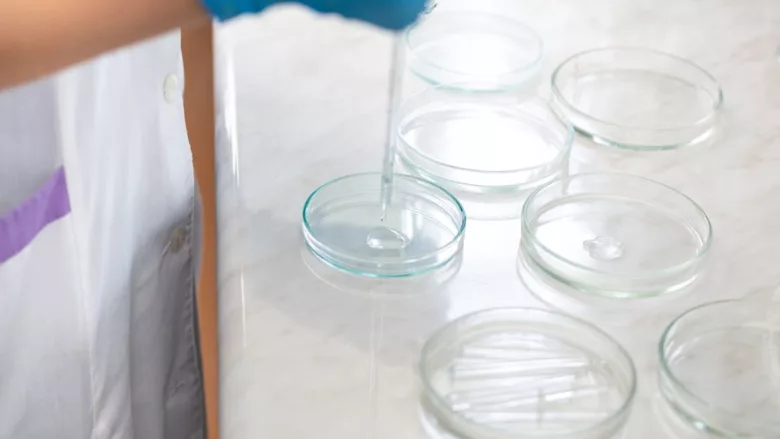
researcher dropping liquid in petri dishes
Image credit: Ivan S via Pexels
November 4, 2025

A recent study has provided new insight into the genetic and phenotypic adaptations that enable Listeria monocytogenes to form robust biofilms.

The ability of L. monocytogenes to form biofilms on surfaces such as stainless steel, plastic, and glass has long been recognized as a key factor in its survival and contamination potential in food production environments. In this context, researchers from Wageningen University and Research (WUR) sought to better understand the evolutionary mechanisms driving L. monocytogenes strains’ enhanced biofilm formation ability, which, up until this point, have remained largely unexplored.

The study was published in Microbiological Research.

Using an experimental evolution model, the researchers isolated evolved variant (EV) strains (i.e., strains that have developed a specific advantage through evolution) from two L. monocytogenes backgrounds: EGDe (a reference strain) and FBR16 (a hypermutator food isolate). To isolate the EV strains, the original EDGe and FBR16 strains underwent repeated cycles of surface colonization, biofilm formation, dispersal, and reattachment. The resulting EV strains demonstrated up to a seven-fold increase in biofilm production compared to their ancestral counterparts.

Phenotypic assays revealed that increased cell surface hydrophobicity was a dominant trait among EV isolates, correlating with stronger attachment to hydrophobic surfaces such as polystyrene and stainless steel. Proteomic analysis identified two significantly upregulated proteins, Lmo1798 and Lmo1799, as key contributors to the enhanced biofilm phenotype.

Genomic analysis of the EGDe EV strain pinpointed a single-nucleotide insertion upstream of lmo1799 and a 42-nucleotide in-frame deletion within the gene. These mutations were associated with elevated expression of lmo1799, which in turn influenced cell surface properties and biofilm capacity. Mutants lacking lmo1799 or the upstream insertion exhibited reduced biofilm formation and lower hydrophobicity, underscoring the functional importance of these genetic changes.

Interestingly, a similar upstream insertion was identified in the FBR16 EV strain, reinforcing the role of this mutation in regulating the lmo1798–1799 operon. The study also highlighted that the impact of lmo1799 on biofilm formation is linked to its overexpression rather than just its presence, aligning with previous findings that deletion of lmo1799 alone does not significantly alter biofilm capacity.

Looking for quick answers on food safety topics?
Try Ask FSM, our new smart AI search tool.
Ask FSM →

The Lmo1799 protein, characterized by its LPXTG cell wall anchor motif and low negative charge, may alter the surface charge of L. monocytogenes, facilitating stronger attachment to surfaces. Its structural similarity to known biofilm-associated proteins further supports its role in biofilm architecture and persistence.

While the study focused on biofilm-related phenotypes, the mutations observed may also influence stress resistance and virulence. Notably, research has linked lmo1799 expression to stress adaptation pathways, and lmo1799 expression has been shown to be upregulated in blood and during bacteriophage exposure.

The WUR study marks the first application of experimental evolution to study biofilm enhancement in L. monocytogenes, offering a foundational understanding of how certain mutations can drive significant phenotypic shifts in this pathogen, posing an important microbiological threat to food safety.

KEYWORDS: genomics listeria study Wageningen University

Share This Story

Baileehendersonmay23

Bailee Henderson is the Digital Editor of Food Safety Magazine. She can be reached at hendersonb@bnpmedia.com.

Recommended Content

JOIN TODAY
to unlock your recommendations.

Already have an account? Sign In

  • people holding baby chicks

    Serovar Differences Matter: Utility of Deep Serotyping in Broiler Production and Processing

    This article discusses the significance of Salmonella in...
    Microbiological
    By: Nikki Shariat Ph.D.
  • woman washing hands

    Building a Culture of Hygiene in the Food Processing Plant

    Everyone entering a food processing facility needs to...
    Personal Hygiene/Handwashing
    By: Richard F. Stier, M.S.
  • graphical representation of earth over dirt

    Climate Change and Emerging Risks to Food Safety: Building Climate Resilience

    This article examines the multifaceted threats to food...
    Risk Assessment
    By: Maria Cristina Tirado Ph.D., D.V.M. and Shamini Albert Raj M.A.
Manage My Account
  • eMagazine Subscription
  • Subscribe to eNewsletter
  • Manage My Preferences
  • Website Registration
  • Subscription Customer Service

More Videos

Sponsored Content

Sponsored Content is a special paid section where industry companies provide high quality, objective, non-commercial content around topics of interest to the Food Safety Magazine audience. All Sponsored Content is supplied by the advertising company and any opinions expressed in this article are those of the author and not necessarily reflect the views of Food Safety Magazine or its parent company, BNP Media. Interested in participating in our Sponsored Content section? Contact your local rep!

close
  • Salmonella bacteria
    Sponsored byThermoFisher

    Food Microbiology Testing Methods: Salmonella species

  • a diagram explaining indicator organisms
    Sponsored byHygiena

    How Proactive Listeria Testing Helps Prevent Six- and Seven-Figure Recalls

  • woman grocery shopping
    Sponsored byCorbion

    Designing Safety Into Every Bite: Proactive Risk Mitigation for Refrigerated Foods

Popular Stories

newborn earing from bottle

Infants Nationwide Hospitalized With Botulism After Consuming ByHeart Formula

U.S. currency on scale

Shutdown Deal Restricts Funds for FSMA 204, Produce Safety Rule Enforcement

dates

Codex Commission Adopts New International Food Standards at 48th Session

Events

November 20, 2025

New U.S. Additive Bans: How to Prepare and Protect Your Brand

Live: November 20, 2025 at 11:00 am EST: From this webinar, attendees will learn the impact of ingredient restrictions on product development, sourcing, labeling, and market access.

December 4, 2025

Beyond Detection: How Integrated PCR Diagnostics Strengthen Food Safety in RTE Manufacturing

Live: December 4, 2025 at 2:00 pm EST: From this webinar, attendees will learn best practices for prevention of FM contamination at the corporate and plant levels.

December 11, 2025

How to Develop and Implement an Effective Food Defense Strategy

Live: December 11, 2025 at 2:00 pm EDT: From this webinar, attendees will learn common areas where companies encounter challenges in their food defense strategies and how to address them.

View All

Products

Global Food Safety Microbial Interventions and Molecular Advancements

Global Food Safety Microbial Interventions and Molecular Advancements

See More Products

Related Articles

  • woman drinking water from a glass blue background

    First-of-its-Kind Study Finds Higher Rates of Cancer in Areas With PFAS-Contaminated Drinking Water

    See More
  • person reading label on jar of food in grocery store

    California Passes First-of-its-Kind Legislation Standardizing 'Best By' Dates on Food; Bans 'Sell By'

    See More
  • plastic cutlery and clear plastic film on purple background

    Microplastics Increase Antibiotic Resistance of E. coli, Aid Biofilm Formation, Study Shows

    See More

Related Products

See More Products
  • 9781498721776.jpg

    Handbook of Food Processing: Food Safety, Quality, and Manufacturing Processes

  • 1444333348.jpg

    Handbook of Food Safety Engineering

  • Food-Forensics-3D.jpg

    Food Forensics Handbook Practice, Instrumentation, Case Studies

See More Products

Related Directories

  • Lakeland University

    Lakeland University offers a unique Food Safety & Quality program that blends the sciences of biology and chemistry with best business practices to prepare students for careers in food processing. This is the nation’s first bachelor’s degree program of its kind. Lakeland worked with some of the biggest names in the food business to create this degree program.
  • Institute of Food Technologists

    Since 1939, the Institute of Food Technologists (IFT) has served as the voice of the global food science community. IFT advocates for science, technology, and research to address the world’s greatest food challenges, guiding our community of more than 200,000. IFT convenes professionals from around the world – from producers and product developers to innovators and researchers across food, nutrition, and public health – with a shared mission to help create a global food supply that is sustainable, safe, nutritious, and accessible to all. IFT provides its growing community spanning academia, industry, and government with the resources, connections, and opportunities necessary to stay ahead of a rapidly evolving food system as IFT helps feed the minds that feed the world. For more information, please visit ift.org.
×

Never miss the latest news and trends driving the food safety industry

eNewsletter | Website | eMagazine

JOIN TODAY!
  • RESOURCES
    • Advertise
    • Contact Us
    • Directories
    • Store
    • Want More
  • SIGN UP TODAY
    • Create Account
    • eMagazine
    • eNewsletter
    • Customer Service
    • Manage Preferences
  • SERVICES
    • Marketing Services
    • Reprints
    • Market Research
    • List Rental
    • Survey/Respondent Access
  • STAY CONNECTED
    • LinkedIn
    • Facebook
    • Instagram
    • X (Twitter)
  • PRIVACY
    • PRIVACY POLICY
    • TERMS & CONDITIONS
    • DO NOT SELL MY PERSONAL INFORMATION
    • PRIVACY REQUEST
    • ACCESSIBILITY

Copyright ©2025. All Rights Reserved BNP Media.

Design, CMS, Hosting & Web Development :: ePublishing