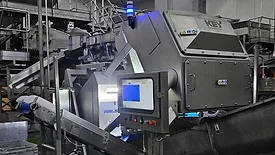
Signode’s automation capabilities for empty container producers—which, relevant to the food supply chain, include aluminum cans, glass and PET bottles, jars, and lightweight rigid plastics—combine conveying, robotic palletizing, strapping, and unitizing into a unified workflow.
The document clarifies key points about the scope of and compliance with Regulation (EU) 2024/3190, which bans the use of BPA and other hazardous bisphenols in food contact materials on the EU market.
FDA has issued a Request for Information regarding labeling and preventing cross-contact of gluten in packaged foods, in an effort to improve transparency in the disclosures of ingredients that impact certain health conditions (such as gluten for those with celiac disease) and other food allergens.
Contributing to the current conversation around food processing (e.g., “ultra-processed foods”), the Institute for the Advancement of Food and Nutrition Sciences (IAFNS) has published a set of governing principles for food formulation and processing classification systems.
Ideal for fresh, ready-to-eat dishes and hot foods, PULPUltra is grease- and oil-resistant, freezer-safe, sustainable, and compliant with new EU regulations for food contact materials.
The pulsed light disinfection system is engineered for food processing and packaging environments, with a range of applications from direct irradiation of foodstuffs to package disinfection.
The resource explores industry-specific challenges, key quality control functions, the best inspection solution for different applications and insertion points, and the role of inspection data.
KROHNE markets its Coriolis flowmeters as applicable to the food industry and especially useful in mass-based operations, recipe formulation, blending applications, and scenarios where ownership changes are transacted.
Through the One Health lens, a scientific review summarized current knowledge on Salmonella biofilms, the importance of non-antibiotic interventions given the rise of antimicrobial resistance (AMR), emerging alternative strategies with potential for real-world use, and challenges and needs moving forward.
A U.S. appeals court has ruled that USDA must amend the Bioengineered Food Disclosure Standard to close the loophole that exempts certain “ultra-processed” foods (UPFs) from displaying label disclosures for genetically modified (GM) ingredients. Additionally, the court ruled that QR code-only disclosures are unlawful without explicit on-label statements.