FDA Says a Taco Bell Iceberg Lettuce Supplier is Source of Five-State Cyclosporiasis Outbreak

Editor's note: This story has been edited to include the latest outbreak updates, listed chronologically at the bottom of the article. Alternatively, you can read the most recent coverage here.
On July 16, after reports of Cyclospora infections mounted for weeks without answers, the U.S. Food and Drug Administration (FDA) announced an outbreak cluster including more than 1,600 people in five Midwestern states.
Based on epidemiological information collected by the U.S. Centers for Disease Control and Prevention (CDC), a total of 1,644 people across Indiana, Kentucky, Michigan, Ohio, and West Virginia were infected with C. cayetenensis after exposure to Taco Bell food.
Michigan public health officials analyzed food exposure details from 190 of the outbreak cases who reported eating Taco Bell and shared those findings with CDC. Ingredient-level analyses on meals eaten by these cases indicate that 90 percent of those interviewed reported eating iceberg lettuce.
Illnesses started on dates ranging from May 13, 2026, to July 13, 2026. There have been 94 hospitalizations, and no deaths have been reported.
Taco Bell Will Stop Using Lettuce Supplier
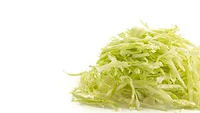
FDA’s traceback investigation identified a single supplier of iceberg lettuce from Mexico used by Taco Bell locations where sick people ate before becoming ill. Taco Bell told FDA it will discontinue sourcing any lettuce from the implicated supplier. The agency is also working directly with the supplier to determine if potentially contaminated shredded iceberg lettuce remains on the U.S. market.
Although FDA and CDC have not officially named the implicated supplier, "a source familiar with the investigation" told CNN that the Mexican-grown lettuce was supplied by Taylor Farms.
Looking for quick answers on food safety topics?
Try Ask FSM, our new smart AI search tool.
Ask FSM →
In a July 16 statement, Taco Bell said, "The affected ingredient from our supplier is being indefinitely removed from our supply chain nationwide and will be replaced within 24 hours in select states... Taco Bell has taken precautionary action, and we encourage all relevant restaurants, retailers, and foodservice operators to do the same."
Investigation Continues
As part of the investigation, FDA and state partners have initiated collection of product samples for testing and analysis. Additionally, FDA has increased border checks for products implicated in the outbreak.
The investigation is ongoing to determine the source and scope of the contamination. Additional implicated brands, restaurants, retailers, or distribution channels may be identified as the investigation continues.
Addressing Confusion About Differing Numbers From Michigan, CDC
Because the number of cyclosporiasis cases seen across the U.S.—and especially in Michigan—has been elevated in comparison to previous summers, and because an official outbreak cluster had not been announced until a July 14 health advisory from CDC, consumers and media have looked to several federal and state sources for data to try to understand the situation, causing public confusion.
As of July 16, the Michigan Department of Health and Human Services (MDOH) has reported 4,312 cases of cyclosporiasis within the state since late June, resulting in 102 hospitalizations. This number differs from the FDA and CDC outbreak count because all 4,000-plus people who fell in Michigan may not be part of the outbreak, or some cases may still be under investigation to determine whether they are.
Additionally, 2026 national surveillance numbers reported by CDC track laboratory-confirmed cases in the U.S. overall, which include this outbreak as well as illnesses that are not a part of this outbreak. This number includes 1,645 cases across 34 states. However, per CDC, “Multiple jurisdictions have reported an increase of cases compared to the same period in 2025. [The agency assumes] a six-week reporting lag between illness onset and case reporting to CDC; therefore, [the agency anticipates] that case counts will continue to rise as data are received.”
In a July 16 briefing hosted by George Washington University's Institute for Food Safety and Nutrition Security, food science and consumer advocacy experts explained how the complexity of the foodborne illness surveillance system across the U.S. leads to federal–state reporting lags, especially as a worsening lack of resources strains the system. Additionally, the biology of C. cayetenensis, including its long incubation period and diagnostic testing limitations, presents unique challenges related to the identification of infections and clusters of cases. They also discussed the difficulty of disseminating public health information amid uncertainty, and the consequences such uncertainty has on consumer confidence and safety.
U.S. Cyclosporiasis Reports Increase Year After Year
Since the 1990s, the prevalence of C. cayetanensis has had an upward trajectory, trending toward possible endemicity. As explained by expert Larry Keener, CFS, PA in Food Safety Magazine, domestic cases of Cyclospora infections more than doubled from 537 in 2016 to 1,194 in 2017, and then nearly tripled to 3,519 cases in 2018. Between 2019 and 2022, the number of laboratory-confirmed cases of cyclosporiasis in the U.S. ranged from a high in 2019 of 2,408 cases to a low in 2021 of 1,024 cases. By 2023, there were nearly 3,000 cases of cyclosporiasis reported in the U.S.
In the July 16 GWU IFSNS briefing, Craig Hedberg, Ph.D., Professor in the Division of Environmental Health Sciences at the University of Minnesota, suggested that the year-over-year increase in reported Cyclospora infections in the U.S. could, in part, be a result of improved diagnostic testing; specifically, the growing use of culture-independent diagnostic tests (CIDTs), which make the clinical identification of cyclosporiasis more likely.
Update, July 17, 2026: Taylor Fresh Foods, parent company of Taylor Farms, issued a statement on the afternoon of July 17 following FDA's announcement on July 16 that shredded lettuce supplied to Taco Bell locations in five Midwestern states has been implicated in the ongoing cyclosporiasis outbreak. The FDA announcement pointed to a lettuce supplier but did not name the implicated company.
In its statement, Taylor Fresh Foods confirmed that, "Based on information provided yesterday by the FDA, Taylor Farms de Mexico is voluntarily removing all iceberg lettuce sourced from central Mexico from the U.S. market." The company also noted that FDA traceback points to "a specific independent farm that represents less than 1 percent of the U.S.'s iceberg lettuce supply as the potential source of the outbreak."
Taylor Fresh Foods specified that no Taylor Farms-branded salads or kits—which do not contain iceberg lettuce—are associated with the outbreak. The full statement can be read here.
Update, July 20, 2026: Taylor Farms of Mexico has been officially named as the supplier of implicated iceberg lettuce products to firms like Taco Bell and Walmart. Michigan is now reporting more than 5,000 cyclosporiasis infections in the state since June. Read more.
Update, July 21, 2026: As of July 20, Michigan reports 6,571 cyclosporiasis infections and Northwest Ohio has seen 2,029 cases. Read more.
Update, July 23, 2026: CDC has reported 4,173 laboratory-confirmed, domestic cases of cyclosporiasis connected to the five-state outbreak, with an additional 7,400 cases under investigation. Michigan is now reporting 7,171 cases.
FDA has added a new Cyclospora outbreak of 72 cases to its CORE Investigation table.
Several senators have written letters to U.S. Health Secretary Kennedy urging Cyclospora surveillance to be restored to the FoodNet program. Experts say that FoodNet cuts, although problematic, did not cause the current outbreak. Read more.
Update, July 24, 2026: The outbreak linked to Taylor Farms iceberg lettuce has been expanded to nine states. More than 1,900 people infected with Cyclospora have reported exposure to Taco Bell, and there have been at least 98 hospitalizations. Michigan and Northwestern Ohio report 7,664 and 2,380 cases, respectively.FDA is currently investigating three other cyclosporiasis outbreaks aside from the nine-state cluster, comprising eight, ten, 18, and 72 cases. A food vehicle of infection has not yet been identified in any of these outbreaks. Read more.
Update, August 5, 2026: CDC has updated its total laboratory-confirmed case count of cyclosporiasis in the U.S. to 10,468 illnesses and 517 hospitalizations, as of August 3. CDC has also updated the number of states reporting cases to 47. The agency noted on August 4 that an additional 12,255 cases require further analysis and have not yet been laboratory confirmed or determined to be part of the U.S. domestic outbreak.
Additionally, CDC has expanded its list of states specifically associated with the Taylor Farms iceberg lettuce outbreak to 15, up from nine, and is reporting 6,358 illnesses, 278 hospitalizations, and two deaths associated with this outbreak. Affected states now include Arkansas, Iowa, Nebraska, New Hampshire, North Carolina, Missouri, Illinois, Indiana, Kansas, Kentucky, Michigan, Ohio, Oklahoma, Pennsylvania, and West Virginia.
Update, August 12, 2026: CDC has updated its total laboratory-confirmed case count of cyclosporiasis in the U.S. to 13,895 illnesses, 740 hospitalizations, and two deaths in 47 states. CDC is aware of at least 10,455 additional cases of cyclosporiasis that are not laboratory-confirmed or require further investigation to determine whether they were somestically acquired. Many of the additional cases continue to be reported by Michigan, which, as of August 6, reports 12,485 cases and 279 hospitalizations.
Update, August 13, 2026: According to FDA, the number of cyclosporiasis cases linked to Taylor Farms lettuce is 9,481 in 17 states. Since the last update, two additional states have been added: Maine and Massachusetts.
FDA has also initiated an onsite inspection and sampling at Taylor Farms of Mexico in coordination with Mexican officials. The agency says it "remains confident that all recalled iceberg lettuce related to this specific Cyclospora outbreak is off the market."Update, August 20, 2026: Since May 1, 2026, CDC has received reports of 15,716 laboratory-confirmed cases of cyclosporiasis acquired in the United States. For comparison, 1,180 cases were reported in the United States between May 1 and August 31, 2025. At least 11,841 additional cases of cyclosporiasis may require further investigation and analysis. The Taylor Farms lettuce outbreak has contributed significantly to the increase of Cyclospora cases in 2026, but CDC has not updated its official outbreak-specific case count since August 13.
Update, August 21, 2026: The total case count associated with the multistate lettuce outbreak is now 10,930 illnesses reported from 17 states.
Update, August 26, 2026: Since May 1, 2026, CDC has received reports of 17,180 laboratory-confirmed cases of cyclosporiasis acquired in the U.S., resulting in 922 hospitalizations and two deaths. These data include the cases reported in the ongoing multistate outbreak linked to iceberg lettuce and cases not linked to that outbreak.
Update, August 28, 2026: The total case count associated with this multistate outbreak is now 11,458 illnesses reported from 20 states. Since the last FDA update, three additional states have been added: Georgia, Tennessee, and Texas.
FDA’s onsite inspections and sampling at iceberg lettuce growers and the processing facility in Mexico, in coordination with Mexican officials, are ongoing. The agency is confident that all recalled iceberg lettuce related to this specific Cyclospora outbreak is off the market.
Additionally, FDA has given the Taylor Fresh Foods iceberg lettuce recall Class I status, accompanied by a statement clarifying what FDA’s recall classification means and why it should not be cause for public panic. Read more here.
Update, September 7, 2026: Michigan has reported 14,718 cyclosporiasis cases, resulting in 366 hospitalizations and two deaths.
Update, September 9, 2026: Between May 1 and August 31, CDC received reports of 19,595 laboratory-confirmed, domestically acquired cases, resulting in 1,043 hospitalizations and two deaths. For comparison, 1,180 cases were reported in the U.S during the same period in 2025. This total includes the cases associated with the Taylor Farms lettuce outbreak, other outbreaks, and non-outbreak-associated cases.
Update, October 5, 2026: CDC declared the outbreak over on September 11 with 12,883 cases across 21 states, including 570 hospitalizations and two deaths. FDA has closed its outbreak investigation. Read more.