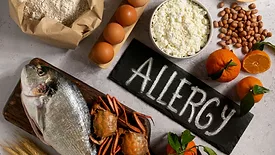
This episode of Food Safety Five discusses new research on the use of cold plasma technologies for biofilm inactivation and reducing allergenic risk, deriving more accurate “sell by” dates based on microbial changes on meat, and ultra-processed food nutrition and purchasing realities.
Studies funded by the Center for Produce Safety (CPS) are investigating ways to improve produce packinghouse brush sanitation, including the use of antimicrobial light and choosing the best time to replace brushes.
FDA published a literature review on the eight phthalates currently approved for food contact uses to determine whether they should be considered chemically and/or pharmacologically related for the purpose of cumulative risk assessment.
In this episode of Food Safety Matters, we speak to water activity specialist and researcher Dr. Brady Carter about the importance of understanding water activity for shelf-life prediction, enhancing food safety and quality, and improving food system sustainability.
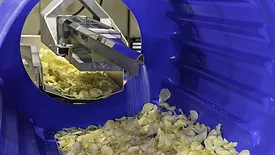
The line combines PPM’s frying, seasoning, and product handling systems with Key’s optical sorting technology into a unified processing solution, from slicing through packaging.
According to Austra Juice, the process lowers sugar and calories by at least 30 percent while maintaining the juice’s flavor profile, allowing beverage companies to label resulting products as “reduced-sugar fruit juice from concentrate.”
During the 49th Meeting of the Codex Committee on Food Labeling (CCFL49), guidelines on risk-based precautionary allergen labeling, labeling for multipack foods, and emergency flexible labeling were recommended for adoption. CCFL also declined a proposal to initiate work related to ultra-processed foods.
Acrylerase, developed by Kerry Group, is an amidase food enzyme that hydrolyzes acrylamide, and is the first commercially available food enzyme designed to directly decompose the process contaminant after it has formed.
Moderated by Chief Science and Technology Officer Dr. Brendan Niemira, the four-part series will discuss the science behind emerging food technologies and innovations, from sustainable packaging to plant-based proteins and nonthermal processing.
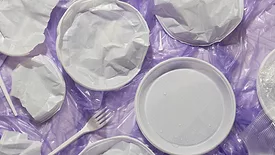
Chemical migration and microplastics shedding from recycled plastic food contact materials pose potential food safety concerns. Biopolymer risks are also not yet fully understood. The Codex Alimentarius Commission is considering developing guidance on recycled materials used in food packaging.
 RSS
RSS



.webp?height=168&t=1691503719&width=275 "FoodSafetyMattersFinal-900x550-(002).jpg")