The Sennoselect Flagship Brewery Program is intended to support the development of fermentation intelligence technology. Participating craft breweries will receive early access to new technologies.
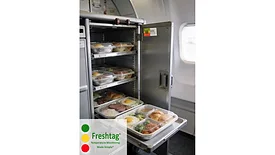
FreshTag Flight Label is intended to support airline Food Safety Management Systems and Quality Management Systems by providing a visual indication of cumulative time-temperature exposure.
Modern investments in applied food safety research infrastructure are essential to bridge the gap between scientific discovery and real-world implementation.
The Ice Cream Video Care system uses network cameras as sensors to monitor production processes, enabling operators to remotely inspect equipment and production areas, continuously and in real time.
The Keep Food Containers Safe from PFAS Act (H.R. 9593) would amend the Federal Food, Drug, and Cosmetic Act to prohibit food packaging containing intentionally added per- and polyfluoroalkyl (PFAS) substances, a.k.a. “forever chemicals.”
The VITAL Program and VITAL Online identify allergens that require labeling consideration, whether due to intentional inclusion or cross-contact. The update includes changes to tree nut grouping and gluten-containing cereal labeling in line with Codex reference doses (RfDs).
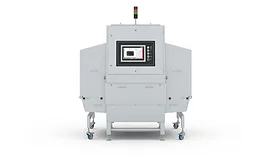
The system provides 1,000 millimeters of inspection coverage and supports belt speeds of up to 76 meters per minute. An optional integrated barcode reader enables inspection of mixed cases and supports multilane production environments.
The label claim “STABILIZED” would indicate that a ready-to-eat (RTE) product had been formulated or processed to inhibit Listeria monocytogenes growth. The researchers advocate for formulation and process changes as listeriosis rates climb in Europe and stricter EU Listeria regulations come into effect.
Sprinkles may seem like a minor decorative detail on a birthday cake or holiday cookie, but they sit at the intersection of several fast-moving regulatory concerns: the phaseout of certain FD&C dyes, the clean label movement, allergen management, and GMO transparency.
 RSS
RSS