The independent audit examined how SafetyChain safeguards customer data, maintains system uptime, manages access controls, monitors risk, and responds to potential security events.
Potentially offering an effective natural control strategy in food production, a study demonstrated the ability of select essential oils to inactivate multidrug-resistant Campylobacter isolated from poultry and investigated the mechanisms of antibacterial action, while highlighting variability in essential oil potency and species-specific susceptibility.
Drawing upon insights shared by UK food safety professionals, a report produced by the Food Safety Research Network (FSRN)/Quadram Institute identifies emerging defenses against microbiological risks in food production environments, including science-backed approaches, advanced technologies, and culture-based initiatives.
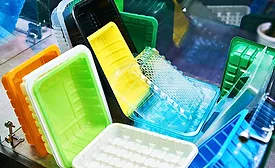
CalRecycle has issued a final draft of the Plastic Pollution Prevention and Packaging Producer Responsibility Act (SB 54), which establishes an extended producer responsibility (EPR) program to manage packaging and single-use plastic. Western Growers shared concerns about the produce industry’s ability to qualify for categorical exclusion.
As part of its efforts to encourage industry to phase out the use of petroleum-based synthetic food dyes, FDA is expanding the allowed uses of the label claim “no artificial colors” on food products and has approved a new naturally derived colorant for food.
New Jersey Governor Phil Murphy has signed into law the Protecting Against Forever Chemicals Act, which prohibits statewide the manufacture and sale of certain consumer goods that contain intentionally added per- and polyfluoroalkyl substances (PFAS).
The FAO/WHO Joint Expert Meeting on Microbiological Risk Assessment (JEMRA) has published a report on prevention and intervention measures for foodborne virus–commodity pairs of concern.
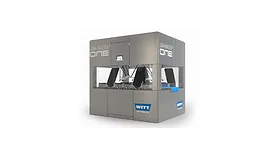
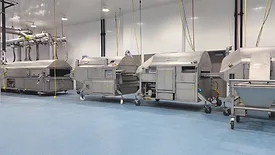
Signode’s automation capabilities for empty container producers—which, relevant to the food supply chain, include aluminum cans, glass and PET bottles, jars, and lightweight rigid plastics—combine conveying, robotic palletizing, strapping, and unitizing into a unified workflow.