Food Safety
search
Ask Food Safety AI
cart
facebook twitter linkedin
  • Sign In
  • Create Account
  • Sign Out
  • My Account
Food Safety
  • NEWS
    • Latest News
    • White Papers
  • PRODUCTS
  • TOPICS
    • Contamination Control
    • Food Types
    • Management
    • Process Control
    • Regulatory
    • Sanitation
    • Supply Chain
    • Testing and Analysis
  • PODCAST
  • EXCLUSIVES
    • Food Safety Five Newsreel
    • eBooks
    • FSM Distinguished Service Award
    • Interactive Product Spotlights
    • Videos
  • BUYER'S GUIDE
  • MORE
    • NEWSLETTERS >
      • Archive Issues
      • Subscribe to eNews
    • Store
    • Sponsor Insights
    • ASK FSM AI
  • WEBINARS
  • FOOD SAFETY SUMMIT
  • EMAG
    • eMagazine
    • Archive Issues
    • Editorial Advisory Board
    • Contact
    • Advertise
  • SIGN UP!
NewsFood TypeProcess ControlIntervention ControlsMeat/Poultry

Antimicrobial Peptides Show Promise as AMR-Mitigating Salmonella Intervention in Poultry
By Bailee Henderson
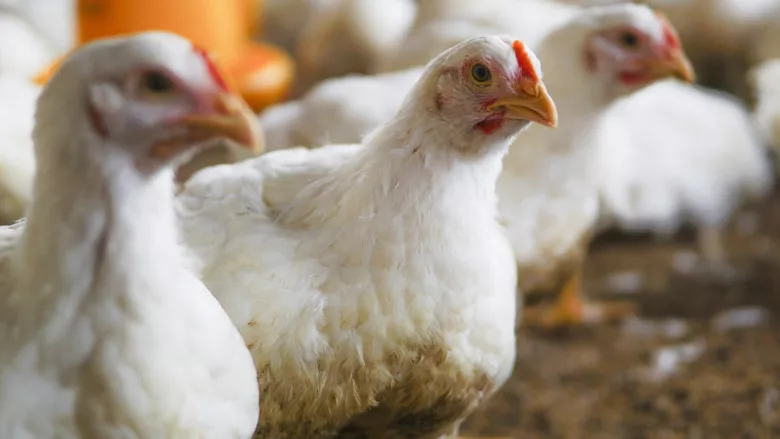
farm chickens.png
Image credit: wirestock via Freepik
November 5, 2025

A new study conducted by researchers from Ohio State University and the University of Illinois Urbana-Champaign has demonstrated the efficacy of antimicrobial peptides for reducing Salmonella in poultry—potentially offering a novel, non-antibiotic intervention strategy that could help mitigate the rise of antimicrobial resistance (AMR) stemming from agricultural drug use.

According to the researchers, the peptides are not only effective at inactivating Salmonella, but can also kill other bacterial pathogens such as Escherichia coli, making them broadly valuable for food safety. The researchers say that their study could provide a framework for developing and using antimicrobial peptides to control Salmonella in chickens. In future projects, they will test the peptides in chickens on a large scale, seeking to optimize peptide delivery via water and/or feed, better understand how they kill Salmonella, and explore the usefulness of additional peptides.

The corresponding author on the study, published in Microbiology Spectrum, is cited as Gireesh Rajashekara, B.V.Sc., Ph.D. of the University of Illinois Urbana-Champaign’s College of Veterinary Medicine. Work conducted within Dr. Rajashekara’s lab was supported by a U.S. Department of Agriculture National Institute of Food and Agriculture (USDA-NIFA). The first author on the study is Gary Closs Jr., Ph.D. of the Department of Food Science and Technology at Ohio State University.

Efficacy of Antimicrobial Peptides Against Salmonella in Chickens, Under Processing Conditions

For their study, the researchers evaluated six Lactobacillus rhamnosus GG (LGG)-derived peptides (P1–P6) for their ability to inhibit Salmonella Typhimurium and Salmonella Enteritidis, both in vitro and in vivo.

Peptides P1 (NPSRQERR), P2 (PDENK), and P4 (MLNERVK) emerged as the most effective in vitro, demonstrating broad-spectrum activity against multiple Salmonella serovars, including S. Anatum, S. Heidelberg, and S. Newport.

Next, the researchers conducted a controlled in vitro study using layer chickens. They found that oral administration of P1 and P2 at 50 milligrams per kilogram of bodyweight (mg/kg bw) was able to significantly reduce S. Typhimurium colonization in the cecum by 2.2 and 1.8 logs, respectively, seven days post-infection. These reductions are considered epidemiologically relevant for lowering pathogen shedding and transmission.

Peptides also reduced S. Typhimurium presence in the liver by 30 percent without affecting body weight, indicating no adverse impact on bird health or performance.

Looking for quick answers on food safety topics?
Try Ask FSM, our new smart AI search tool.
Ask FSM →

Importantly, mimicking commercial poultry feed processing conditions, the peptides retained their antibacterial properties after exposure to heat and protease treatments, making them viable candidates for industry application.

Microbiota Preservation and Safety Profile

Unlike traditional antibiotics, which can disrupt gut microbiota and increase susceptibility to secondary infections, P1, P2, and P4 did not affect microbial richness or diversity in the chicken cecum. Metagenomic analysis confirmed that the peptides preserved beneficial gram-positive bacteria such as Lactobacillus and Bifidobacterium, while selectively inhibiting pathogenic gram-negative strains, including Escherichia coli.

Mechanism of Action and Resistance Studies

Confocal and transmission electron microscopy revealed that P1 and P2 likely exert their antibacterial effects by disrupting the outer membrane of Salmonella, a mechanism associated with reduced likelihood of resistance development. Supporting this, no resistance was observed in lethal or sub-lethal exposure assays over multiple passages.

Docking studies further confirmed strong binding affinities of P1 and P2 to outer membrane proteins OmpF and OmpC—chosen by the researchers to predict binding propensities because they are likely to function by affecting the outer membrane lipid asymmetry system in avian pathogenic E. coli—reinforcing the peptides’ membrane-targeting capabilities.

Implications for Poultry Industry and Food Safety

The study provides evidence that LGG-derived short peptides can serve as effective, non-antibiotic antimicrobial agents in poultry, without contributing to the growing public health threat that is AMR. The peptides’ stability under processing conditions, selective inhibition of pathogens, and preservation of gut microbiota position them as promising candidates for integration into poultry feeding strategies.

Further research is warranted to evaluate long-term efficacy, optimal dosing, and delivery methods in commercial settings. Nonetheless, the findings align with global antibiotic stewardship goals and offer a viable path forward for reducing Salmonella-related foodborne illnesses.


KEYWORDS: AMR Salmonella

Share This Story

Baileehendersonmay23

Bailee Henderson is the Digital Editor of Food Safety Magazine. She can be reached at hendersonb@bnpmedia.com.

Recommended Content

JOIN TODAY
to unlock your recommendations.

Already have an account? Sign In

  • people holding baby chicks

    Serovar Differences Matter: Utility of Deep Serotyping in Broiler Production and Processing

    This article discusses the significance of Salmonella in...
    Microbiological
    By: Nikki Shariat Ph.D.
  • woman washing hands

    Building a Culture of Hygiene in the Food Processing Plant

    Everyone entering a food processing facility needs to...
    Facilities
    By: Richard F. Stier, M.S.
  • graphical representation of earth over dirt

    Climate Change and Emerging Risks to Food Safety: Building Climate Resilience

    This article examines the multifaceted threats to food...
    Best Practices
    By: Maria Cristina Tirado Ph.D., D.V.M. and Shamini Albert Raj M.A.
Manage My Account
  • eMagazine Subscription
  • Subscribe to Newsletters
  • Manage My Preferences
  • Website Registration
  • Subscription Customer Service

More Videos

Sponsored Content

Sponsored Content is a special paid section where industry companies provide high quality, objective, non-commercial content around topics of interest to the Food Safety Magazine audience. All Sponsored Content is supplied by the advertising company and any opinions expressed in this article are those of the author and not necessarily reflect the views of Food Safety Magazine or its parent company, BNP Media. Interested in participating in our Sponsored Content section? Contact your local rep!

close
  • Salmonella bacteria
    Sponsored byThermoFisher

    Food Microbiology Testing Methods: Salmonella species

  • a diagram explaining indicator organisms
    Sponsored byHygiena

    How Proactive Listeria Testing Helps Prevent Six- and Seven-Figure Recalls

  • woman grocery shopping
    Sponsored byCorbion

    Designing Safety Into Every Bite: Proactive Risk Mitigation for Refrigerated Foods

Popular Stories

new food pyramid 2026

Eat Real Food: New U.S. Dietary Guidelines Name and Shame ‘Highly Processed Foods’

EU and UK flags

2026 Trends in the EU/UK Food Law Space

irrigation pond

FAO/WHO Identify High-Priority Chemical Contaminants in Water Used for Agri-Food Production

Events

January 27, 2026

Strategies for Reinforcing Food Safety Culture Among Temporary and Seasonal Staff

Live: January 27, 2026 at 2:00 pm EST: From this webinar, attendees will learn common areas where companies encounter challenges in their food defense strategies and how to address them.

May 11, 2026

The Food Safety Summit

Stay informed on the latest food safety trends, innovations, emerging challenges, and expert analysis. Leave the Summit with actionable insights ready to drive measurable improvements in your organization. Do not miss this opportunity to learn from experts about contamination control, food safety culture, regulations, sanitation, supply chain traceability, and so much more.

View All

Products

Global Food Safety Microbial Interventions and Molecular Advancements

Global Food Safety Microbial Interventions and Molecular Advancements

See More Products

Related Articles

  • rendering of salmonella bacteria

    Strain Factors May be as Important as AMR in Clinical Outcomes of Foodborne Salmonella Infections

    See More
  • chicken being fed

    Salmonella Outbreaks Linked to Poultry, AMR Rising in U.S.

    See More
  • brood of hen

    Study Shows Promise for AI-Powered AMR Surveillance, Mitigation in Livestock Production

    See More

Related Products

See More Products
  • 1119237963.jpg

    Food Safety in China: Science, Technology, Management and Regulation

  • 9781138070912.jpg

    Trends in Food Safety and Protection

  • 9781498721776.jpg

    Handbook of Food Processing: Food Safety, Quality, and Manufacturing Processes

See More Products

Related Directories

  • WTI Inc.

    Protect people. Protect products. Incorporate WTI’s ingredients to ensure that your food remains safe, reliable, and of the highest quality from production to consumption. WTI produces naturally-derived vinegar antimicrobials, lemon-based phosphate alternatives, and conventional solutions that improve food quality, enhance yield, produce cleaner labels, keep food safe, and extend shelf-life.
×

Never miss the latest news and trends driving the food safety industry

Newsletters | Website | eMagazine

JOIN TODAY!
  • RESOURCES
    • Advertise
    • Contact Us
    • Directories
    • Store
    • Want More
  • SIGN UP TODAY
    • Create Account
    • eMagazine
    • Newsletters
    • Customer Service
    • Manage Preferences
  • SERVICES
    • Marketing Services
    • Reprints
    • Market Research
    • List Rental
    • Survey/Respondent Access
  • STAY CONNECTED
    • LinkedIn
    • Facebook
    • Instagram
    • X (Twitter)
  • PRIVACY
    • PRIVACY POLICY
    • TERMS & CONDITIONS
    • DO NOT SELL MY PERSONAL INFORMATION
    • PRIVACY REQUEST
    • ACCESSIBILITY

Copyright ©2026. All Rights Reserved BNP Media.

Design, CMS, Hosting & Web Development :: ePublishing