Food Safety
search
Ask Food Safety AI
cart
facebook twitter linkedin
  • Sign In
  • Create Account
  • Sign Out
  • My Account
Food Safety
  • NEWS
    • Latest News
    • White Papers
  • PRODUCTS
  • TOPICS
    • Contamination Control
    • Food Types
    • Management
    • Process Control
    • Regulatory
    • Sanitation
    • Supply Chain
    • Testing and Analysis
  • PODCAST
  • EXCLUSIVES
    • Food Safety Five Newsreel
    • eBooks
    • FSM Distinguished Service Award
    • Interactive Product Spotlights
    • Videos
  • BUYER'S GUIDE
  • MORE
    • ENEWSLETTER >
      • Archive Issues
      • Subscribe to eNews
    • Store
    • Sponsor Insights
    • ASK FSM AI
  • WEBINARS
  • FOOD SAFETY SUMMIT
  • EMAG
    • eMagazine
    • Archive Issues
    • Editorial Advisory Board
    • Contact
    • Advertise
  • SIGN UP!
NewsContamination ControlFood TypeMicrobiologicalMeat/Poultry

The Spread of Antibiotic Resistance Genes in Salmonella is a Problem for U.S. Poultry, Study Shows
By Bailee Henderson
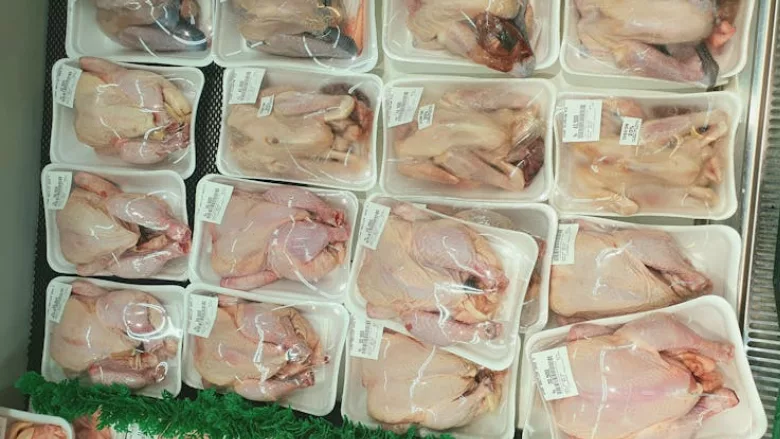
raw chicken on display at supermarket

Image credit: Laudia Tysara via Pexels

July 23, 2025

A study by North Carolina State University (NC State) researchers has demonstrated a concerning presence of antimicrobial resistance (AMR) genes among Salmonella isolated from retail poultry meat.

AMR is a major threat to global public health, causing a growing number of difficult-to-treat infections in humans, and recognized by the World Health Organization (WHO) as one of the top ten health challenges facing humanity in the 21st century. At present, AMR illnesses cause more than 700,000 deaths annually and are expected to outnumber cancer fatalities by 2050. The excessive use of antibiotics in farmed animals is a leading cause of rising AMR among bacteria, such as Salmonella.

The blaCTX-M-65 gene, an AMR gene with traits that facilitate easy transfer between bacteria, has been increasingly reported in Salmonella in food animals. Therefore, the researchers sought to understand the prevalence of and characterize the blaCTX-M-65 gene in Salmonella enterica isolated from poultry meat at retail.

To do so, the NC State researchers analyzed U.S. National Antimicrobial Resistance Monitoring System (NARMS) data for poultry products sampled from North Carolina retail stores between 2020 and 2024, including 132 S. enterica isolates representing 25 serovars, with S. Infantis (34 isolates) and S. Kentucky being the most prevalent. The isolates were then subjected to antibiotic susceptibility testing.

Of the 132 Salmonella isolates, 14 were multidrug resistant (MDR), which whole genome sequencing (WGS) analysis revealed as belonging to three serovars: S. Infantis (11 isolates), S. Seftenberg (one isolate), and S. I -:r:1,5 (two isolates). All 14 of the isolates carried the blaCTX-M-65 gene, and 13 isolates harbored a quinolone resistance-determining mutation. Genes encoding resistance to aminoglycosides, sulfonamides, and tetracyclines were also identified.

The presence of genes that could provide potential environmental survival advantages were also noted, raising concern about Salmonella persistence in food production environments.

Furthermore, the presence of Sequence Type 32 (ST32) among S. Infantis isolates, an ST frequently associated with this serovar, supports the notion that certain lineages of S. Infantis are adept at acquiring and disseminating AMR genes via mobile genetic elements, such as plasmids. ST32 was also found in the two S. I -:r:1,5 isolates, which may indicate a shared evolutionary pathway between the serovars regarding the acquisition of AMR traits. Previous studies have shown a high prevalence of MDR associated with ST32, suggesting a history of successful gene transfer between bacteria.

Looking for quick answers on food safety topics?
Try Ask FSM, our new smart AI search tool.
Ask FSM →

Additionally, in the sole S. Seftenberg isolate, blaCTX-M-65 was assigned to ST14, pointing to the adaptability of AMR genes across different Salmonella serovars. “This highlights the importance of continuous surveillance, especially in understudied or less prevalent serovars, to prevent the silent spread of critical resistance genes such as blaCTX-M-65,” said the researchers.

Overall, the detection of blaCTX-M-65 across multiple serovars suggests that its spread is not restricted to a single lineage or serovar; rather, it is a widespread phenomenon. The researchers underline the importance of routine surveillance for MDR Salmonella enterica serovars, particularly those harboring blaCTX-M-65, and call for comprehensive strategies, including genomic monitoring and responsible antimicrobial use, to curb the spread of AMR in food production settings.

The study was authored by Daniel F. M. Monte, Ph.D.; Erin Harrell, M.S.; Lyndy Harden; and Siddhartha Thakur, D.V.M., Ph.D. of the Department of Population Health and Pathobiology in NC State’s College of Veterinary Medicine. The full study can be read in Scientific Reports.


KEYWORDS: AMR Salmonella WGS

Share This Story

Baileehendersonmay23

Bailee Henderson is the Digital Editor of Food Safety Magazine. She can be reached at hendersonb@bnpmedia.com.

Recommended Content

JOIN TODAY
to unlock your recommendations.

Already have an account? Sign In

  • people holding baby chicks

    Serovar Differences Matter: Utility of Deep Serotyping in Broiler Production and Processing

    This article discusses the significance of Salmonella in...
    Meat/Poultry
    By: Nikki Shariat Ph.D.
  • woman washing hands

    Building a Culture of Hygiene in the Food Processing Plant

    Everyone entering a food processing facility needs to...
    Sanitation
    By: Richard F. Stier, M.S.
  • graphical representation of earth over dirt

    Climate Change and Emerging Risks to Food Safety: Building Climate Resilience

    This article examines the multifaceted threats to food...
    Risk Assessment
    By: Maria Cristina Tirado Ph.D., D.V.M. and Shamini Albert Raj M.A.
Manage My Account
  • eMagazine Subscription
  • Subscribe to eNewsletter
  • Manage My Preferences
  • Website Registration
  • Subscription Customer Service

More Videos

Sponsored Content

Sponsored Content is a special paid section where industry companies provide high quality, objective, non-commercial content around topics of interest to the Food Safety Magazine audience. All Sponsored Content is supplied by the advertising company and any opinions expressed in this article are those of the author and not necessarily reflect the views of Food Safety Magazine or its parent company, BNP Media. Interested in participating in our Sponsored Content section? Contact your local rep!

close
  • Salmonella bacteria
    Sponsored byThermoFisher

    Food Microbiology Testing Methods: Salmonella species

  • a diagram explaining indicator organisms
    Sponsored byHygiena

    How Proactive Listeria Testing Helps Prevent Six- and Seven-Figure Recalls

  • woman grocery shopping
    Sponsored byCorbion

    Designing Safety Into Every Bite: Proactive Risk Mitigation for Refrigerated Foods

Popular Stories

NRTE breaded stuffed chicken

USDA Indefinitely Delays Enforcement of Salmonella as Adulterant in Raw Breaded, Stuffed Chicken

non-conforming product

How to Handle Non-Conforming Product

spoonfuls of food ingredients

FDA’s Developing Rule to Tighten GRAS Oversight Moves to White House

Events

December 11, 2025

How to Develop and Implement an Effective Food Defense Strategy

Live: December 11, 2025 at 2:00 pm EDT: From this webinar, attendees will learn common areas where companies encounter challenges in their food defense strategies and how to address them.

May 11, 2026

The Food Safety Summit

Stay informed on the latest food safety trends, innovations, emerging challenges, and expert analysis. Leave the Summit with actionable insights ready to drive measurable improvements in your organization. Do not miss this opportunity to learn from experts about contamination control, food safety culture, regulations, sanitation, supply chain traceability, and so much more.

View All

Products

Global Food Safety Microbial Interventions and Molecular Advancements

Global Food Safety Microbial Interventions and Molecular Advancements

See More Products

Related Articles

  • brown broiler hens in feeding area

    Latest U.S. Poultry Report Shows Significant Decrease in Antibiotic Use for Farmed Chickens

    See More
  • plastic cutlery and clear plastic film on purple background

    Microplastics Increase Antibiotic Resistance of E. coli, Aid Biofilm Formation, Study Shows

    See More
  • hen and chicks

    Salmonella Less Prevalent in Backyard Poultry Farms Than Commercial Farms, but Multidrug Resistance is Similar

    See More

Related Products

See More Products
  • 1119053595.jpg

    Food Safety for the 21st Century: Managing HACCP and Food Safety throughout the Global Supply Chain, 2E

  • 1119258073.jpg

    FSMA and Food Safety Systems: Understanding and Implementing the Rules

  • 9781138070912.jpg

    Trends in Food Safety and Protection

See More Products

Related Directories

  • PATLITE (U.S.A.) Corp.

    Since 1947, PATLITE has offered state-of-the-art equipment for the process and industrial automation industries. Innovative and durable design, backed by years of industry experience and a strong commitment to safety and security, has made PATLITE the world's best known manufacturer of visual and audible signaling devices.
×

Never miss the latest news and trends driving the food safety industry

eNewsletter | Website | eMagazine

JOIN TODAY!
  • RESOURCES
    • Advertise
    • Contact Us
    • Directories
    • Store
    • Want More
  • SIGN UP TODAY
    • Create Account
    • eMagazine
    • eNewsletter
    • Customer Service
    • Manage Preferences
  • SERVICES
    • Marketing Services
    • Reprints
    • Market Research
    • List Rental
    • Survey/Respondent Access
  • STAY CONNECTED
    • LinkedIn
    • Facebook
    • Instagram
    • X (Twitter)
  • PRIVACY
    • PRIVACY POLICY
    • TERMS & CONDITIONS
    • DO NOT SELL MY PERSONAL INFORMATION
    • PRIVACY REQUEST
    • ACCESSIBILITY

Copyright ©2025. All Rights Reserved BNP Media.

Design, CMS, Hosting & Web Development :: ePublishing