Food Safety
search
Ask Food Safety AI
cart
facebook twitter linkedin instagram youtube
  • Sign In
  • Create Account
  • Sign Out
  • My Account
Food Safety
  • NEWS
    • Latest News
    • White Papers
  • PRODUCTS
  • TOPICS
    • Contamination Control
    • Food Types
    • Management
    • Process Control
    • Regulatory
    • Sanitation
    • Supply Chain
    • Testing and Analysis
  • PODCAST
  • EXCLUSIVES
    • Food Safety Five Newsreel
    • eBooks
    • FSM Distinguished Service Award
    • Interactive Product Spotlights
    • Videos
  • BUYER'S GUIDE
  • MORE
    • NEWSLETTERS >
      • Archive Issues
      • Subscribe to eNews
    • Store
    • Sponsor Insights
    • ASK FSM AI
  • WEBINARS
  • FOOD SAFETY SUMMIT
  • EMAG
    • eMagazine
    • Archive Issues
    • Editorial Advisory Board
    • Contact
    • Advertise
  • SIGN UP!
NewsContamination ControlFood TypeProcess ControlSupply ChainMicrobiologicalProcess ValidationMeat/PoultryGrowers/GAPs

Study Shows Drinking Water Quality Significantly Impacts Salmonella Vaccines for Poultry
By Food Safety Magazine Editorial Team
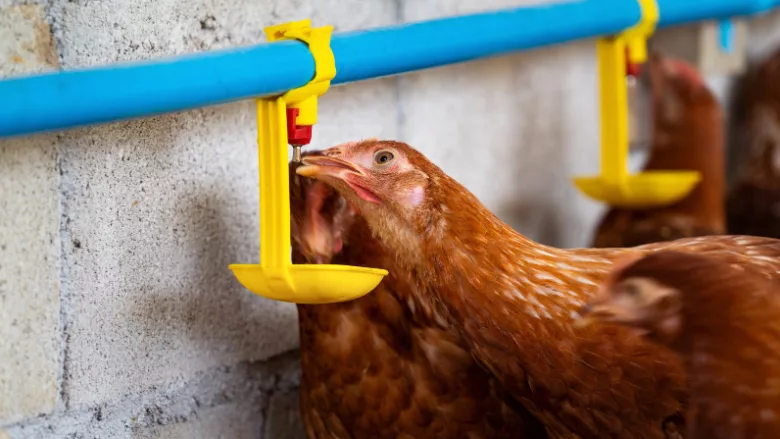
chickens drinking water on a farm
Image credit: tawatchai07 via Freepik
March 6, 2026

In pre-harvest poultry production, live Salmonella vaccines are often administered through drinking water, thereby requiring water quality to be compatible with live vaccines. A new in vitro study has identified drinking water qualities and contaminants that can affect the viability of an available Salmonella vaccine for poultry.

The research evaluated how water pH, hardness, and the presence of metals, ions, and disinfectants affected the stability of a live Salmonella vaccine (i.e., Elanco’s live attenuated bivalent vaccine AviPro Salmonella Duo) over a 24-hour period. While many water characteristics had minimal impact, elevated levels of certain metals and disinfectants were found to inactivate the vaccine.

The study was conducted by Elanco researchers and published in MDPI Poultry.

Metals Identified as Primary Risk to Vaccine Stability

Among the parameters tested, aluminum, arsenic, iron, and manganese had the most pronounced, dose-dependent negative effects on vaccine survival. In contrast, fluoride, nitrate, sulfate, and water hardness exerted little to no measurable influence under the tested conditions.

Iron concentrations as low as 0.5 milligrams per liter (mg/L)—levels well within existing livestock drinking water guidelines in some countries—led to a decline in vaccine counts. Manganese levels of 1 mg/L also jeopardized vaccine efficacy, depending on exposure time and temperature, despite also being within recommended thresholds for farm animal water in certain countries.

At higher concentrations, aluminum and arsenic also reduced vaccine viability. However, the researchers noted that adverse effects from arsenic occurred above the 10 micrograms (µg)/L limit set for human drinking water in many countries, suggesting that municipal water supplies within regulatory limits would likely not pose a risk. Groundwater sources in regions with elevated environmental arsenic levels could present greater concern.

Because poultry operations frequently rely on borehole or well water, which can contain elevated metal levels, the researchers suggest that chemical testing should be considered before administering live vaccines via drinking water.

Looking for quick answers on food safety topics?
Try Ask FSM, our new smart AI search tool.
Ask FSM →

Disinfectants Rapidly Inactivated the Live Vaccine

The study evaluated commonly used drinking water disinfectants: free chlorine, chlorine dioxide, and hydrogen peroxide. All of the studied disinfectants strongly reduced vaccine viability within a short period, even at concentrations considered safe for poultry consumption.

Hydrogen peroxide inactivated the vaccine quickly, and the tested water stabilizer did not provide protection. On the other hand, the stabilizer did mitigate the effects of chlorine and chlorine dioxide up to certain concentrations.

The researchers suggested that residual disinfectants from prior water line sanitation or municipal supply spikes could unintentionally compromise vaccination efforts if not monitored and managed. They advised ensuring that disinfectant treatments are paused and verifying residual levels before live vaccine administration.

pH, Hardness, and Ions Showed Limited Impact

The vaccine demonstrated resilience across a broad pH range, with significant declines observed only at pH 4 and pH 9. Water hardness, conductivity, and most dissolved ions had minimal influence on stability. Chloride showed a dose-dependent effect at high concentrations, although vaccine levels remained within manufacturer specifications under the tested conditions.

These results suggest that routine fluctuations in many water quality parameters are unlikely to compromise vaccine performance, given that values remain within moderate ranges.

Implications for Food Safety and Biosecurity

Live Salmonella vaccines administered via drinking water are widely used in poultry production because they stimulate mucosal and cellular immunity and can be applied early in life without handling stress. Effective vaccination is considered a core component of tertiary biosecurity measures that enhance flock immunity, thereby reducing pathogen colonization and shedding.

Because Salmonella can persist in poultry populations and farm environments for extended periods, compromised vaccine viability could increase the risk of downstream contamination of meat and eggs.

The researchers concluded that maintaining appropriate chemical and disinfectant conditions in drinking water lines is critical to ensuring vaccine efficacy. While water stabilizers may provide protection under certain conditions, they did not fully mitigate risks from all contaminants, especially hydrogen peroxide.

As the study was conducted in vitro, the researchers noted that field validation is necessary. However, the data provide practical information for poultry operations seeking to strengthen vaccination programs and reduce food safety risks pre-harvest.


KEYWORDS: biosecurity Elanco Salmonella study vaccine water use

Share This Story

Fsm purple logo 200x200

The Food Safety Magazine editorial team comprises Bailee Henderson, Digital Editor ✉ and Adrienne Blume, M.A., Editorial Director.

Recommended Content

JOIN TODAY
to unlock your recommendations.

Already have an account? Sign In

  • people holding baby chicks

    Serovar Differences Matter: Utility of Deep Serotyping in Broiler Production and Processing

    This article discusses the significance of Salmonella in...
    Meat/Poultry
    By: Nikki Shariat Ph.D.
  • woman washing hands

    Building a Culture of Hygiene in the Food Processing Plant

    Everyone entering a food processing facility needs to...
    Food Prep/Handling
    By: Richard F. Stier, M.S.
  • graphical representation of earth over dirt

    Climate Change and Emerging Risks to Food Safety: Building Climate Resilience

    This article examines the multifaceted threats to food...
    Best Practices
    By: Maria Cristina Tirado Ph.D., D.V.M. and Shamini Albert Raj M.A.
Manage My Account
  • eMagazine Subscription
  • Subscribe to Newsletters
  • Manage My Preferences
  • Website Registration
  • Subscription Customer Service

More Videos

Sponsored Content

Sponsored Content is a special paid section where industry companies provide high quality, objective, non-commercial content around topics of interest to the Food Safety Magazine audience. All Sponsored Content is supplied by the advertising company and any opinions expressed in this article are those of the author and not necessarily reflect the views of Food Safety Magazine or its parent company, BNP Media. Interested in participating in our Sponsored Content section? Contact your local rep!

close
  • This image displays a multi-stage water filtration system designed to remove contaminants from drinking water.
    Sponsored byWaterdrop Filter

    The 4.0 ppt Era: Future-Proofing Your Food Supply Chain Against "Forever Chemicals"

  • The image displays a bottling plant production line, commonly used in the beverage industry for filling and packaging soft drinks.
    Sponsored byBIOIONIX

    Sustainability with ROI: A Beverage Producer Case Study in Water Savings

  • factory
    Sponsored byIFC

    A Clean Break to Reset the Environment with Chlorine Dioxide

Popular Stories

workers and inspector in processing facility

Gearing Up for an FDA Inspection

formula powder

ByHeart Infant Formula Botulism Outbreak Ends with Extensive WGS Evidence, but Root Cause Remains Unidentified

grocery shopper examining label on a can

EU Considers Adoption of Harmonized Precautionary Allergen Labeling Rules

Events

March 26, 2026

Continuous Pathogen Control: Enhancing Sanitation and Environmental Monitoring in Food Processing

Live: March 26, 2026, at 2:00 pm EST: This session explores the role of continuous airborne pathogen control technology in supporting sanitation and environmental monitoring programs within food processing environments.

March 31, 2026

Regulatory Risk, Ingredient Safety, and GRAS: What Companies Need to Act on Now

Live: March 31, 2026, at 11:00 am EDT: From this webinar, attendees will recognize patterns in food policy affecting dietary guidelines, UPFs, state legislative actions, and expected GRAS reform.

April 8, 2026

Foreign Material Contamination: Why In-Line Reinspection Isn't Enough

Live: April 8, 2026, at 11:00 am EDT: From this webinar, attendees will learn why re-inspecting with in-line equipment is not sufficient when it comes to potential foreign material contamination.

View All

Products

Global Food Safety Microbial Interventions and Molecular Advancements

Global Food Safety Microbial Interventions and Molecular Advancements

See More Products

Related Articles

  • raw chicken on display at supermarket

    The Spread of Antibiotic Resistance Genes in Salmonella is a Problem for U.S. Poultry, Study Shows

    See More
  • broilers on the farm

    Study Shows Commensal E. coli Could Effectively Control Drug-Resistant Salmonella in Poultry

    See More
  • farmed chicks

    USDA-FSIS Expresses Interest to Manufacturers About Salmonella Vaccines for Poultry

    See More

Related Products

See More Products
  • 9781498721776.jpg

    Handbook of Food Processing: Food Safety, Quality, and Manufacturing Processes

  • 9781032369990 (1).webp

    Food Safety Quality Control and Management

  • 1119160553.jpg

    Food Safety: Innovative Analytical Tools for Safety Assessment

See More Products

Related Directories

  • Nestle Quality Assurance Center Dublin

    The Nestle Quality Assurance Center (NQAC) Dublin provides the analytical testing businesses need to ensure product safety for consumers. We have supported the food industry world-wide for over three decades and offer an expansive portfolio of over 200 methods to meet your food safety testing needs.
×

Never miss the latest news and trends driving the food safety industry

Newsletters | Website | eMagazine

JOIN TODAY!
  • RESOURCES
    • Advertise
    • Contact Us
    • Directories
    • Store
    • Want More
  • SIGN UP TODAY
    • Create Account
    • eMagazine
    • Newsletters
    • Customer Service
    • Manage Preferences
  • SERVICES
    • Marketing Services
    • Reprints
    • Market Research
    • List Rental
    • Survey/Respondent Access
  • STAY CONNECTED
    • LinkedIn
    • Facebook
    • Instagram
    • X (Twitter)
  • PRIVACY
    • PRIVACY POLICY
    • TERMS & CONDITIONS
    • DO NOT SELL MY PERSONAL INFORMATION
    • PRIVACY REQUEST
    • ACCESSIBILITY

Copyright ©2026. All Rights Reserved BNP Media.

Design, CMS, Hosting & Web Development :: ePublishing